




subscribe_today.png


Top Stories

algae.gif An unusual experiment featuring equal parts science and Native American capitalist ambition is unfolding. Read more

Columnist

Share this!
ricey wild Last month I had to run for my life from a burning building carrying two hefty cats in their carriers in my bare feet on cold gravelly pavement. Read more

The Arts

resistance cultural cd.jpg

Their promo says “Resistant Culture is. . .tribal music that has weaved the indigenous flute, rattle, tribal drum and chant into an organic and flowing tapestry with extreme contemporary punk and metal.” Read more 

Citizen Journalism

Citizen JournalismCreate your free account and submit your own stories to The Circle website.Register for free and start publishing!

Article Guidelines

Watch the video to learn how!

The Dakota War of 1862, refuges in Canada
Sunday, June 10 2012
 
Written by By Kathy Henderson,
Average user rating    (0 vote)
It is well known that in the aftermath of the U.S.-Dakota War of 1862 when the Dakota people were being rounded up and confined at Fort Snelling, some chiefs fled with their bands into the Dakota Territory and Canada. And in most history books, that's where the story ends - at the Canadian border.
But the often-overlooked story about what happened on the other side of the 49th parallel deserves telling, for it comes with ancient silver medals and an amazing account of refugee status based on oaths of perpetual obligation made to the Dakota people a half century before. As Minnesotans commemorate the 150th anniversary of the U.S.-Dakota War of 1862, it took a visit to the Manitoba Museum in Winnipeg, Manitoba Canada to spotlight this little-known chapter of Dakota history.
The sign in the museum's Grassland Gallery exhibit area simply states:  "Following the Sioux Uprising in Minnesota in 1862, many Dakota families moved north into British territory. In recognition of their longstanding allegiance to the British Crown, they were granted reserve lands beginning in 1874, although they did not sign treaties. By the mid-1870s, there were over 1,000 Dakota living in camps near Portage la Prairie, along the Assiniboine River, at Oak Leaf and near Fort Ellice."
What! Canadian Dakotas. Allegiance to the British Crown! How did all this happen?
The Dakota people have had a long history of crisscrossing the border and had at various times since 1821 established trading relationships with the Hudson Bay Company (HBC) at Fort Garry. Fort Garry was not a military post, but a fur trading post near the confluence of the Red and Assiniboine rivers, where Winnipeg, Manitoba, is located today.
However, this time the arrival of the Dakota at the fort was different. In the aftermath of the U.S.-Dakota War of 1862, the Dakotas came to Forth Garry as refugees, not trading partners, and they arrived with silver medals that displayed the image of King George III and claims to sanctuary based on promises made to their forefathers for their allegiance and service to the British during the War of 1812.
Running Wolf Fitness Center member loses 60 lbs, regains health
Sunday, June 10 2012
 
Written by by Connie Norman,
Average user rating    (1 vote)
We here at the Running Wolf Fitness Center would like to share one of our success stories with the community. Salvador Pacheco (White Earth Ojibwe/ Hispanic) lives and works in the Phillips neighborhood and heard we were re-opening the Running Wolf Fitness Center in the neighborhood. So in September he went to the Native American Community Clinic (NACC) and got his fitness exam, which entitled him to recieve a free 6 month membership at Running Wolf Fitness Center.
During the exam Salvador learned that he had a high total cholesterol of 236. He determined to set goals to improve that through dietary change. Several of the changes he made included cutting butter from his diet and eating high fiber oatmeal.  Pacheco said the toughest part of the diet change was giving up Pepsi.
After changing his diet and working with a NACC Dietician his cholesterol went down 100 points in about 6-8 weeks.
Salvador started his membership at Running Wolf Fitness Center November 1st. He came every morning at 10 am when Running Wolf opened and set goals with the trainer named Q. When he started Salvador said that he could only do about 5 minutes on the Nustep (Recumbent bike).
Letter To The Editor
Sunday, June 10 2012
 
Written by Chris Mato Nunpa, Ph.D., Ritired Former Associate Professor Indigenous Nations & Dakota Studies,
Average user rating    (0 vote)
In response to the Year of Healing Proclamation
I read with a great deal of interest the article in The Circle, May 2012, Volume 33, Issue 5, titled "Year of Healing Proclamation honors 1862 Dakota Conflict."
There are several coments and concerns that I wish to make about the article and the proclamation, which proclamation was authored by the "American Indian Movement, the Episcopal Church of Minnesot, and the Democratic-'Farmer-Labor Party (DFL), and the Native American Community at large."
First, there appears to be no input from the Dakota People of Minnesota.  Also, I was wondering if there was any effort by the initiators of the resolution to seek input from the four Dakota Communities of Minnesota.  I did talk to members of the Board of Trustees, the governing body of the Upper Sioux Community near Granite Falls, Minnesota, one of the four Dakota Communities in Minnesota, and they said no one approached them.
Native Issues in the Halls of Government
Sunday, June 10 2012
 
Written by by Mordecai Specktor,
Average user rating    (0 vote)
Hunting wolves
I wrote in my May column that the Minnesota Legislature's bill to establish a wolf hunting and trapping season was awaiting a decision by Gov. Mark Dayton. The governor signed the bill in early May, and the Department of Natural Resources (DNR) has set an early wolf season to begin Nov. 3, the opening day of the firearms deer season, wherever rifles can be used to kill deer. If the quota of 400 wolves is not reached, a later wolf season (allowing hunting, along with trapping and snaring) would begin on Nov. 24.
The DNR states that Minnesota has the largest population of wolves in the lower 48 states - 3,000 wolves, a number that has remained stable over the past decade. Further, the DNR has set a winter population of 1,600 wolves as the minimum goal; if the state wolf population should fall below this number, the DNR would take immediate steps to restore wolves to the minimum level. As I mentioned last month, wolves in Minnesota, Wisconsin and Michigan were removed from federal protection, in January 2012. So, each state has taken responsibility for wolf management.
I don't understand the mentality that favors killing wolves. They are not a threat to humans, and farmers can legally shoot wolves that are threatening their livestock. And, as I wrote in May, the Red Lake Band of Chippewa - which manages their reservation land as a wolf sanctuary - has complained to the DNR commissioner about not being consulted prior to the state setting up a wolf season.
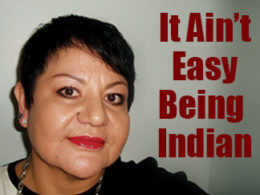
It ain't easy being indian
Sunday, June 10 2012
 
Written by by Ricey Wild,
Average user rating    (2 votes)

For the past three months or so I've been out of the loop because I've been busy recovering from spinal fusion surgery. Yes, the operation hurt, it hurt a lot but I am now able to walk normally again…mostly. I had to get it you know. I had lost that swing in my step and my smiles had turned into grimaces. When my Unk Koon picked me up after my spending six days in the hospital he said that in the Old Days I would have just been put on an iceberg and left there to perish. Well, I don't recall that he said 'perish' precisely but his meaning was clear. Me? I just laughed as well as I could. It hurt.
Superintendent Speaks
Sunday, June 10 2012
Looking forward to what comes next…

Congratulations, Graduates! Each spring our preschool students visit kindergarten classrooms to get a sense of what they can expect from the coming year's big transition. They embrace their day-long challenge with a blend of trepidation and excitement, understanding on some intrinsic level that they are getting a glimpse of their future, seeing that it is close enough to touch. Although they may not have a full grasp of what is to come, they know that their lives are about to change.
Each spring, our graduating seniors prepare for their own big transition. With college and career on the horizon, they savor the last milestones of high school and proudly ready themselves to accept diplomas in front of family and friends. And as they look out across the crowd, they too know that their future draws nearer by the moment.
 
<< Start < Prev 1 2 3 4 5 6 7 8 9 10 Next > End >>

Results 105 - 130 of 330

Syndicate