



|
Written by Winona LaDuke
|
|
Friday, April 13 2012 |
|
ild rice, or Manoomin, is the only grain endemic to North America and is a part of the Anishinaabeg migration story. There are few other places in the world where such a bountiful gift is delivered to those who live there, whether they have wings or hands. The lakes and rivers, owing to the unique nature and adaptability of the manoomin, each year offer a wild rice crop. This is a sacred food and a keystone of the ecosystem of the Great Lakes region, or Anishinaabe Akiing.
Related as well, to the most spiritual of all traditions and history is also the Anishinaabeg relationship to the Ma'iingan, the wolf. It is said in Anishinaabeg prophecies that which befalls the wolf will befall the Anishinaabeg. The decimation of the Anishinaabeg by plagues, starvation and federal policies closely mirrored the destruction of the ma'iingan. The limiting of territories to reservations for the Anishinaabeg, and the wolves to a few sparse patches of the north woods, occurred for both.
Today, both the wolf and the wild rice face dire threats of devastation, as mining interests loom on the edges of the territory, or seek to re-open old scarred mines of the past hundred years in a renewed fervor of an inefficient minerals based material economy.
It is ironic that the two largest barriers to the wholesale mining of the north, may be manoomin, or wild rice and the ma'iingan. Proposals in northern Michigan, Wisconsin and Minnesota would eviscerate water quality laws with severe impacts on the wild rice of the north. In turn, the recent delisting by the US Fish and Wildlife of the wolf seems suspiciously synchronized with the interests of new mining companies in the region. Losing an endangered species is the removal of a big stumbling block to mining.
Tribal communities, joined increasingly by northern residents, have opposed the threats to water and wild rice throughout the north country. And, while the wolf has been delisted by federal agencies, with moves to state regulation, tribal governments and inter-government agencies in the north pledge to retain their relationship and responsibility to the ma'iingan .
|
|
| Written by The Circle Staff, |
| Average user rating |
(0 vote) |
|
 Lyle H. Iron Moccasin honored at the Multicultural Forum on Workplace Diversity
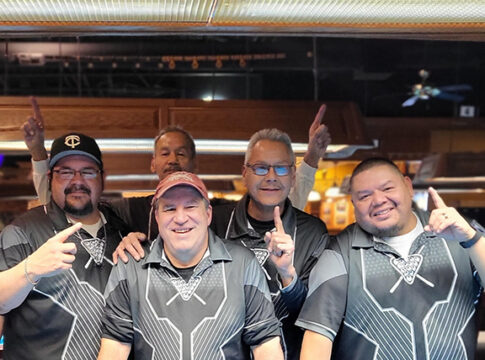
Lyle H. Iron Moccasin was one of four champions of workplace diversity that were honored during the 24th annual Multicultural Forum on Workplace Diversity, a conference on diversity and inclusion, which took place March 20-22 at the Minneapolis Convention Center.
Lyle H. Iron Moccasin was given the Friend of the Forum Award. He is an enrolled member of the Cheyenne River Lakota of South Dakota. After growing up in Minnesota and New York City, serving in the U.S. Navy and the New York City police force, he returned to Minneapolis to work for the American Indian Opportunities Industrialization Center.
During his employment at AIOIC, he has worked in juvenile justice, ex-offender, employment and education programs addressing the issues the American Indian community faces. Since 2003, Iron Moccasin has been the Multicultural Forum's guide for addressing the issues of displaced communities, the Native community and youth education and employment.
The forum, presented by the Opus College of Business at the University of St. Thomas, is designed for professionals who manage a diverse workforce, are responsible for diversity within their organization, or work with a multicultural clientele. The diversity awards are given to individuals or organizations that show exemplary effort in addressing workplace diversity issues.
|
|
| Written by By Tom Robertson Minnesota Public Radio, |
| Average user rating |
(0 vote) |
|
 Some Ojibwe in Minnesota are worried about the fate of the state's wolf population as state lawmakers consider a hunting and trapping season for the animals.
Wolves were removed from the federal endangered species list last year, and that upsets some tribal members. For many Ojibwe, wolves are important to traditional culture. Some believe wolves are sacred, and they want to see protections continue.
A painting of two wolves hangs prominently on the living room wall in Mary Favorite's home in Wauben on the White Earth Indian Reservation.
Favorite is a tribal elder and a member of the wolf clan. That means many in her large, extended family associate themselves very closely with the animal. Favorite considers wolves among her relatives.
"It's very special to me. When I read that in the paper that they were thinking about... passing a law about killing the wolves," Favorite said. "It broke my heart."
Favorite remembers decades ago when gray wolves nearly disappeared. Now there are an estimated 3,000 gray wolves in Minnesota.
The Department of Natural resources proposes to let hunters and trappers kill 400 wolves this fall. Favorite hates the idea.
"I thought, 'Oh my God,'" she said. "It's like they want to come in here and they want to shoot my brothers and my sisters."
It's not just members of the wolf clan who are upset about a possible wolf hunting season. Favorite's husband, Andy, is a historian and retired tribal college teacher. For traditional Ojibwe across the upper Midwest, wolves are sacred, Andy Favorite said.
"In our creation stories and a lot of our other legends, the wolf is very prominent. A lot of our spirits come in the form of these creatures, so it's a very spiritual thing," he said. "If the tribes have the spiritual moxie, they will step in and do something to protect the wolves."
Some Minnesota tribes have already done that. In 2010, the Red Lake Band of Ojibwe was the first to adopt a wolf management plan. They designated the band's 843,000 acres of land as a wolf sanctuary.
|
|
| Written by The Circle Staff, |
| Average user rating |
(0 vote) |
|
Since December 2009, I have written a number of columns about copper-nickel mining, a significant environmental threat to the North Country. My focus has been on the Canadian firm PolyMet (polymetmining.com); but it seems that another mining outfit, Twin Metals (twin-metals.com), which has an interest in large tracts of land south and east of Ely, might be the first sulfide mining project that gets a permit to being operating.
Minnesota has a long history of iron ore and taconite mining; but the extraction of copper-nickel and precious metals (palladium, silver, gold and platinum) would be something new in the state.
In late March a headline in the Duluth News Tribune announced: "Twin Metals Ely mine project takes steps forward." The article notes that the company is "collecting baseline environmental date across 32,000 acres… under which geologists say is a jackpot discovery of copper."
The newspaper reported that Twin Metals "formally announced Thursday [March 22] that it has instructed its engineering contractor, global giant Bechtel, to draw up plans for an 80,000-ton-per-day mine and processing plant, putting Twin Metals on par with the largest mines in the world."
So, one of the "largest mines in the world" is being developed on the edge of the Boundary Waters Canoe Area Wilderness - and on land that is within the 1854 Treaty Ceded Territory, so the Bois Forte and Grand Portage Ojibwe bands have a legally-recognized interest in how this land is developed.
The 1854 Treaty reserves hunting, fishing and gathering rights in the land that was ceded to the U.S. government. And as I have reported previously, the Fond du Lac band is closely monitoring the progress of the sulfide mining schemes, which have the potential to pollute the reservation's surface and ground water, and destroy wild rice beds.
|
|
| Written by Jim Northrup, |
| Average user rating |
(0 vote) |
|
In spite of my well known aversion to flying I did it again. Fond du Lac Follies jetted to Fayetteville, North Carolina.
I passed through the security checkpoint at the Duluth Airport and boarded the airplane for a short hop to Detroit, Michigan. The plane arrived safely and I shuffled off the airplane and did the concourse/gate dance. I checked my ticket and identified my new destination. I began the long hump to my next gate. It was easily a mile away.
The quarter mile tunnel was interesting. The electronic music seemed to match the colors as the ceiling changed. Even with moving sidewalks it is a long way. I was blowing deep breaths by the time I got there. The airplane ride to Atlanta was uneventful, my favoritest kind. Then into a smaller jet for the hop to Fayetteville.
Dr. Jane Haladay met me there. We drove and talked and talked. She gave me a brief overview of the Lumbee people. I felt sad when she told me they didn't have a tribal language. I guess 400-500 years of colonialism will do that.
We ate and talked some more. After all that travel and jaw jacking I was tired so she took me to the Holiday Express where I became a Holiday Inndian.
The next morning I was given a tour of where the Lumbee people lived. According to the state they are an Indian tribe but they are waiting for Federal recognition. I was taken on a tour by Dr. Linda Oxendine, a retired professor from the University of North Carolina-Pembroke. We drove around and around and looked and looked.
At noon we met with the professors of the Indian Studies Department of the University. We gathered at Linda's Caf? right on the main drag. I wasn't very hungry so I just had a slice of banana cr?me pie and coffee.
|
|
| Written by Ricey Wild, |
| Average user rating |
(1 vote) |
|
Writing this column for nearly 14 years now I have always been careful not to call anyone out in particular lest there be hurt feelings and they want to beat me up. This does not include the public cast of characters that are always in the media; them anyone can talk about.
Well darn it, in a recent column I was writing about my job, and that 'an old misery' had it before me. People said that person only had the job of documenting the Rez cemeteries because they couldn't get along with anybody else. I got a good response for that column. Fans wrote, called, and one even said it was my best one ever…well, not according to some very special and important people in my life.
I had been out from work because my back, which was injured this past fall, was worsening so I was medical leave. When I finally got back and checked my correspondence. I had the sweetest, nicest, non-harshly worded angry letter from my friend Christine. She wrote she was disappointed that I would call out our mutual friend Leroy, that he didn't deserve what I had written and that I was rotten (my words) for doing so. I wrote her back immediately, first that I was NOT referring to Leroy as the old miz, and I feel awful for having unintentionally hurt his feelings. I told her who I actually meant and Christine said, "Ohhhh!" She knows of the person, the real old miz.
First off Leroy, I apologize. It did occur to me after the column was published that you might take it to mean you; I assure you it is not. You are not a misery at all; I cherish our friendship and the time you have taken to impart your knowledge, wisdom and sharing funny stories with me. To be very clear, you're the last person I would ever accuse of being an Old Misery. Gawd knows Rezberry has way more than its share and you, Leroy Defoe, do not qualify. Mea culpa, or in today's parlance, my bad.
|
|
|