
By Sarah Thamer / MPR News
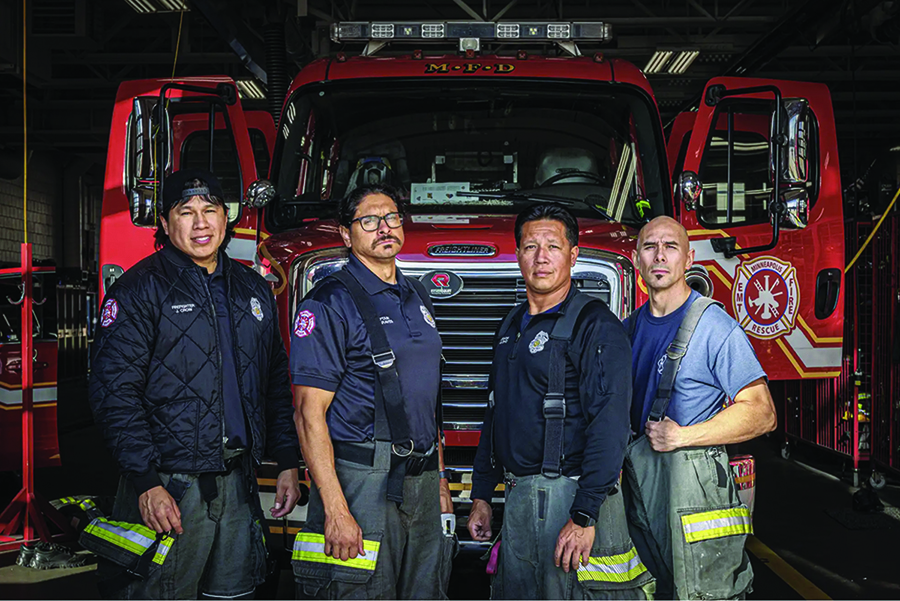
At Minneapolis Fire Station 6, Engine 10’s A-shift recently renewed their commitment to stay together for two more years, continuing their work out of the city’s busiest station.
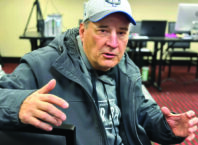
Inside the station stands Capt. Michael Graves, fire motor operator Jesse Strong, and firefighters Johnny Crow and Bobby Headbird. Their all-Native American crew wasn’t assigned. It wasn’t a department directive.
“This was all us,” Graves said. “It was important because we all have ties to the city, and we grew up not seeing police or fire that looked like us.”
Representation, he says, has a real impact on trust and connection. The crew sees that impact every day.
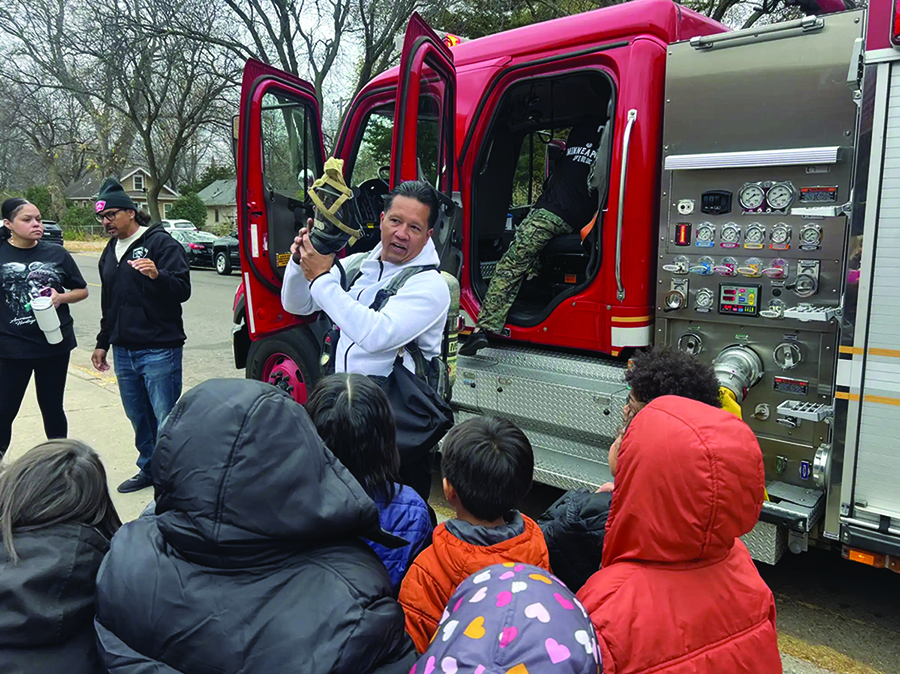
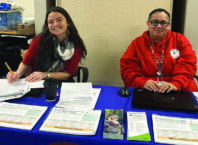
students at Anishinabe Academy in Minneapolis. (Photo
by Sarah Thamer / MPR News.)
On the job: Familiar calls, familiar histories
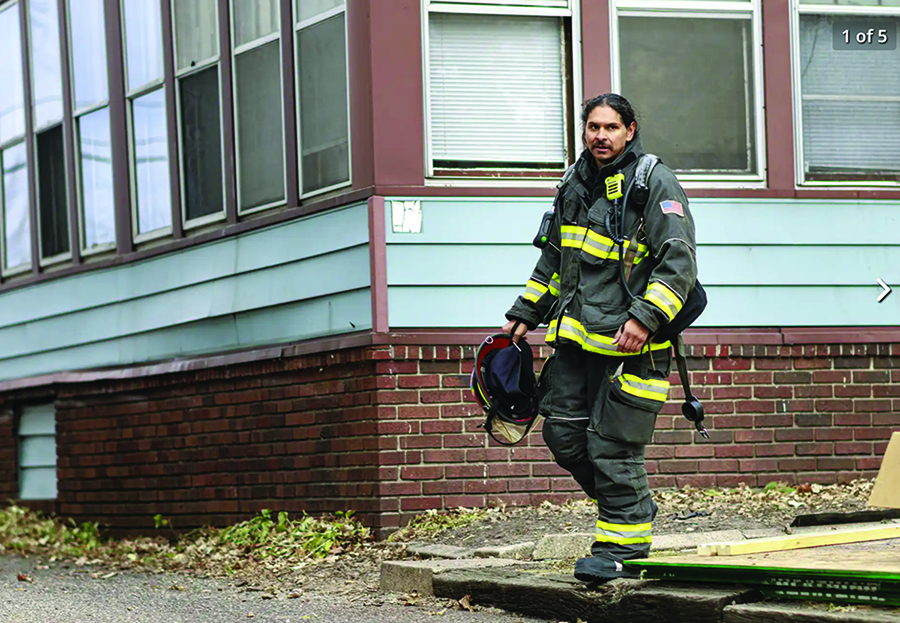
During a recent ride-along to a small house fire in south Minneapolis — a call resolved within minutes — the crew talked about the emergencies that dominate their work. Many of them reflect challenges disproportionately affecting Native communities.
Firefighter Johnny Crow described it candidly: “Calls that have to deal with overdose and opioid domestic violence, all these things that the Native community has dealt with, we have experienced firsthand in our families. So we come with a lot of compassion and understanding.”
That shared lived experience shapes how they approach people in crisis. It also shapes how they see their role inside the city’s emergency response system.
A different kind of impact
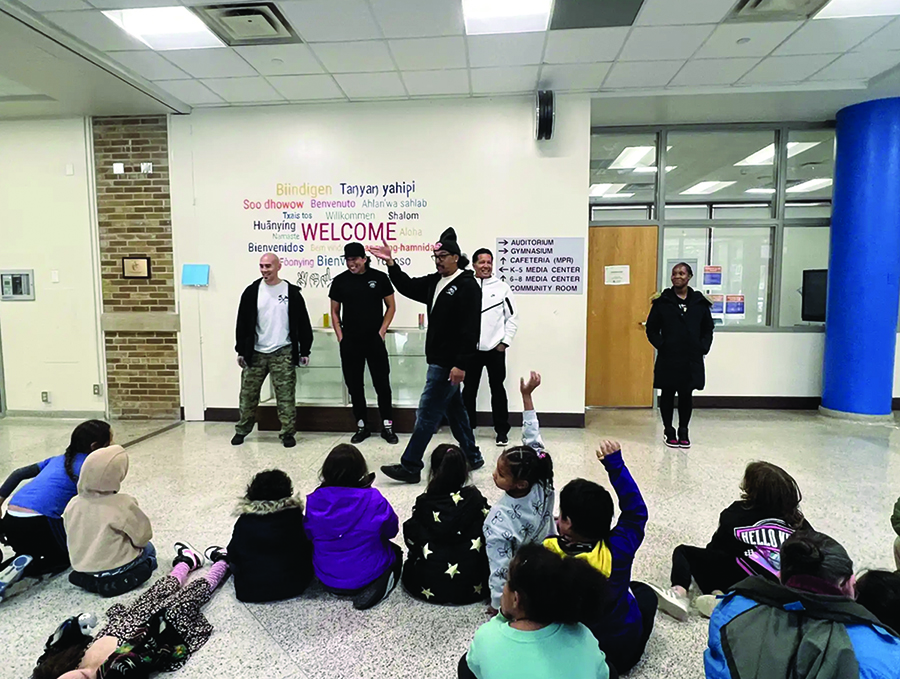
A few days later, on their day off, the crew visits Anishinabe Academy, where about 80 percent of students are Native American. The hallways fill as soon as the firefighters arrive. Students swarm them with questions, excitement and recognition.
“It’s really nice to have Native superheroes in this city,” one student says.
“I’ve never seen a Native fire group. It’s, like, so amazing that they’re here to see everyone and have the kids in my class sit in the truck,” another student said.
Fire motor operator Jesse Strong says that connection is already reshaping who sees themselves in these uniforms.
“I always think back to myself when I was a kid, and there weren’t many people in roles like we’re in, to some people we’re role models, and I think that we’re really honored to be in those positions.”
Strong said the students aren’t just noticing the gear or uniforms — they’re seeing firefighters who reflect their own community in a way that hasn’t been present in Minneapolis firehouses until recently.
Influence beyond the station
Later that afternoon at Pow Wow Grounds coffee shop in the American Indian Cultural Corridor, firefighter Bobby Headbird runs into Derrick Yazzie, a 22-year-old who is also Indigenous and working toward becoming a firefighter himself. Yazzie credits the crew for that decision.
“Native men being successful, that really inspires me to push myself to believe that I can do anything,” Yazzie said. “These guys, they’re strong warriors, they help people, just do a lot of good things. And that just inspires me to do good things.”
Headbird remembers the first time Yazzie approached them — seeing the crew in full gear, stopping them to ask how to get started.
“It’s really emotional right now because we met here at Pow Wow Grounds,” Headbird said. “This is where we first met, he saw us in gear, came up here to get a coffee, he said he was interested in becoming a firefighter. So now he’s working himself through the process and it’s good to see him better himself. That’s what it’s all about, right there.”
The four firefighters come from several tribal nations — Red Lake Nation, Bois Forte Band of Chippewa, Oglala Lakota Tribe and Leech Lake Band of Ojibwe. Their backgrounds differ, but their motivations quickly align.
“Over the past few months, we realized we are all cut from the same cloth and have the same shared beliefs and mindset for the city, for the community and everything,” Graves said.
Being warriors, they say, is part of their lineage — but today that looks different than it did for their grandfathers.
“It’s been a struggle to adjust from where we come from in surviving genocide and surviving the reservations, which were originally prison camps. And so us moving to the city here, we might have came 50 plus years ago. So it’s been a struggle for our community to get representation and to get our voice and get seen,” Crow said.
For the crew, being at Station 6 is part of a broader effort to increase visibility for Native people in institutions where they have often been underrepresented.

A team, and something more
Between calls, the crew trains, cooks, and works side-by-side like any other shift in the department. What sets them apart is the collective sense of purpose that forms the backbone of their work.
They’ll keep responding to fires, overdoses, alarms, and medical calls across Downtown West, Loring Park, Loring Heights and Lowry Hill. But the four men say the job extends far beyond emergencies.