

By The Circle
Pow Wow Groundsand NaCdi becomes hub of resistance in Mpls
MINNEAPOLIS — A Minneapolis Native-led arts gallery, coffee shop, and community hub is coordinating donations to support local residents and activists responding to recent federal immigration enforcement raids in the Minneapolis community along the Franklin Cooridor where many Native people live.
The coffeehouse and the adjacent gallery have transformed into a place where neighbors can come together for meals, warmth, and the distribution of essential food and supplies, serving residents shaken by fear and uncertainty after the fatal shooting of Renée Good and Alex Pretti by a federal immigration officer in Minneapolis in January this year.
All My Relations Arts Gallery and the adjacent Pow Wow Grounds coffee space at 1414 E. Franklin Ave. are collecting weather and protective gear, first-aid supplies, legal observer vests, gas masks with P100 filters, gas cards (in $20 denominations) and cash for community use. Drop-offs are being accepted at that location.
As of Jan. 27, general donations — including food, household goods and other supplies — are being accepted at the Division of Indian Work, 1001 E. Lake Street, with drop-offs between 10 a.m. and 3 p.m. and pickup available from noon to 3 p.m.
Organizers thanked volunteers, donors and community members for their support during “this turbulent time,” saying the gallery has acted as a gathering place for observers and organizers, including the Indigenous Protector Movement. The next art exhibition has been postponed, but officials said art will continue to be part of community efforts.
Resource hubs such as standwithminnesota.com and Native-led organizations like the Minnesota Urban Indian Directors network offer additional mutual aid and support opportunities across the state.
The Circle newspaper will also drop off the paper at Pow Wow Grounds only, as many businesses and organizations are closed. All other drop off sites will no longer have any paper delivered to them for the time being.
———————————————————-
Red Lake bars ICE from its tribal lands
RED LAKE, Minn. — Leaders of the Red Lake Nation have unanimously approved a resolution barring U.S. Immigration and Customs Enforcement and other federal immigration agents from entering tribal lands without a federal judge-signed court order.
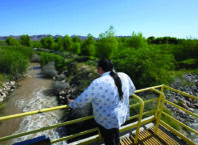
The Jan. 13 resolution, passed 10-0 by the tribal council, also requires agents to present the court order to the tribe’s public safety director and be accompanied by a tribal public safety officer while on the Red Lake reservation, about 30 miles north of Bemidji. The measure includes a ban on ICE fishing on parts of Lower and Upper Red Lake within reservation boundaries.
Council members cited concerns about ICE activity in Minnesota, including stops and arrests of Native Americans in the northwest part of the state, as prompting the action. There have been no reported ICE operations on the Red Lake Reservation.
The resolution follows broader tensions over federal immigration enforcement after a U.S. Immigration and Customs Enforcement agent shot and killed a Minneapolis woman during ICE operations earlier this month. Tribal legal officials said copies of the resolution will be posted at Red Lake Nation properties, including the tribal embassy and an apartment complex in south Minneapolis.
———————————————————-
State cannot prosecute tribal citizen for cannabis on tribal lands says judge
MINNEAPOLIS — A Minnesota appeals court has ruled that the state cannot prosecute a tribal citizen for a cannabis offense that occurred on tribal land, saying state authorities lack jurisdiction in such cases.
The Minnesota Court of Appeals overturned a lower court decision and dismissed a first-degree cannabis possession charge against Todd Jeremy Thompson, an enrolled member of the White Earth Band of Ojibwe. Thompson had been charged after state agents seized about 7.5 pounds of cannabis during a 2023 raid on his tobacco shop located on the White Earth Reservation.
In its ruling, the court said Minnesota’s cannabis possession laws are civil and regulatory in nature rather than criminal. As a result, the state cannot enforce them against tribal citizens on reservation land under Public Law 280, a federal statute that grants states limited criminal jurisdiction in Indian Country but restricts civil authority.
The decision noted that Minnesota’s legalization of cannabis and its authorization of tribal-state compacts further supports tribal authority to regulate cannabis on reservation land. The court said enforcement in this case falls under tribal, not state, jurisdiction.
Supporters of the ruling said it affirms tribal sovereignty and clarifies enforcement boundaries following Minnesota’s cannabis law changes. The state has not said whether it will appeal.
———————————————————-
Feds want MN counties to give ICE access to jails
MINNEAPOLIS — Federal immigration officials are in talks with county sheriffs in Minnesota about agreements that could give U.S. Immigration and Customs Enforcement greater access to local jails, part of broader efforts to expand cooperation amid ongoing controversy over enforcement actions in the state.
The Minnesota Sheriffs’ Association has been leading discussions with the Trump administration’s border czar, Tom Homan, on possible contracts that would allow counties to house ICE detainees past their scheduled release times in return for federal compensation. The arrangements, including so-called Basic Ordering Agreements, would legally enable jails to detain people for up to 48 hours so ICE can assume custody — something sheriffs cannot do now under state law without a judicial warrant.
Homan cited “unprecedented cooperation” from counties as part of his announcement that about 700 ICE and Customs and Border Protection officers would be withdrawn from Minnesota after months of enforcement activity. Local officials had resisted full cooperation, arguing ICE detainers aren’t legally binding and county holds beyond release violate state law.
Hennepin County Sheriff Dawanna Witt, whose office operates the state’s largest jail, said her agency is discussing limited cooperation but will not pursue agreements that would hold detainees beyond their release. She reiterated that warrants would be required for any extended custody.
Critics, including the Minnesota Attorney General, say such agreements risk unconstitutional detention without probable cause and could deter immigrant communities from reporting crime. Legal debates over the proposals’ compliance with state and constitutional law continue amid heightened scrutiny of immigration enforcement in the Twin Cities.
———————————————————-
The important of gathering evidence and witnessing
WASHINGTON — Democratic state attorneys general are stressing the growing legal importance of citizen-generated evidence, including cellphone video and photographs, in challenging U.S. Immigration and Customs Enforcement actions amid expanded federal enforcement efforts.
Attorneys general say bystander footage has increasingly contradicted official federal accounts and played a critical role in lawsuits alleging constitutional and civil rights violations. The issue has gained urgency during the Trump administration’s “Operation Metro Surge” and related enforcement activity in Minnesota and other states.
Minnesota Attorney General Keith Ellison is among those citing video evidence as central to legal challenges and public scrutiny. In Minneapolis, cellphone footage recorded by witnesses captured the fatal shooting of Alex Pretti, a 37-year-old ICU nurse, during an ICE operation. The video shows Pretti filming agents before officers tackled him, beat him and shot him after seizing his firearm. Pretti, who was licensed to carry a gun, never drew it, contradicting claims by Homeland Security Secretary Kristi Noem that he attacked agents.
“There are a whole lot more stories,” Ellison said, pointing to recordings from cellphones and dashboard cameras that he says show increasingly forceful tactics by some of the more than 3,000 federal immigration agents operating in Minnesota.
In response, Minnesota has launched an online tip portal allowing residents to submit video and photographic evidence of alleged federal misconduct. The move followed the U.S. Department of Justice’s refusal to share evidence in Good’s death with county prosecutors or the attorney general’s office.
Similar citizen-evidence portals or federal accountability commissions have been established in Colorado, Illinois and Oregon.