

By Lee Egerstrom
Whether from the plains or from the lakes and woods, Native Americans have used their skills to build some of the most iconic structures locally and all across America.
Take U.S. Bank Stadium, or the Vikings Stadium as many call it. Or Target Field, where the Minnesota Twins play. Or the new Minnesota State Senate Office Building, and Minneapolis Central Library, Guthrie on the River, newer bridges around the Twin Cities and University of Minnesota buildings, as examples.
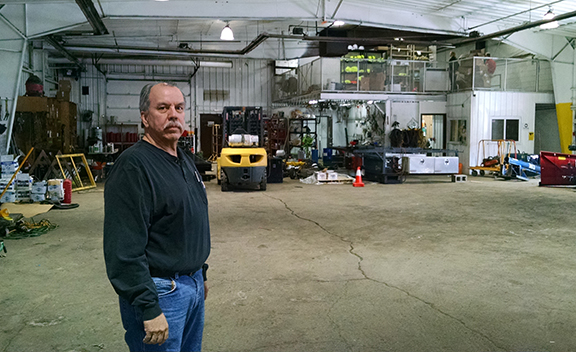
Bald Eagle Erectors, the Circle Pines iron and steel erectors company owned by Dave Bice, was a subcontractor on all those projects. An enrolled member of the White Earth Band of Ojibwe, he is a third generation ironworker and is keeping alive a family – as well as a Native – tradition of builders.
This isn’t a local fluke. It is a story repeated across the nation. In years gone by, American elementary students were taught how the Mohawk from upstate New York and adjacent areas of Canada provided a disproportionate number of the ironworkers who built the New York City skyline. That tradition, too, continues to this day and is supported by construction stories from the Pacific Northwest and down through California.
Bice isn’t sure how Native ties to building and ironworks came about. Skyscrapers were as rare in Mohawk territory as they were, and are, on White Earth land. But his grandfather was an ironworker, as were uncles and family members who helped build the towering IDS Center in Minneapolis. That makes a family tradition.
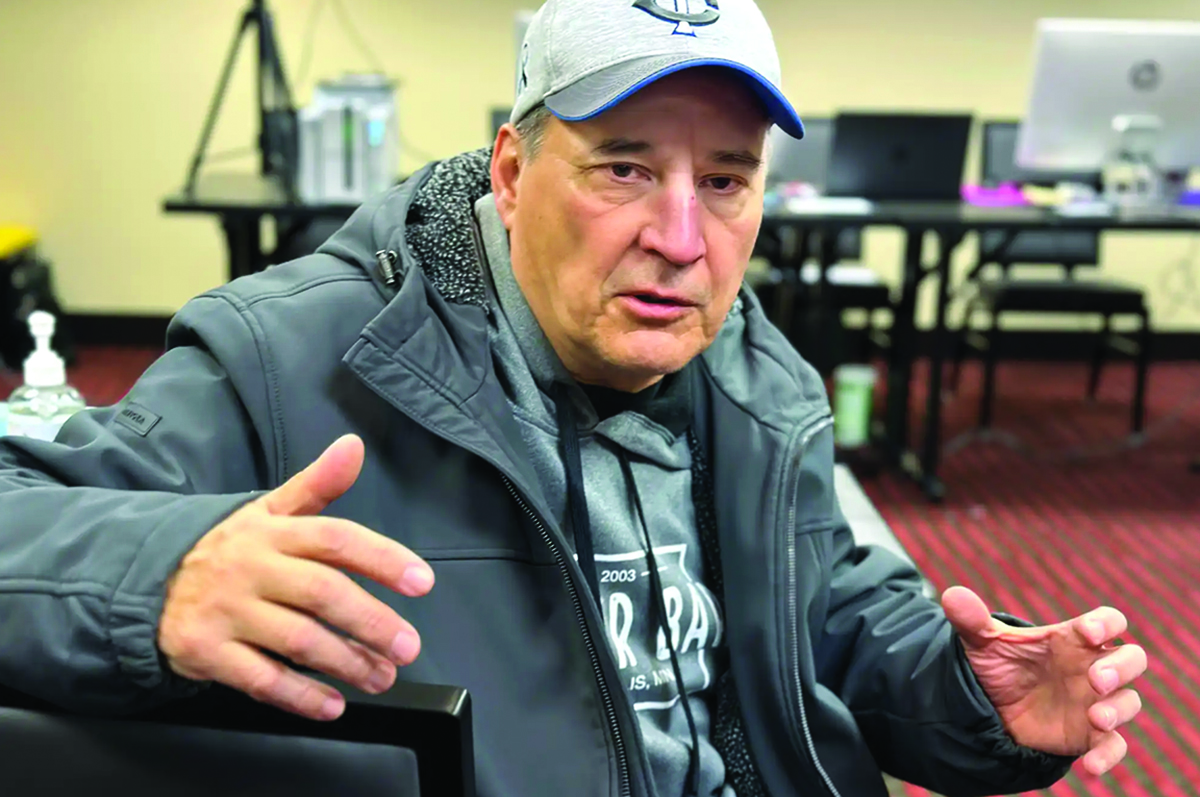
At an interview in his office, Bice reflected on how other aspects of ironworking make a fit culturally for Native Americans and for others who are from marginalized communities that are often lumped together as “people of color.”
While his company and that of all small subcontractors struggled to survive during “the great recession” era of the 1980s, Bice also had to survive internal turmoil resulting from employee embezzlement. Ironworking and running a business are both “daily struggles,” he said. “Every day has a new challenge.”
Construction industry work is especially vulnerable to national and local economic conditions, he said. But since the current recovery started in 2009, Bice and Bald Eagle Erectors have attempted to make sure that at least a third of the employees are Native Americans, other “people of color,” and women.
There is pride in developing and using skills, he said. And there is dignity in being a skilled worker that continues for his or her family into retirement.
Bice served in the Marine Corps from 1977 to 1980 and then joined the Ironworkers Union on return to civilian life. He continues to be a member of St. Paul-based Ironworkers Union Local 512 even though he also became an entrepreneur and started Bald Eagle Erectors in 1994.
“I tell (young) people that they should develop their skills and talents. That doesn’t mean skilled people can’t be entrepreneurs, too,” he said. “Whatever you do, it won’t be easy.”
There are rewards for becoming skilled crafts people. With wages and benefits, skilled Ironworkers make from $135,000 to more than $140,000 a year around most of Minnesota, based on current rates posted by the union.
Dignity comes from pride in what you are doing, Bice said, and through the health and retirement benefits that come with the job. “You work hard, you should have a good retirement,” he said.
Barry Davies, business manager and financial secretary-treasurer for Local 512, said Bice works hard at keeping ironworkers’ skills up to date and to keep people ready for the work projects ahead. “He’s always there and he’s always helpful,” Davies said.
That comes from Bice serving on committees for training and apprenticeship programs the union operates in collaboration with other groups, both for new workers entering the field and for “journey people upgrading their skills.”
Special skills are necessary for the work Bald Eagle Erectors’ employees perform. That includes such things as placing and connecting rebar, installing steel I-beams, and structural steel framing for buildings such as the Mystic Lake and Mille Lacs casino and hotel properties and at various tribal hospitality enterprises. You’ve had to watch construction projects to understand what most of these tasks entail.
Far more visible projects for the public to understand include stairways and mezzanines inside buildings, as well as linking structures with skyways. Bridges are probably the most exposed examples of the ironworkers’ talents.
Keeping skilled workers up to date is important for workers’ families as well as the ironworkers, Davies said. Every four or five years, for instance, Local 512 has a picnic for its members and families at which time children are given bicycles. “Dave is always first to show up with bicycles.”
That commitment to people and families in the work-a-day world reflects Bice’s involvement with the Native American community as well.
“He’s always been supportive of our work and he’s been especially helpful to me,” said Nevada Littlewolf, president and chief executive of the Tiwahe Foundation in Minneapolis.
Littlewolf (Leech Lake Ojibwe) joined the foundation a year ago shortly after Bice had served on its board of directors. When she moved to the Twin Cities from northern Minnesota, Bice made time to introduce her to people. He “opened doors for me to meet the people and groups I need to know,” she said.
The Tiwahe Foundation describes itself as “a community foundation that distributes micro grants to deserving Native men and women living in the Twin Cities metro area who need direct financial assistance with their education, cultural connections and/or other professional goals.”
It administers the American Indian Family Empowerment Program (AIFEP) that was started by three metro-area family foundations with the desire to build relationships that will lead to assisted people to make meaningful contributions to their communities in the future.
Bice is himself an example of what the foundation seeks to achieve. In addition to his serving on the Tiwahe board, Bice is a current board member for the American Indian Community Development Corp., a former board member of the Minnesota American Indian Chamber of Commerce, and is also a past board member for The Circle.
His commitment to community as well as his accomplishments in the business world have been recognized. Among honors, the U.S. Small Business Administration for the Upper Midwest region named Bald Eagle Erectors its 2015 Subcontractor of the Year, and Finance & Commerce magazine honored Bice that same year with its Individual Progress Minnesota Award.
For more information on Bald Eagle Erectors, see: www.baldeagleerectors.com.
For info on the Tiwahe Foundation, see: https://tiwahefoundation.org.
For an especially interesting article on how the Mohawks built New York’s skyline, see: https://www.6sqft.com/men-of-steel-how-brooklyns-native-american-ironworkers-built-new-york.