By Elizabeth Shockman/MPR News
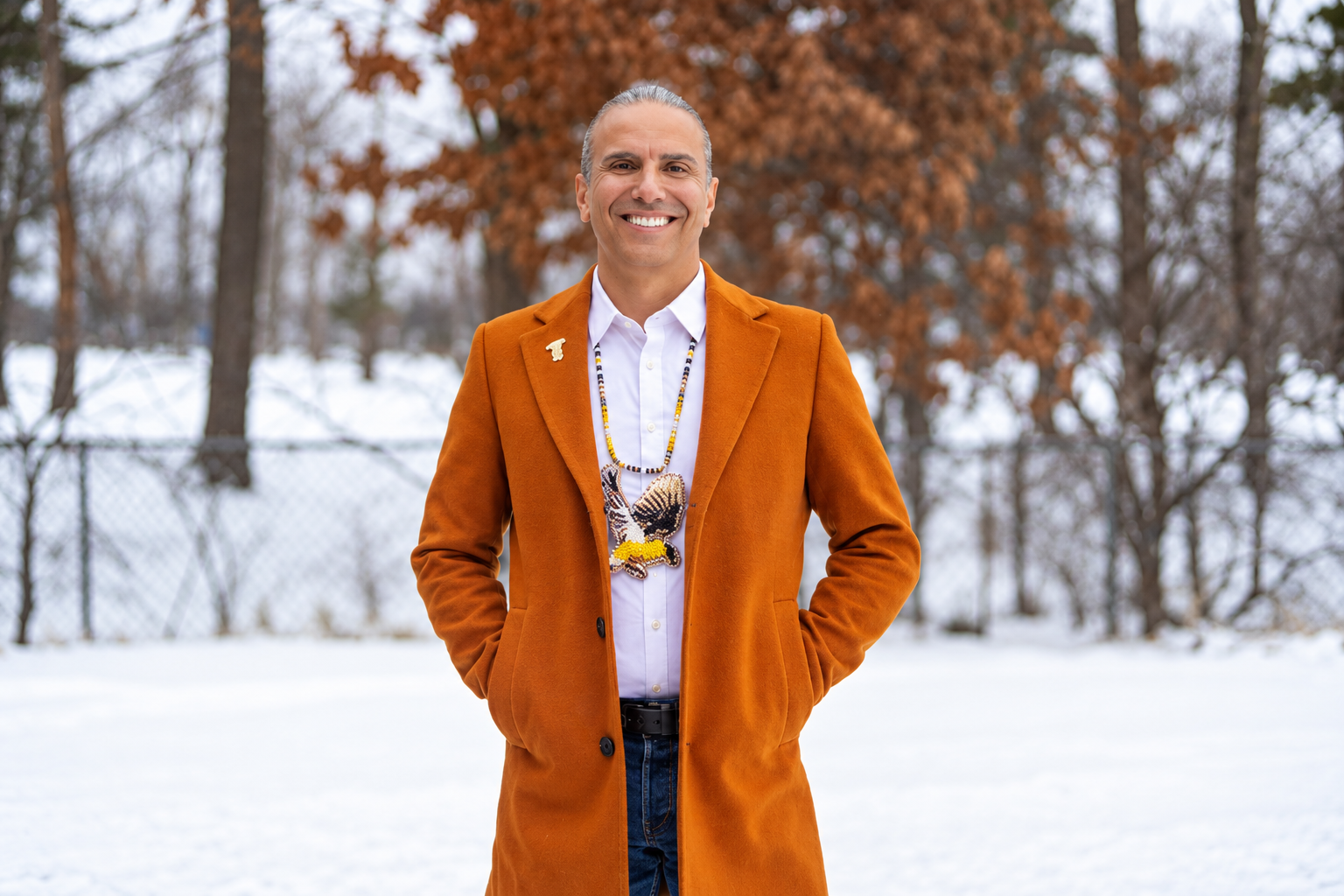
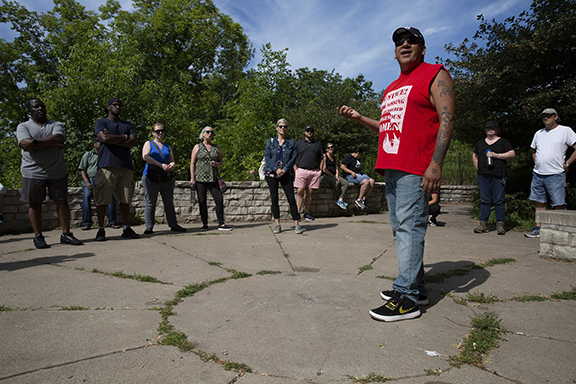
In early August, a group of Minneapolis public school teachers stood atop a bluff overlooking the Mississippi River. Victor Makes Room For Them, who is Lakota and often goes by Rocky, stood with them.
They were gathered at Indian Mounds Regional Park in St. Paul, a Native American burial site. Many of the educators said they hadn’t known the place existed.
Rocky wanted to change that. He was leading a tour of sites around the Twin Cities that are significant to Dakota people, who are native to the area. It was part of a three-day best-practices workshop for Minneapolis Public Schools employees, led by the Division of Indian Work.
Rocky is a director of the Medicine Wheel Project, a mental health program at Center School in Minneapolis. He said he hoped that sharing his own stories, as well as Dakota history and oral tradition, would help these educators in the work they have ahead of them this year.
“We’re all educators and we all have compassion, so why shouldn’t you guys hear these stories, too?” he asked. “I mostly save these stories for my indigenous students, but I realize that that’s my own ego… and if I want a healthy community, then we all need to understand each other.”
At the Dakota burial site, he talked about grief. He’s seen it negatively affect the behavior and mental health of people he knows.
“Maybe a lot of things we don’t understand [about] what our children do has a lot to do with grief. Grief is one of those hidden things we could explore with our children that we’re not connecting with,” Rocky said.
Ed Bourgeois is a special education assistant at South High School who’s been coming on these tours for about 10 years. He said what he learns applies not just to the Native American kids he works with, but also the Somali, Latino and white students in his school.
It’s good, he said, “to be reminded every year that it’s about relationships.”
“I mean, it’s just like taking first-aid class. Every year you need to be reminded because it’s not just the Native population that has cultural trauma or that has reoccurring family issues,” said Bourgeois. “It applies to probably about 90 percent of the students I work with.”
Kehinde Oyederu is a middle school health teacher. He said this tour is the best professional development he’s ever had as an educator.
“I want to know how to manage my class. I want to know how to relate with my students. I want that relationship – how can I form it with my students? This is where I get ideas, and I love this,” Oyederu said.
Native American students in Minnesota are particularly affected by educational achievement gaps. The graduation rate for Native American students is only 51 percent, compared to approximately 88 percent for white students.
Louise Matson, an Ojibwe and executive director of the Division of Indian Work, said the workshop and tour aren’t about shaming or blaming anyone. They’re about helping educators understand how historical and cultural trauma might be affecting students.
“Our kids are smart. Our kids are capable. It’s just, we haven’t had a very good history with the institutions of education. So, this is designed to flip that,” Matson said.
After a year of trying to apply what they learned, teachers will have a follow-up session in June. Matson said it’s just one example of how the Native American community in Minnesota is partnering with schools to improve education outcomes for Native and other students.
Minnesota Public Radio News can be heard on MPR’s statewide radio network or online.