


By Mordecai Specktor
It’s murder in Minneapolis
I stopped by the Pow Wow Grounds coffee shop on Sunday afternoon, January 25. It was the day after Border Patrol agents gunned down Alex Pretti, a 37-year-old ICU nurse at the VA hospital in Minneapolis. Pretti was pumped full of US government bullets on Nicollet Avenue just off 26th Street.
The ICE invasion, the federal immigration enforcement initiative dubbed “Operation Metro Surge,” has gone from bad to worse. As The Circle reported in the January issue, the recent carnage started Jan. 7, when an ICE agent named Jonathan Ross fatally shot Renee Good, also 37 and the mother of three children. That murder took place on Portland Avenue near 34th Street. After shooting Good three times as she tried to maneuver her car away from ICE agents, Ross spat out, “Fucking bitch.” The Department of Justice quickly announced that it would not open a civil rights investigation into the Good killing.
The influx of federal agents, some 3,000 heavily armed thugs, into Minnesota has targeted immigrants, primarily Latinos, East Africans and Southeast Asians. However, anyone is liable to be assaulted ICE and Border Patrol agents on the prowl in their rented SUVs, including Native residents.
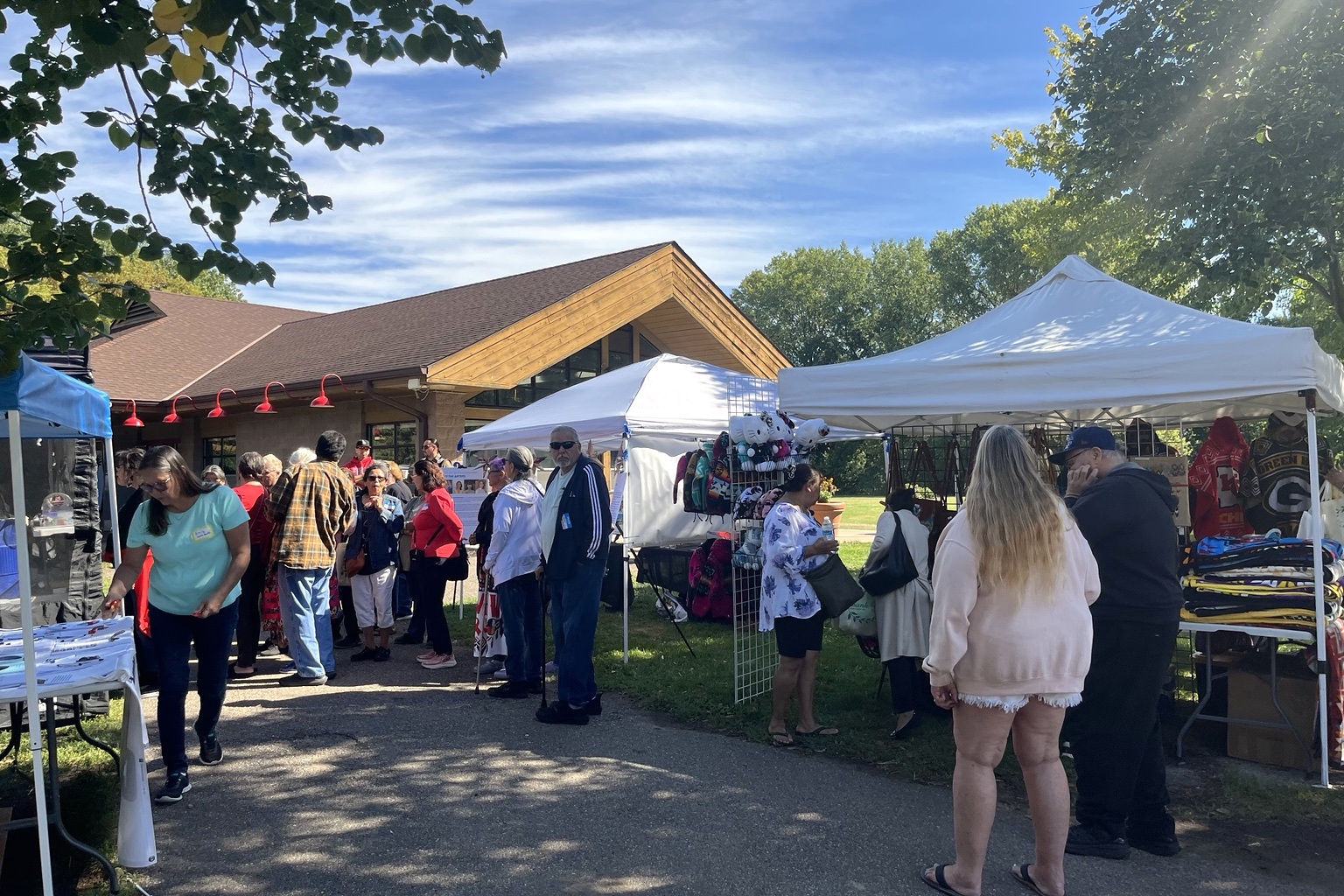
Outside of Pow Wow Grounds there’s a tall pile of firewood and volunteers tending a fire. The door to the shop is locked, as is the case at many local restaurants and shops, and a young woman opens it for me. Then I’m greeted by old friend Crow Bellecourt. He’s the director of the Indigenous Protector Movement (indigenousprotectormovement.com), which works in concert with other groups, including Many Shields and the Little Earth Protectors, on community safety.
The group’s website explains that “community safety is not just a value, it’s a sovereign responsibility. ‘Protector’ is in our name because we believe in the inherent right of Indigenous people to defend our lands, our communities, and our relatives when systems fail to do so.” As of this writing, the “systems” have failed in a remarkable way.
I asked Crow, son of the late AIM leaders Clyde and Peggy Bellecourt, about the abduction by ICE of four homeless Native men in mid-January. One man was released from detention but there is no information about the fate of the other three, according to press reports.
As we talked, volunteers prepared snack bags that were piled high on a table. All My Relations Gallery, a large room adjoining the coffee shop, has become a depot for varied supplies during the crisis. Crow, who worked for several years at Homeward Bound Native Homeless Shelter, introduced me to Vin Dion, who sang the AIM Song at an anti-ICE rally at Target Center after the massive downtown march on Jan. 23. The basketball arena, home to the Minnesota Timberwolves, was packed to the rafters for the event.
And Bob Rice, the proprietor of Pow Wow Grounds, also was at the table eating a bowl of soup. Bob has been providing soup and coffee for the volunteers. Asked about Indians being set upon by ICE agents, he mentioned that Crow’s sister and Vin’s wife, Rachel Dionne-Thunder, a leader of the Indigenous Protector Movement, recently had been in her car and was hemmed in by ICE agents about a block from the coffee shop. She alerted people who came running to her aid and the goons retreated. In numerous cases, ICE agents have backed off when confronted by angry local residents.
The crazy cases of ICE hunting down American Indians, whose families have lived on this land since before there was a USA, caught the attention of the New York Times, which ran a feature story on Jan. 28.
“Federal agents have stopped, detained or violently confronted dozens of American citizens in Minneapolis in recent weeks under suspicion of being undocumented immigrants or for protesting the government’s crackdown. But the detention of Sophie Watso stands out,” the Times reported
Watso, a 30-year-old Mdewakanton Dakota artist living in Minneapolis, was tracking ICE agents when her 2011 white Ford Ranger was boxed in by the feds. As we’ve seen in numerous videos on social media, the agents broke out the driver- and passenger-side windows on her truck, dragged her out, knocked her to the ground and applied zip-ties to her wrists.
And the Times story mentioned the “distinguishing irony” in Watso’s ordeal: the agents transported her to the Bishop Henry Whipple Federal Building, headquarters of the immigration operation and the detention lockup, which sits above Bdóte, the site where hundreds of Dakota were interned in a US government concentration camp, 1862-63.
As Watso was being driven to the Whipple Building, she sang a “Native song of hope and healing,” as per the Times story. “I knew where I was going my ancestors were there. I wanted them to hear me.”
During this time of dirty and criminal repression by the US government, the Native community in Minneapolis has risen to the challenge. According to Crow Bellecourt, his group’s efforts are part of “being good relatives.”