
{mosimage}
The Science Museum of Minnesota has recieved the Institute of Museum and Library Services’ (IMLS) Museums for America grant for its Digitization Initiative, which will allow photos and information about the museum’s 1,000-piece collection of Dakota and Ojibwe ethnology objects to be inventoried, catalogued and posted online.
The two-year project, which will cover just a fraction of the museum’s collection of nearly 1.75 million artifacts from around the world, will serve as a model for future projects, with the hope that one day, a comprehensive catalog will be complete and available online for descendent communities, educators, students, scholars, collectors, scientists, and the public to access.
“The Science Museum’s collection of objects and artifacts is
world-class, and we’re very proud of it,” says Dr. Eric J. Jolly
(Cherokee), president of the Science Museum of Minnesota. “We’re so
pleased that IMLS recognizes and shares our enthusiasm for the value of
documenting and sharing our artifacts and objects, and we’re grateful
for their funding that helps us get our digital archiving and web
publishing component off the ground.”
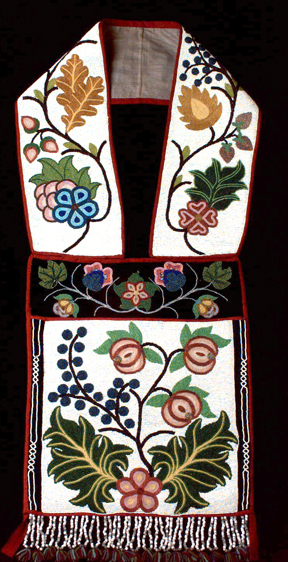
Some of the objects that
will be catalogued and published during this pilot project for the
Digitization Initiative include meticulously-crafted moccasins and
clothing, bandolier bags, parfleche containers, arrows, courting
flutes, saddle pads, birch bark containers, and even a full-size Ojibwe
canoe.
“The Science Museum’s collection of objects and artifacts is
world-class, and we’re very proud of it,” says Dr. Eric J. Jolly
(Cherokee), president of the Science Museum of Minnesota. “We’re so
pleased that IMLS recognizes and shares our enthusiasm for the value of
documenting and sharing our artifacts and objects, and we’re grateful
for their funding that helps us get our digital archiving and web
publishing component off the ground.”
Some of the objects that
will be catalogued and published during this pilot project for the
Digitization Initiative include meticulously-crafted moccasins and
clothing, bandolier bags, parfleche containers, arrows, courting
flutes, saddle pads, birch bark containers, and even a full-size Ojibwe
canoe.
“Creating on
online database of the items in our collection is something the Science
Museum has been dreaming of doing for several years,” says Tilly
Laskey, curator of ethnology at the Science Museum of Minnesota. “This
grant award will allow us to share the incredibly diverse items in our
collection with their descendant communities. It provides a wonderful
opportunity to connect our collections to the communities from which
they came, provide a teaching tool to the public, and expand our
knowledge about the items that we care for. I’m really looking forward
to the feedback that it garners.”
The project will provide
members of the Dakota and Ojibwe communities with unprecedented access
to objects that were created by their ancestors. At the same time, the
objects will be well cared for and preserved by the Science Museum’
conservation and stewardship.
{mosimage}
“The Science
Museum’s Digitization Initiative will initially benefit local Ojibwe
and Dakota tribes, but the infrastructure it creates will ultimately
benefit nations around the world,” adds Roxanne Gould (Odawa/Ojibwe),
consultant for Indian Education Programs for Minneapolis Public Schools
and member of the Science Museum’s American Indian Advisory Committee.
The
Institute of Museum and Library Services is the primary source of
federal support for the nation’s 122,000 libraries and 17,500 museums.
The Institute works at the national level and in coordination with
state and local organizations to sustain heritage, culture, and
knowledge; enhance learning and innovation; and support professional
development.
The Science Museum of Minnesota, located in St.
Paul, is among the nation’s largest science museums, it conducts
research and collects artifacts in paleontology, anthropology, and
environmental science, in addition to its ongoing work in exhibit
production and presentation. For more information about the Science
Museum of Minnesota, call 651-221-9444 or visit www.smm.org.