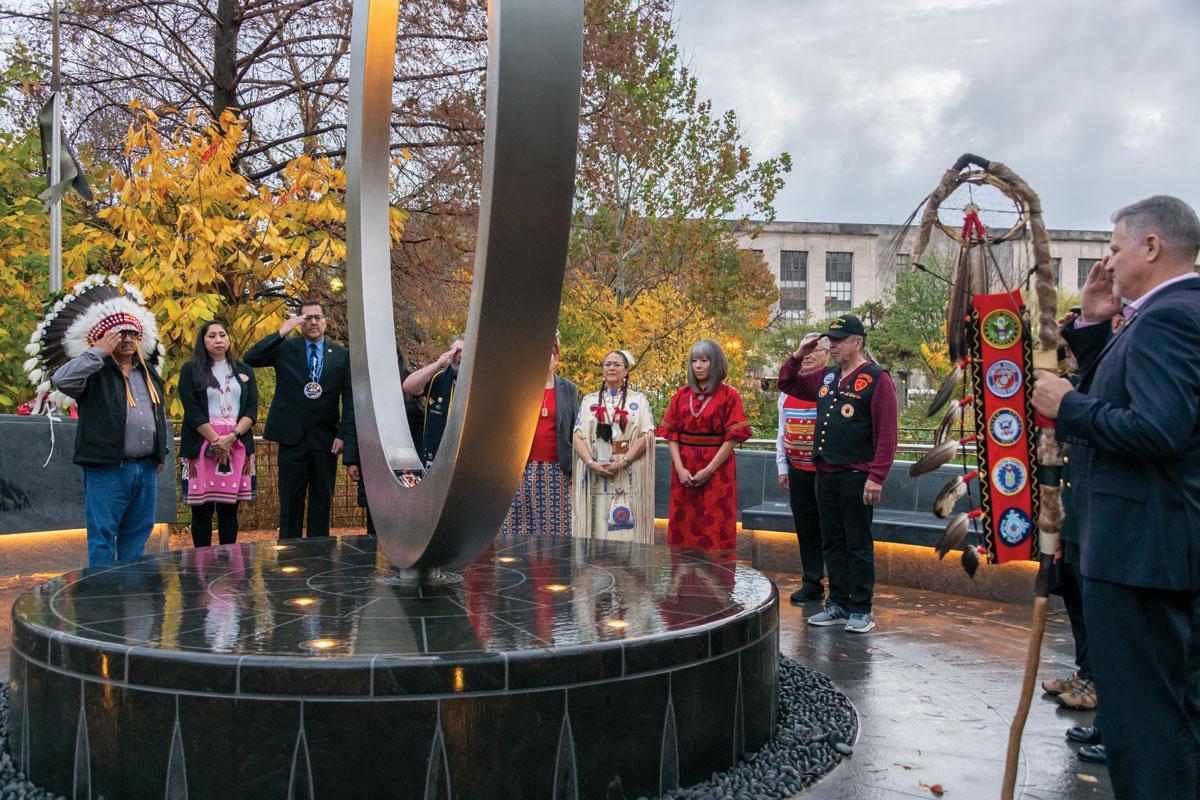
As communities across the country observe Veterans Day on November 11th, The Circle joins tribal nations in honoring the Native American men and women who have served, and continue to serve, in the United States Armed Forces.
Native Americans have a long history of military service, with participation rates historically among the highest of any racial or ethnic group in the country.
According to the United Service Organizations (USO), a historical estimate published in 2021 indicated that nearly 19% of Native Americans had served in the military since September 11th, 2001, compared to an average of 14% among other ethnic groups. However, these figures should not be interpreted as current enlistment rates.
More recent data from the U.S. Census Bureau provide another perspective. According to the 2024 American Community Survey, 6.3% of American Indian and Alaska Native adults ages 18 and older were veterans. Additionally, Census Bureau figures released in 2026 identified 150,925 American Indian and Alaska Native veterans who identified with that race alone in 2025.
Native American military service stretches back generations, including periods when many American Indians were denied U.S. citizenship and voting rights. During World War I, more than 12,000 American Indians served in the military, according to the Smithsonian’s National Museum of the American Indian. Many served before Congress passed the Indian Citizenship Act of 1924.
During World Wars I and II, Native American Code Talkers used their Indigenous languages to transmit military communications. These service members represented numerous tribal nations, including the Choctaw, Navajo, Comanche, Meskwaki, and Ho-Chunk. Their contributions played an important role in protecting sensitive military information.
Native Americans continued serving during the Korean War, Vietnam War, Gulf War, and conflicts in Iraq and Afghanistan. Today, Native American men and women continue that legacy across the branches of the U.S. military.
For many tribal communities, honoring veterans extends beyond national holidays. Native American veterans are frequently recognized at powwows, community gatherings, and ceremonies through honor songs, prayers, and other traditions that acknowledge their service and sacrifices.
Military service also holds a complex place in Native American history. Generations of Native Americans have served a country that historically denied their communities fundamental rights, while maintaining commitments to protecting their homelands, families, and future generations.
Despite their contributions, Native American veterans continue to face challenges accessing health care and other benefits. According to a 2022 Department of Veterans Affairs report, 41.6% of Native American veterans utilized at least one VA benefit or service, compared to 52.7% of veterans of other races.
As Veterans Day coincides with Native American Heritage Month, it offers an opportunity to recognize the sacrifices of Native American service members and the enduring traditions of service, leadership, and responsibility within tribal nations.
This Veterans Day, The Circle extends its gratitude to all Native American veterans, active-duty service members, and their families. Their service, sacrifices, and contributions remain an important part of Native American history and the communities they represent.
Sources:
- U.S. Census Bureau – National Native American Heritage Month 2026
- U.S. Census Bureau – Honoring Veterans Across Tribal Nations
- United Service Organizations (USO) – A History of Native American Military Service
- Smithsonian National Museum of the American Indian – Native American Code Talkers
- U.S. Department of Veterans Affairs – More Benefits Claims Support Available to Native American Veterans