
Vegas on Hennepin
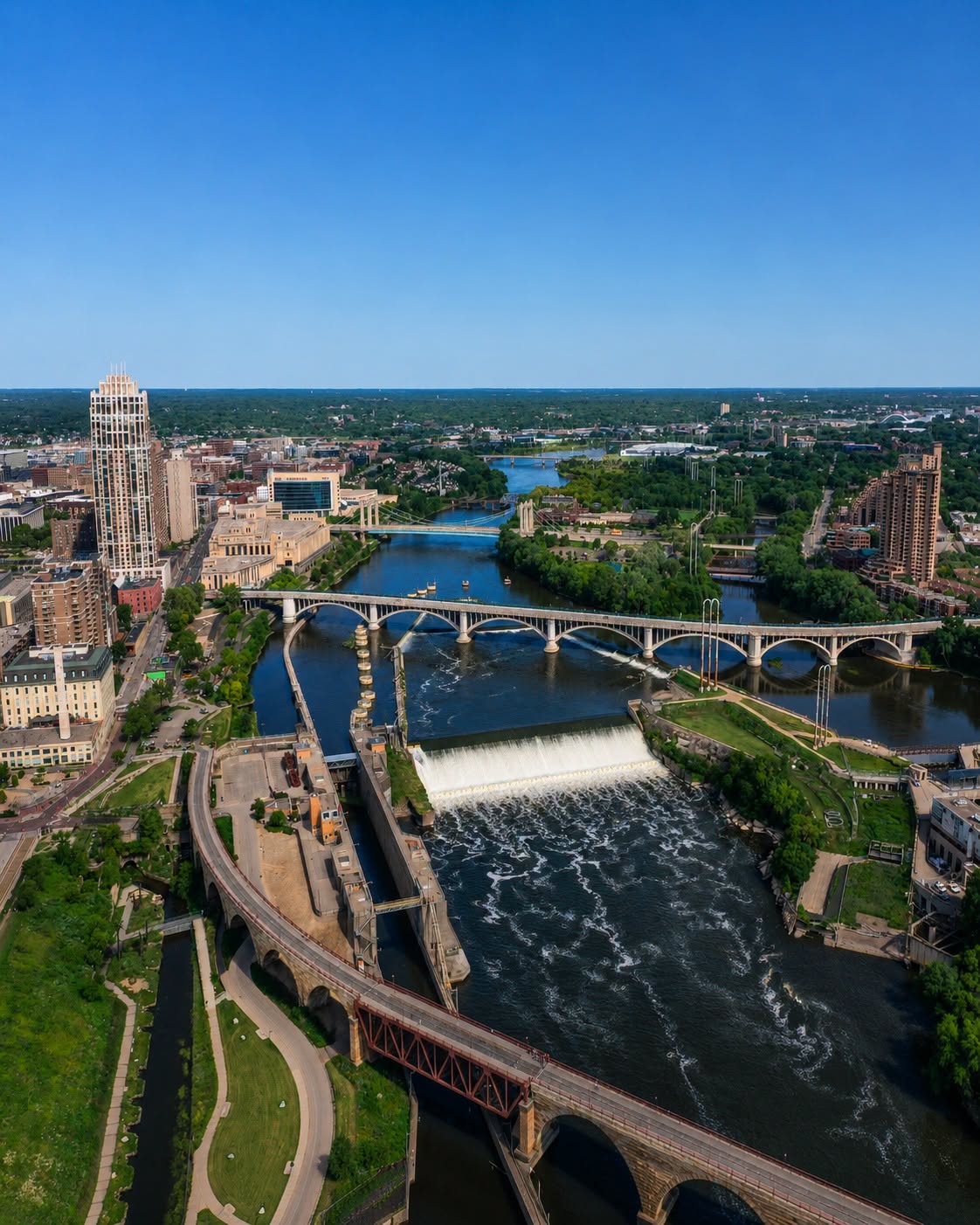
Politicians, business interests and labor unions are applying a full-court press to build a new stadium for the Vikings (to mix sports metaphors). Team owners Zygi and Mark Wilf favor the old arsenal site in Arden Hills, while Minneapolis boosters – including Mayor R.T. Rybak and the Minneapolis Downtown Council – are dangling sales tax money to lure the Purple People Eaters to one of three proposed sites in the Mill City.
Of course, the Vikes have fallen on hard times of late (a dismal 2-9 on the season, as The Circle goes to press); but this is Political Matters, not the Sports Report.
Over at the Capitol, two Senate committees held a joint hearing Nov. 29 to hear testimony on proposed stadium sites. There is no bill in the hopper; and there is no funding mechanism for a new stadium (beyond the Wilfs’ offer to put up $425 million, with the remaining $600 million coming from somewhere).
A faction in the Legislature, comprised of both Republicans and DFLers, is adamant that no public money be used to build a football stadium; at the same time, a knowledgeable source in St. Paul told me that the building trades unions and the Minnesota Chamber of Commerce are flexing their muscles in support of a new home for the Vikings.
The clamor for a football stadium inevitably has breathed life into proposals to expand state- sanctioned gambling. A racino (casino at an existing racetrack), slot machines in bars and electronic pull-tabs are part of the discussion about a new revenue stream – as has been the case for the past 18 years or so.
And a new proposal is gaining momentum: a casino on Block E in downtown Minneapolis. An outfit called Alatus LLC bought the Block E complex last year, and they argue that a casino there could generate $125 million a year in tax revenue for Minnesota government coffers. The building trades unions support the project, as does United Here! Local 17, which represents hotel and restaurant workers.
I have been interested in the odd coalition that has opposed the expansion of state-sanctioned gambling over the years. The Minnesota Indian bands, which have a monopoly on casino gambling in the state – operating 18 casinos – have been quite skillful in their political lobbying against the state expanding gambling options.
The Minnesota Indian Gaming Association – which argues that a casino, or racinos, in the metro area will cannibalize their industry – is joined by the Joint Religious Legislative Coalition (JRLC) and the ultra-conservative, anti-gay Minnesota Family Council, in opposing more gambling. Brian Rusche is the executive director of the JRLC, which is comprised of mainstream Jewish, Christian (Protestant and Catholic) and Muslim groups. He told me that his organization opposes gambling from a "social/moral" perspective: there are deleterious social costs from gambling, including family violence, divorce, theft, embezzlement and the attendant criminal justice expense. Rusche cited a study which found that a typical casino business model derived 48 percent of revenue from problem gamblers.
Regarding the passage, in 1988, of the federal Indian Gaming Regulatory Act, which established the Indian casino gaming industry, Rusche said that Indian tribes "had no foothold in the economy." Intractable poverty in Indian country constituted what Rusche termed a "unique set of circumstances," which led to the establishment of a system of tribal-state compacts that created an economic engine for the reservations. And if the state sanctions a casino at Block E, for example, tribal gaming interests will gear up their marketing to maintain market share, according to Rusche; this will lead not to an expansion of gambling, but an "escalation of gambling."
"It’s bad public finance," said Rusche, regarding schemes by Minnesota politicians to generate revenue by going all-in on gambling. The Minnesota Senate will hold another Vikings stadium hearing on Dec. 6, which will consider various funding options.
War for oil
I happened to run into Fred Veilleux while shopping on East Lake Street – at what we call "Targhetto." He told me about his new video documentary, "The Real Reason for the Invasion and Occupation of Iraq," and later delivered a copy.
Fred explores government documents that detail how ExxonMobil, Shell, BP and other oil giants gained concessions to 11 percent of the world’s oil reserves, after the Coalition Provisional Authority rewrote Iraq’s laws "during the first 14 months of the occupation, in violation of international law."
The 2-hour documentary will air on the Minneapolis Television network later in December. For air dates, contact Fred at: veill004@umn.edu or call 612-245-9303.