
By Lee Egerstrom
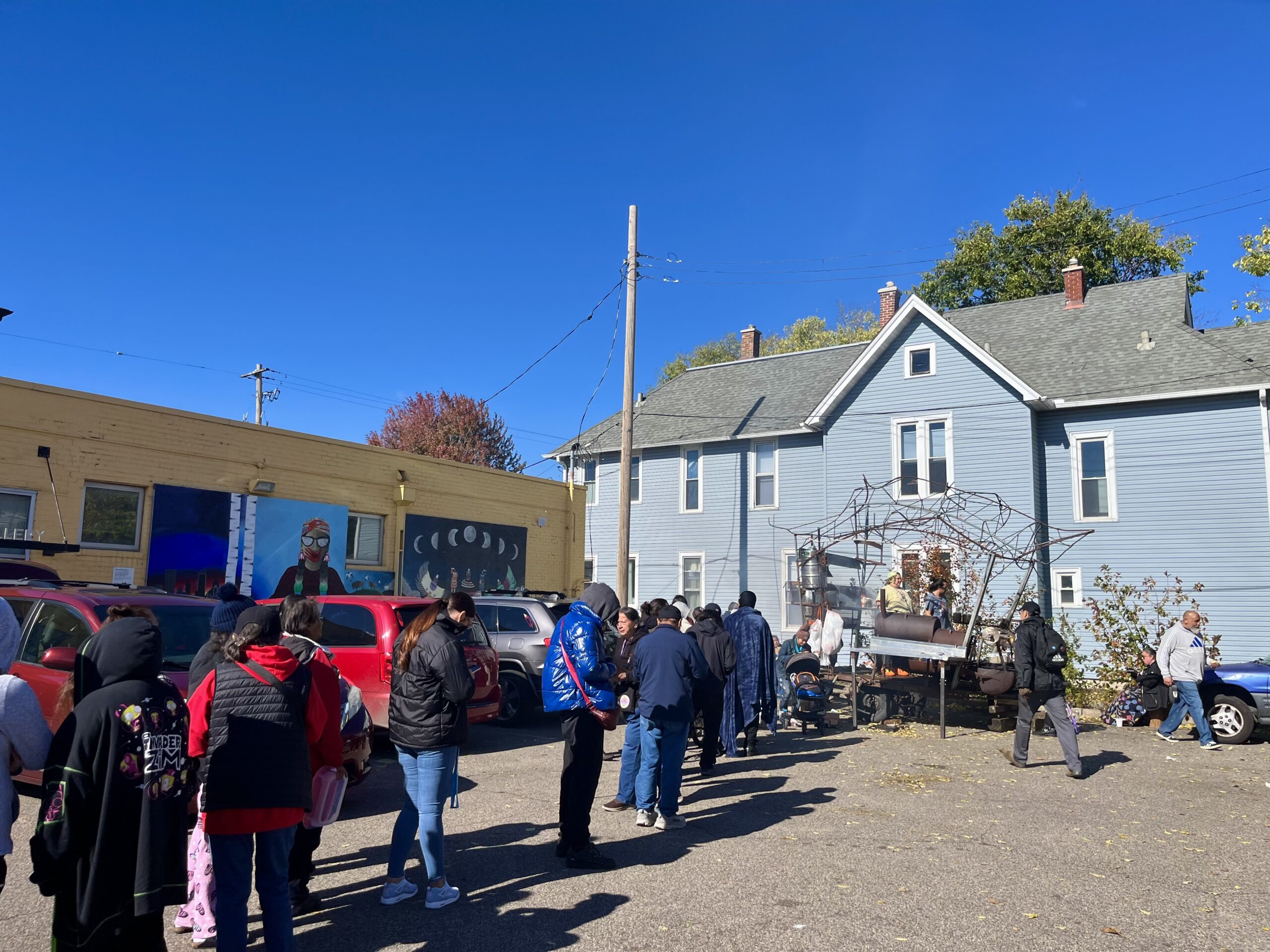
Demolition work in warehouse property in south Minneapolis is underway to convert space into a temporary Navigation Center for the 300 or more mostly American Indian homeless living at the Wall of Forgotten Natives encampment.
The Minneapolis City Council authorized $1.5 million on Oct. 19 to convert the property at 2109 Cedar Ave., owned by the Red Lake Nation, to serve as the transition, or Navigation Center. That work started in late October, said Patina Park, executive director of the Minnesota Indian Women’s Resource Center (MIWRC) and the current chair of Minnesota Urban Indian Directors (MUID), a coordinating body for Native American organizations.
Current plans call for moving people into warm, more protected temporary housing in the center beginning in early December. Tented domes, like those used for all season tennis courts and indoor golf driving ranges found throughout the metro area, are being planned as protective covering within the Navigation Center site.
The Minneapolis City Council said in its announcement of the funding that the temporary site will remain in place until the end of May. That should cover the worst weather and temperatures the homeless would encounter this winter, and support the social and health services groups are providing the homeless.
Using available space like the Red Lake property for transitional housing is modeled after similar projects in Seattle, San Francisco and San Diego – all expensive housing metropolitan areas with low vacancy rates and little affordable housing.
Nonprofit organizations, such as the American Indian groups in the Twin Cities, are working with city and county officials on other immediate needs and longer term fixes for the chronic, affordable housing problems affecting Natives and others from low income households, Park said.
These groups are “making sense, rationalizing” what their strengths are and how best they can serve the homeless community living in the Franklin-Hiawatha encampment, she added.
For instance, she said, the American Indian Community Development Corp., headed by Mike Goze, is working on immediate and long-term housing needs, while Red Lake officials are more focused on the temporary use of their property. Along with that, Park said, Red Lake is part of the long-term “fix” for the housing crisis since they plan to develop the property into affordable housing.
Also, the Natives Against Heroin (NAH) group works with social services and health organizations on related drug problems among the homeless. And the nearby Native American Community Clinic (NACC), which has been involved with health and wellness services within the encampment, is now partnered with LIVIO, or Livio Health Group in Minneapolis, which operates mobile clinics and in-home care services for people and communities in need.
Park’s own Minnesota Indian Women’s Resource Center continues to find, house and supply needed personal and family needed items. Groups and volunteers have been supplying large amounts of items, she said, but at this point cold-weather winter clothing is still needed but fire wood for open fires doesn’t help.
“The (Minneapolis) fire marshal is there every day. We can’t have open fires for safety reasons,” she said.
The City has been working with tribal, community and government partners for several weeks on a response to the homeless encampment located along a sound wall on the east side of Highway 55 near the Little Earth community. In addition to working on the development of the temporary Navigation Center, the City and its partners have been coordinating ongoing outreach efforts at the encampment focused on connecting people to healthcare, emergency shelter and other supportive services.
Meanwhile, as October came to a close, Park said the Indian and nonprofit organizations and government agencies were still engaged in daily planning in a race against snow and cold.
The following links will provide you information about key players in planning for the Navigation Center, and how you may help by volunteering, donating or providing still needed supplies and foodstuffs:
• The Wall special encampment: www.franklinhiawathacamp.org
• Natives Against Heroin: www.gofundme.com/NativesAgainstHeroin
• American Indian Community Development Corp.: www.aicdc-mn.org
• Native American Community Clinic, http://nacc-healthcare.org
• LIVIO: www.liviohealth.com
• Indigenous Peoples Task Force: http://indigenouspeoplestf.org
• American Indian OIC: http://aioic.org
• Church of Gichitwaa Kateri: www.katerimpls.org/Home/Church
• Division of Indian Works: www.diw-mn.org.