No data was found

Alaska Airlines Passenger Says She Was Told to Remove Sacred Medicine Pouches

Writer
Share :
Facebook
X
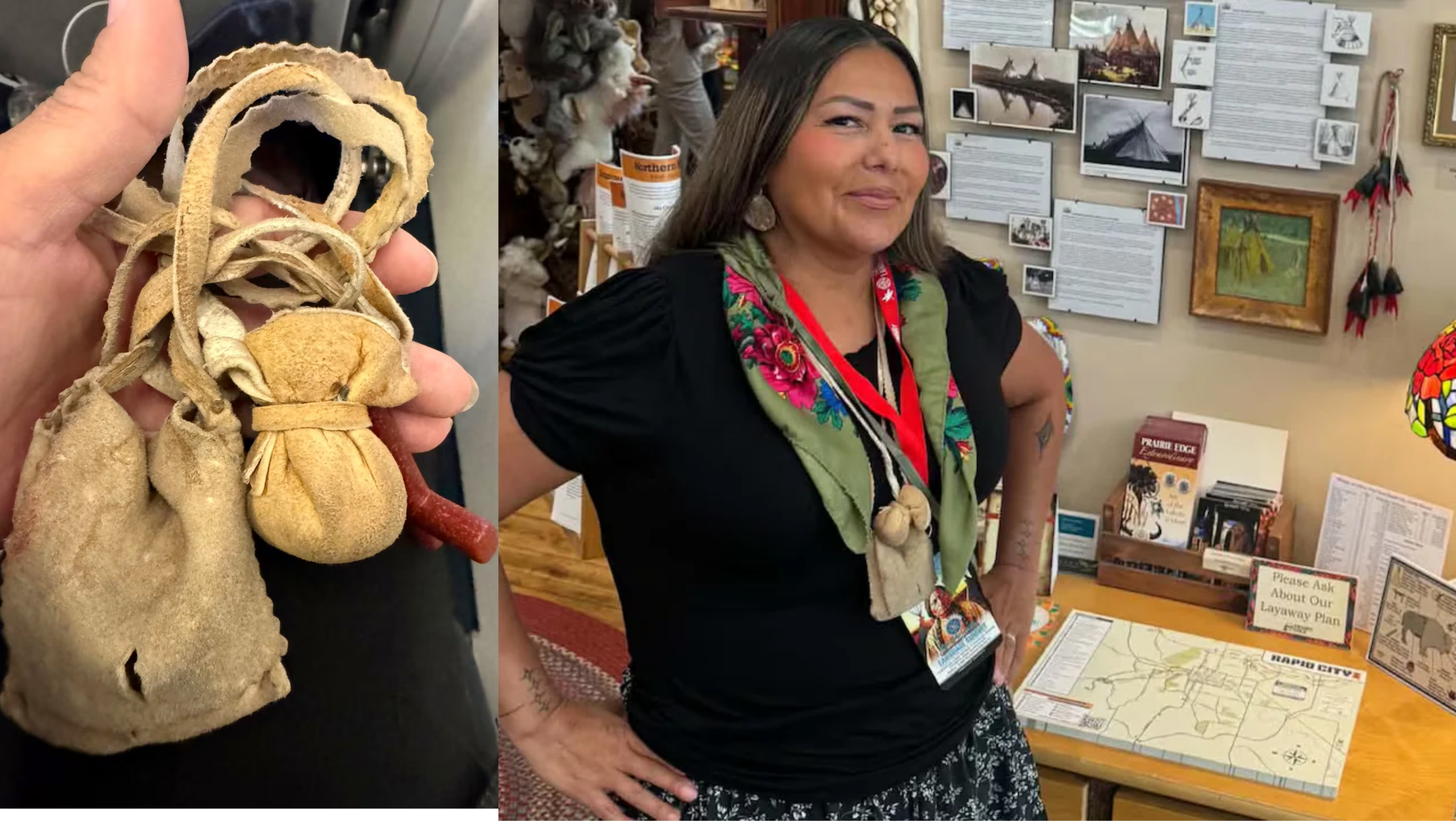
A hand holds Tipiziwin Tolman’s deer-hide medicine pouches, which contain íŋyaŋ wóawaŋyaŋke (protection rock), according to CBC.(Left) Tipiziwin Tolman stands beside a display, wearing her medicine pouches around her neck.(Right)
No data was found

Tipiziwin Tolman, a Dakota and Lakota student from the Standing Rock Sioux Tribe, says a flight attendant on an Alaska Airlines flight from Seattle to Vancouver told her to remove the medicine pouches she wore around her neck or leave the plane.

Tolman was traveling to a First Nations Language Keepers conference in Saskatoon. She told CBC News the attendant said passengers could not wear anything around their necks during the flight. Tolman pointed out that the attendant was wearing a scarf and asked to see the airline’s policy. According to Tolman, the attendant replied that she was working and Tolman was a passenger, and told her she could deplane.

Tolman said she had worn the pouches through airport security and on previous flights without being asked to remove them. She wears them for protection. Made of deer hide and tied with a leather string, the pouches contain íŋyaŋ wóawaŋyaŋke, or protection rock, and she said she rarely takes them off.

Tolman said she felt humiliated and chose to remove the pouches rather than risk missing the rest of her trip. She held them in her hand during the flight. She later contacted Alaska Airlines customer care; Tolman said the airline apologized and offered her a $50 U.S. credit.

In a statement to CBC Indigenous, Alaska Airlines said it reviewed the incident and acknowledged Tolman did not receive the standard of care and service the airline expects to provide. The airline said it was addressing the matter internally and reinforcing safety policies with the crew members involved.

Tolman said she supports cultural competency training for airline crew members. She said respectful communication could have changed how the interaction unfolded, and that Indigenous passengers should not be singled out or treated without dignity.

The article also notes that the U.S. Transportation Security Administration has guidance for screening Indigenous cultural, sacred, or religious items, including hand screening by request. The Canadian Air Transport Security Authority says its screening officers are instructed to work with passengers so sacred or spiritual items are handled with sensitivity and respect.

Sources

Writer,
General News
Miiskogihmiiwan “Miisko” Poupart-Chapman is a Dakota and Ojibwe writer, artist, and social media coordinator for The Circle. She is Dakota from the Sisseton Wahpeton Oyate, an enrolled member of the Lac du Flambeau Band of Lake Superior Chippewa, and Bear Clan. Her work celebrates Indigenous voices, creativity, and community.

This reporting is made possible by readers like you.

The Circle is a nonprofit newsroom with no tribal affiliation, no corporate ownership, and no paywall. Independent Native journalism depends on reader support.

Advertisement

NOV-JAN Federal Changes Ad (1080 x 1080 px) - The Circle (1)

Recent Stories

Advertisement

NOV-JAN Federal Changes Ad (1080 x 1080 px) - The Circle (1)

More From NewsUncategorized

Montana’s American Indian Caucus to Reach Historic 14 Members in 2027 Legislature

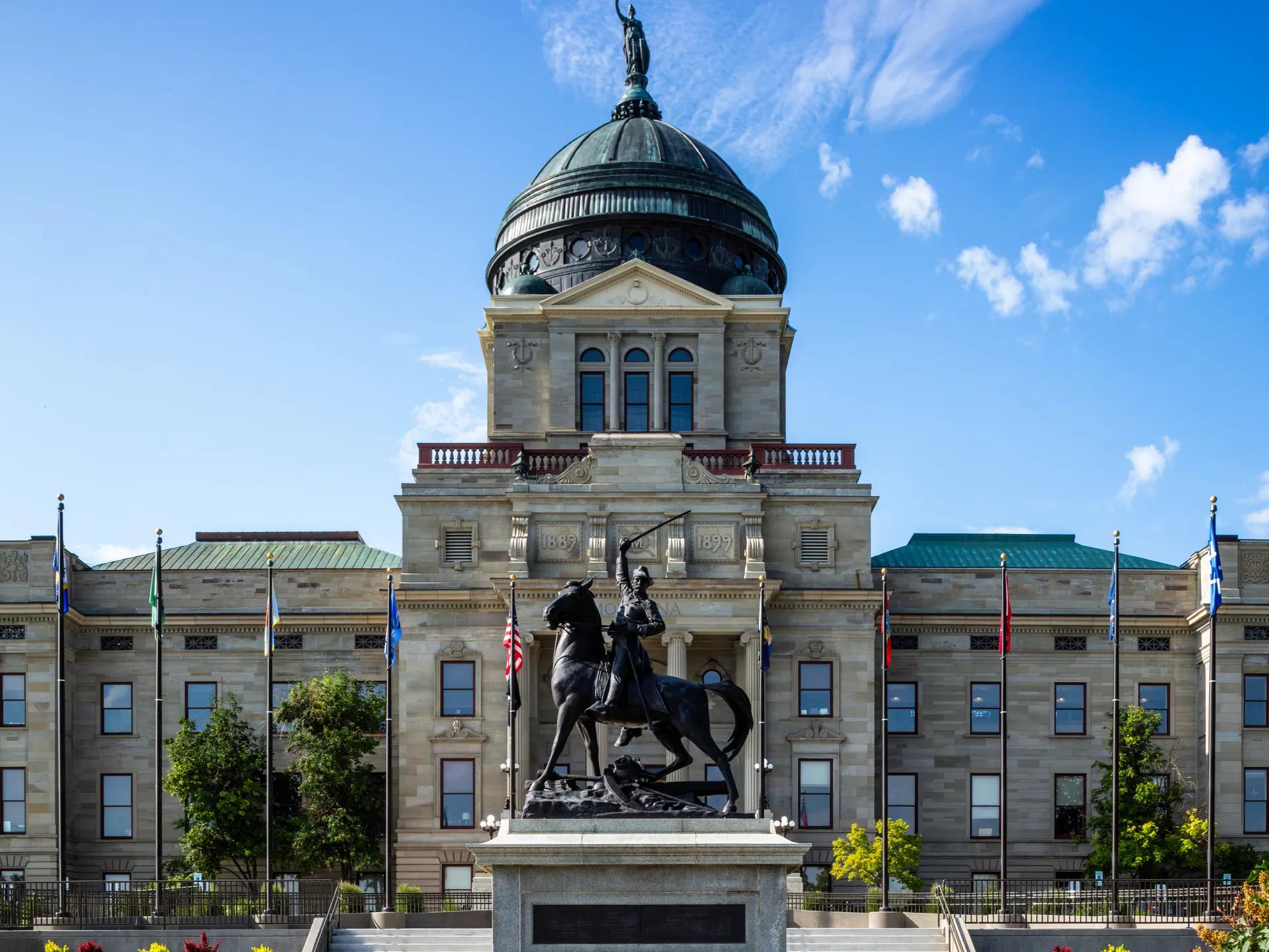
Montana’s American Indian Caucus is set to reach a historic milestone following the November 3rd general election, with at least 14 Native American lawmakers expected to serve during the state’s 2027 legislative session, making it the largest Native legislative caucus in Montana history. The milestone represents an increase from the 12 Native lawmakers who served […]

Tribal Organizations Warn Revised Federal Permitting Bill Still Threatens Sacred Sites and Tribal Sovereignty

The U.S. Senate has taken two procedural steps toward considering a sweeping federal permitting reform proposal, despite continued opposition from Tribal Nations and historic preservation advocates who warn the legislation could weaken consultation rights and protections for sacred and culturally significant sites. On November 9th, senators voted 73–25 to invoke cloture on a motion to […]

‘Valuable to learn’: Students take first Ojibwe class offered at Anoka-Hennepin schools

By Chandra Colvin | MPR News Originally published November 2nd, 2026. Republished with permission from MPR News. Ojibwe teacher Tayah Reyes takes attendance while speaking the language at Coon Rapids High School, just north of Minneapolis. About 20 students, from freshmen to seniors, respond to their names with “indaaya oma” to announce their presence. Reyes […]

No data was found

Search The Circle

Find stories, columns, events, and magazine features.

Help The Circle Recover & Preserve Native History

FIRE RECOVERY & ARCHIVE PRESERVATION FUND

A recent fire at the building housing The Circle’s office has created unexpected challenges for our independent Native newspaper.

Thankfully, with the help of community members, we were able to recover our newspaper archives dating back to the 1980s. These irreplaceable records preserve decades of Native community history, cultural knowledge, and stories.

Your donation will help The Circle recover from the fire, protect our historical archives, and continue sharing Native voices for generations to come.

Every contribution makes a difference.

Pinagigi — Thank you for helping preserve generations of Native stories.