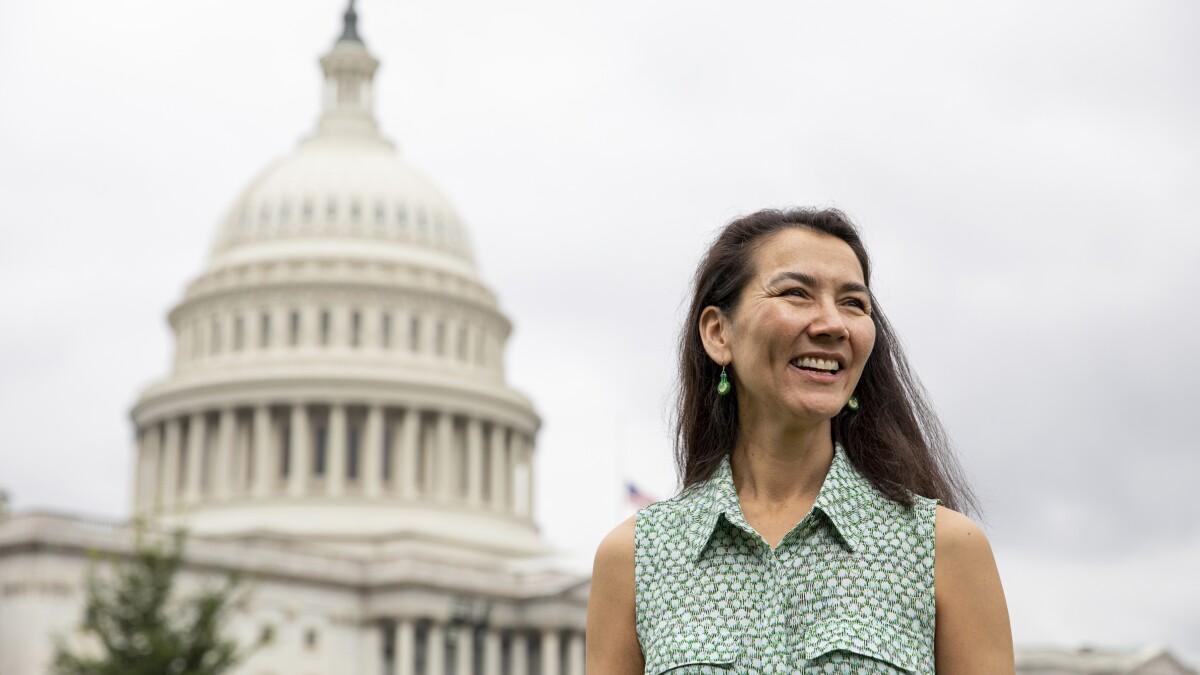
Mary Peltola, a Yup’ik Alaska Native and former U.S. representative, has made history once again after defeating incumbent Republican Sen. Dan Sullivan in Alaska’s closely contested U.S. Senate race.
The Associated Press declared Peltola the winner on November 17th, two weeks after Election Day, making her the first Alaska Native elected to the U.S. Senate. Her victory also makes her the second Native American woman elected to the Senate, following Minnesota’s Peggy Flanagan, a citizen of the White Earth Nation, who won her election earlier this month.
The two women are expected to make history together when the new Congress convenes in January 2027, becoming the first Native American women to serve in the U.S. Senate.
Peltola previously made history in 2022, becoming the first Alaska Native elected to Congress and winning Alaska’s sole seat in the U.S. House of Representatives. She served until January 2025, after losing her 2024 reelection bid to Republican Nick Begich.
Her political comeback marks another significant milestone for Indigenous representation in the federal government.
According to the Associated Press, Peltola secured approximately 50.1% of first-choice votes, enough to win outright without requiring additional rounds under Alaska’s ranked-choice voting system.
Throughout her campaign, Peltola emphasized affordability, protecting Alaska’s fisheries, and addressing the challenges facing rural communities. Her campaign focused particularly on the rising costs of groceries, fuel, and healthcare, along with concerns about declining salmon populations that affect subsistence fishing and Alaska Native communities.
Peltola’s victory also carries national political significance. By flipping a Republican-held Senate seat, she helped expand the incoming Democratic majority to 56 seats, compared with 44 held by Republicans.
For Native communities across the country, the elections of Peltola and Flanagan represent a historic expansion of Indigenous voices in federal leadership.
Both women bring experiences rooted in their respective Native communities to a legislative body where Native American women have historically been absent.
As Peltola prepares to represent Alaska and Flanagan prepares to represent Minnesota, their elections mark a new chapter in Native American political representation and the growing presence of Indigenous leadership in Washington, D.C.
Sources: