
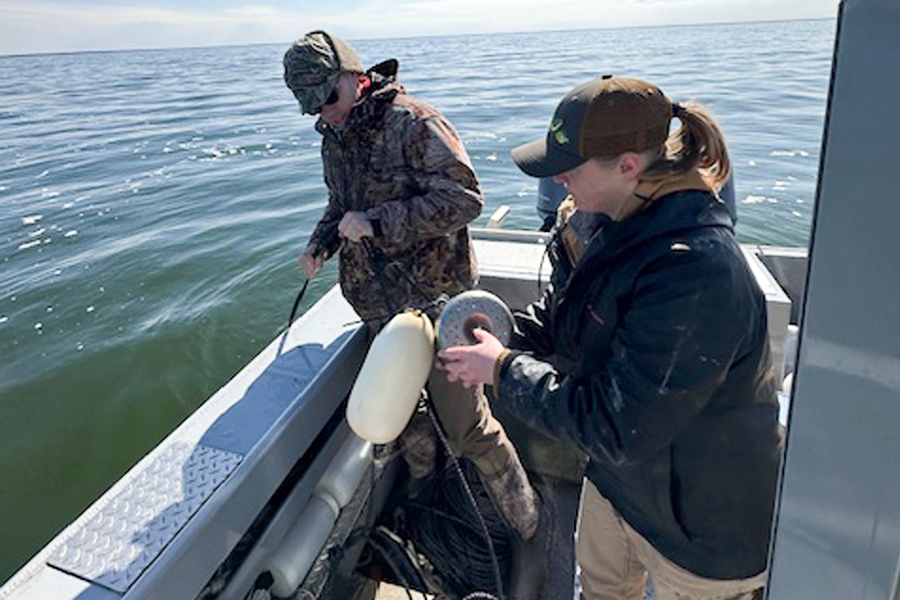
Three Minnesota tribal nations are working with researchers to investigate contaminants in lakes, waterways, and fish to protect water quality, traditional food sources, and the health of their communities.
The Red Lake Nation, Fond du Lac Band of Lake Superior Chippewa, and Grand Portage Band of Lake Superior Chippewa are participating in a tribal-led research project supported by the University of Minnesota.
The research focuses on contaminants of emerging concern, including pharmaceuticals, personal care products, and per- and polyfluoroalkyl substances, commonly known as PFAS or “forever chemicals.”
According to a November 17th report from the University of Minnesota, tribal resource managers collected water and fish samples during the summer of 2026 to test for nearly 200 different contaminants.
Researchers are now analyzing the samples and working with tribal partners to interpret the findings.
Tyler Orgon, a biologist with the Red Lake Nation, said the tribe has long been interested in better understanding contaminants in Upper and Lower Red Lake.
Previous research conducted by the Grand Portage Band helped create opportunities for the current partnership, allowing Red Lake to begin examining the presence of these substances in its waters.
The research is particularly important for tribal communities whose cultural practices, diets, and traditional ways of life are closely connected to fishing, hunting, and gathering.
Contaminants entering waterways can affect aquatic ecosystems and potentially accumulate in fish and other traditional foods.
Bonnie Keeler, director of the University of Minnesota’s Water Resources Center and a project leader, said previous Grand Portage research identified contaminants in culturally important foods and resources, including samples collected in remote areas.
The findings raise broader questions about how widespread these substances may be in the environment and how communities can respond.
Researchers are also examining how the results could inform future water quality standards, environmental policies, and fish consumption guidance that accounts for tribal cultural practices.
The project emphasizes that protecting public health should not require Native communities to abandon traditional food harvesting or treaty-reserved rights.
Instead, researchers hope the findings will help state and federal agencies identify ways to address environmental contamination and reduce the burden placed on tribal nations.
Another challenge involves the lack of established health-based guidance for many emerging contaminants found in wild foods.
Without clear standards, researchers and tribal resource managers may struggle to determine the potential health risks associated with certain substances.
The collaborative effort includes researchers from the University of Minnesota, Bemidji State University, and environmental agencies, alongside tribal natural resource professionals.
The project is expected to be completed in summer 2027.
For participating tribal nations, the research could provide information to support environmental protection efforts, inform future policy decisions, and help preserve culturally important waters and traditional food sources for future generations.
Source: