

By Mark Anthony Rolo
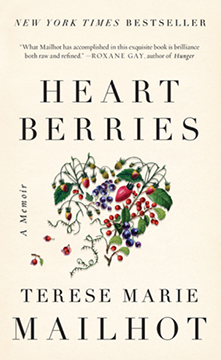
In her first collection of essays, Therese Marie Mailhot weaves a memoir that is lyrical and intimately revealing of a once guarded interior story of surviving abuse and mental illness. “Heart Berries” is a most welcomed story by Mailhot (a member of the Seabird Island Indian Reservation of the Pacific Northwest) because she gives an honest, poetic, even healing voice to the many, many Indian women suffering in silence.
Beginning with time spent with a Christian grandmother who loved carnations, canned milk and cooking without recipes, Mailhot learned at an early age the price Indian women pay. “When she (grandmother) died nobody noticed me. Indian girls can be forgotten so well they forget themselves.”
Finding herself hospitalized in a psych ward, Mailhot tells of her struggle to relate to the non-Native women in group therapy. She recalls the group counselor instructing the women to learn to forgive themselves. This made little sense to Mailhot, a culture clash of white values and Indian beliefs. “In my culture, I believe we carry pain until we can reconcile with it through ceremony.”
This clash would add to the fog of trying to recover from the darkness of depression and moving into healing light. Mailhot leaves the hospital but she does not feel that healing. She is not sick enough to stay in the psych ward and yet she can’t function in the workplace, and locking herself inside her home is all she can do to make it through the long days.
But her journey turns upward when she receives a scholarship to enroll in a creative writing program at the Institute of American Indian Arts in Santa Fe, New Mexico. Writing her way through the loneliness of childhood, engaging with men whom she had no deep feelings for and being a mother, Mailhot begins to trace her journey with new eyes.
“Nobody wants to know why Indian women leave or where they go. Our bodies walk across the highway from the dances of our youth into missing narratives without strobe lights or sweet drinks in our small purses, or the talk of leaving. The truth of our leaving or coming into the world is never told.”
Mailhot graduates with a creative writing degree. She described the experience as a “renaissance.” Like her decision to metaphysically crawl out of her mother’s grave, leaving her behind, Mailhot learns to forgive her parents. “You are formless to me now. But, still, your pine and winter willow are in my body. As my grandmother’s olive seed and red hill earth.”
In the book’s Afterword, an interview with Inupiaq American poet, Joan Naviyuk Kane, Mailhot puts into perspective the healing power of writing down her voice. And it began with reclaiming her own voice that was once drowned out in the screams of the dominant culture. “So where are we? Who is telling our story? Who is preventing misreading? No one. Violence happens throughout bodies. Isn’t that how colonialism used to work? So where are we? Where we have always been. Where are you?”
“Heart Berries” is a remarkably honest and brutal telling of survival, hanging on until the light appears. Mailhot is a stunning, seasoned writer despite the fact that this is her first published work. Her razor sharp look into her deeper self and into the world at large paints a picture that brings clarity to those lost in the maze of abuse and mental turmoil. Too many books about pain and mental illness focus on the details of the tragedy, in an almost grotesque manner. But “Heart Berries” is woven with such longing to find healing, to make some point of the past, and to find a reason to long for the universe to guide her. It is truly a treasure.
Unfortunately, Spokane Indian writer, Sherman Alexie penned the Forward. I say this because in recent months the writer has been accused of numerous unwanted sexual advances by Indian women. Unfortunate, because Alexie was instrumental in encouraging Mailhot with her story. But diving into the very first pages of her wonderful memoir the reader might realize that Mailhot does not need Alexie to help tell her story.