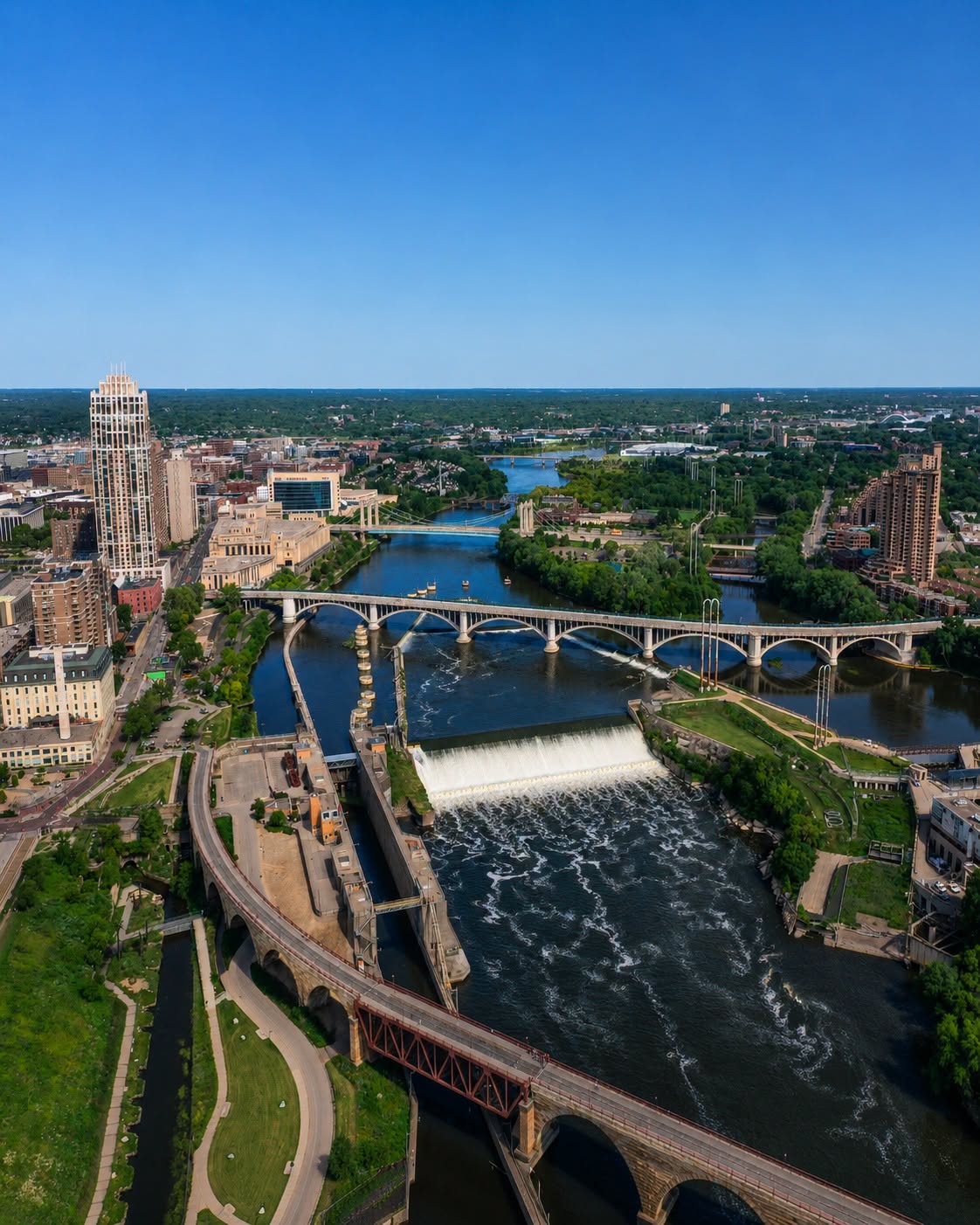

A proposed canoe route through the Twin Cities portion of the Mississippi River seeks to host thousands of children at camp grounds built upon Native American holy sites along the river.
In May representatives of the Urban Wilderness Canoe Adventures (UWCA), National Park Service, Minnesota Department of Natural Resources, Boy Scouts of America, Friends of the Mississippi River, City of St. Paul, and Minneapolis Public Schools met at Picnic Island in Fort Snelling State Park, to tout a plan to facilitate canoe travel though the Mississippi Gorge, a 50-mile stretch that cuts across the Twin Cities metro area. The Gorge currently contains no designated campsites.
Across a narrow channel of sludge strangled water, the flood plain upon
which a Dakota concentration camp once stood went unacknowledged by the
eighty politicians, educators, bureaucrats, and reporters attending the
meeting. UWCA stakeholders paid lip service to “the Dakota belief that
this area is the center of the world.” Dakota people, however, were not
represented at the meeting.
Spearheading the UWCA effort is Minneapolis-based Wilderness Inquiry, a
non-profit organization whose mission “is to help people from all walks
of life to personally experience the natural world.” According to its
promotional literature, Wilderness Inquiry “aims to serve 10,000 youth
per year on canoe trips on the Mississippi River.”
Wilderness Inquiry officials have stressed that specifics, such as the
proposed locations of campgrounds, sanitary facilities, and other
amenities, have not yet been established. On its website, however,
Wilderness Inquiry is already advertising the urban canoe experience:
“Paddle the oldest highway in Minnesota and get to know the Twin Cities
in a whole new way. Learn about historic Fort Snelling while you camp
in its shadow on Picnic Island.”
Both Picnic Island and Grey Cloud Island – the campsites identified by
Wilderness Inquiry’s online route description – are places of immense
historical, cultural, and spiritual significance to the Dakota people.
The proposed Picnic Island camp is adjacent to Pike Island, considered
by many Dakota to be the birthplace of their nation. It is also within
a stone’s throw of the Fort Snelling Concentra-tion Camp, where 1700
Dakota people were imprisoned in the winter of 1862-1863 following the
U.S.-Dakota war. An estimated 300 Dakota died of malnutrition, disease,
and exposure.
On November 11, 1865, more blood was spilled on the site when Dakota
leaders Sakpe and Medicine Bottle were hanged at Fort Snelling for
defending their people in the war.
While the UWCA plan is yet to be finalized, at least one organization
is already using Fort Snelling as a recreational campground. Despite
the site’s tragic history, a group called Friends of the Mississippi
River continues to hold its annual campout at the fort. In conjunction
with Mississippi River Challenge 2009, the Friends’ 6th annual
fundraising event, hundreds of paddlers and their supporters will spend
the evening of July 25, “enjoying a hearty meal, live music, cold
beverages including root beer and Summit beer, historic actors and
more.”
Evidence of indigenous habitation on Grey Cloud Island, in present day
St. Paul Park, dates to 100 B.C. The island contains the greatest
concentration of burial mounds in the region. The Mdewakanton band
headed by Medicine Bottle lived on Grey Cloud Island until forced to
vacate under the 1837 treaty.