
{mosimage}
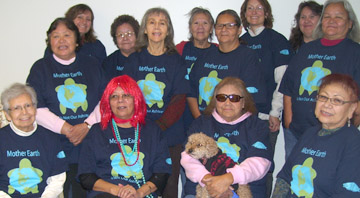
Attention Native smokers: before going out for your next smoke break, be advised that you are likely to be approached by a Native elder who has made a commitment to educate Native smokers in the Twin Cities about the deadly health affects and overuse of non-commercial tobacco.
The elders have been trained to approach smokers in the Native community and speak with them about tobacco. They don’t expect you to extinguish your cigarette, or quit cold turkey. They simply want to uphold their role as Native elders and advise you about the dangers of commercial tobacco, and the value of traditionally harvested tobacco.
The elders were approached a year ago at the Inter-tribal Elder Services and asked to commit to learning about natural tobacco for a few hours a month. They had learning circles to teach them ways to approach smokers in a safe, friendly, and informational way. The elders were also taught how to make traditional kinnikinik (tobacco) from Red Willow.
“They feel more confident in talking to people. As an elder, they feel responsible” says Chris Rhodes, coordinator for the group at the University of Minnesota School of Public Health., which funded the one-year pilot program along with ClearWay for Community Academic Research, and the American Indian Policy Center. The goal of the program is to provide elders with the knowledge and support to be leaders in the tobacco control movement, a new movement that is grounded in the ceremonial traditions of tobacco use.
Each elder’s mission is to speak to individuals about the dangers of commercial tobacco, and to identify ways to build a healthier relationship with tobacco through community strengths and cultural values.
Aside from sharing information about what smoking does to your health, the elders are also likely to talk about the Native way of life. They might menton that you should greet them and honor them as if they are your grandparents. They might also tell you why Natives should not use commercial tobacco. That it is processed, and it is not the traditional tobacco used by our ancestors. And that traditional tobacco should not be inhaled.
One of the elders, Carol Hill says “We need to be returning to a healthier way to use tobacco. There aren’t the health affects if used properly. A lot of times tobacco is not burned, it is made as an offering outside by a tree or near water. The smoke is not inhaled, that is the gift to Creator.”
Another elder, Marcy Hart, talks about the difference between commercial tobacco and traditional/Native tobacco. “Our ancestors did not use processed tobacco. They [the tobacco industry] add chemicals and they use fertilizers and that stuff goes into your body and lungs,” said Hart.
“Think about commercial tobacco versus traditional/Native tobacco. It [Native tobacco] comes from Mother Earth. The tobacco plant itself is natural. It’s organic. The difference of commercial tobacco and natural tobacco is comparable to wild rice and patty rice. The patty rice is grown on large scale and is probably not as natural or organic. Which would you rather eat?” said Hart.
But where can people get natural tobacco? Rhodes said, “You can’t sell tobacco.” Meaning it can’t be bought. “American Indian Spirit is still processed, it’s still commercial” she said.
So how does the Native community begin to uphold what is traditional if traditional tobacco is not readily available? George Spears, Program Director of Health Services at the Division of Indian Work has applied for two grants recently to buy land for an organic garden which would grow natural tobacco. Both grants were denied. He is currently seeking further grants for this purpose.
Some of the elders who might approach you at the Light rail, bus stop, in front of the clinic, near the Indian center, or anywhere outside are ex-smokers themselves, quitting after being approached by their own children.
“My kids came home and told me they didn’t want me to die, so I quit. I was their sole supporter. I didn’t want them to grow up without any parents at all” said Hart.
One elder, Barb Benjamin-Robertson, quit smoking with the support of the elders in the group. “Every day I say, ‘I don’t need to’. I still have a craving, but support helps,” says Benjamin. “Smoking shortens your life by 5-10 years.” But a couple of the elders continue to smoke.
Rhodes said she is now looking into applying for funding for research which would focus on measuring the impact of the elders work.