

Review by Deborah Locke
If I told you that an exhibit was fabulous and that you should run, not walk, to see it within the next two weeks, would you do it?
Why the rush? The “In Our Hands – Native Photography, 1890 To Now” is at the Minneapolis Institute of Art (Mia) until January 14, 2024. American Indians can see the exhibit free of charge so when you arrive at the desk, just self-identify. You don’t need a tribal ID.
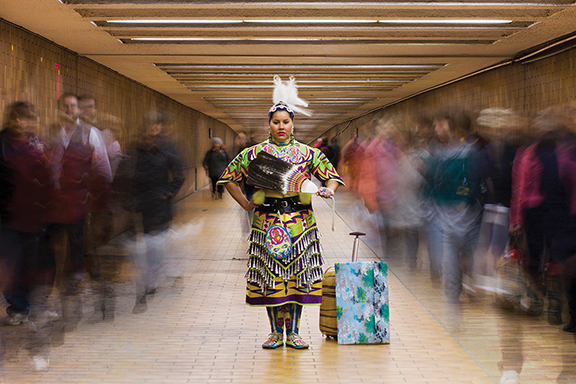
The 12,000-square foot exhibit divided into three parts contains an amazing array of more than 150 photos and works by American Indian photographers from North America. The level of talent in those rooms is astronomical, and the hardest part of my afternoon was leaving it behind.
Maybe the best way to absorb the impact of this powerful display is this: spend a couple hours reviewing everything, go downstairs and have lunch or walk outside, then return for a second visit to give full attention to your favorite works.
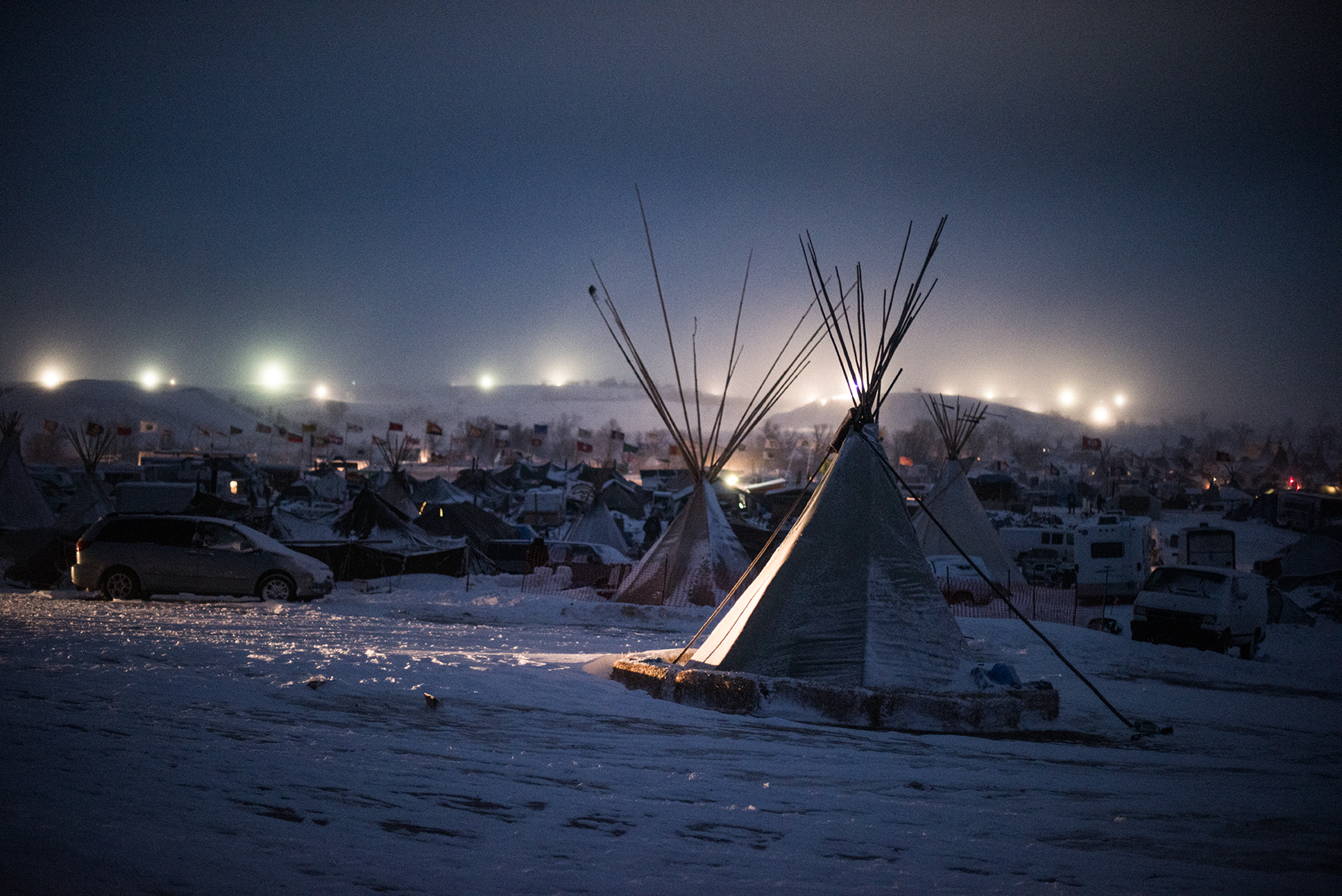
Standing Rock Sioux Nation, December 4, 2016.
Here’s a cautionary warning: As with any honest depiction of American Indian history, some works in the exhibit are hard to take. But the message that carries from room to room is simple. American Indians are still here. We matter, have always mattered, and will always matter.
At the exhibit entrance that day as visitors milled around, Mia curator Casey Riley said that work on the exhibit began in March 2020. Two councils were formed to determine the breadth and scope of the exhibit. They were: (1) a curatorial council of 14 advisors that included internationally known artists and academics based in Canada and the U.S., and (2) a community council of advisors and consultants. Both councils were composed primarily of Native people. The council members and Mia staff agreed to three themed exhibit areas: “Always Present,” “Always Leaders,” and “A World of Relations.”
A few of my favorite works include these: “matri-lineal” by Raye HeavyShield (Blackfoot) which showed life size photos of four women from four generations of HeavyShield’s family. HeavyShield’s oldest photo will resonate with many of you. It shows a woman who may be in her mid-40s whose clothing and facial expression resembles pictures of great grandparents from your family photo albums. The strength and tenacity of American Indian women leaps from many of the exhibit’s photos.
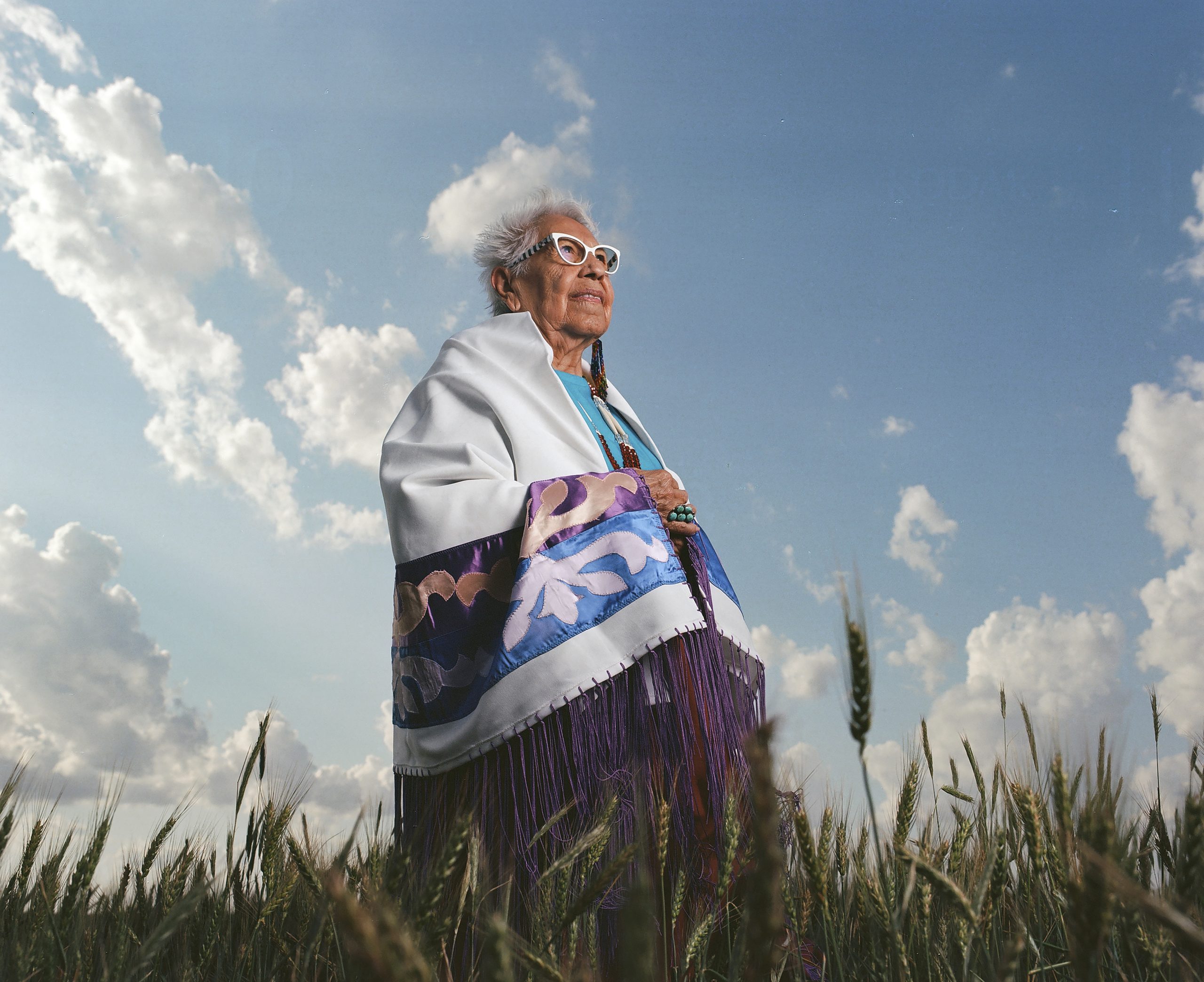
Many depictions are timeless. Thomas Fields’ “Dancing in the Sunlight” shows a photo of women walking in a circle that could date to the early 1900s. Fields took the picture in 1999.
“Rez-Dog” by Rapheal Began (Navajo), taken in 1985, shows the photo of a starving, snarling dog that was taken at his late grandmother’s home following the butchering of sheep. The dog is dragging a sheep’s head and had been challenged by another dog for the prize. I felt pity for the animal and rez dogs generally who live without care from humans.
Offsetting “Rez-Dog” was Zig Jackson’s (Arikara, Hidatsa and Mandan) humorous “Indian on Mission Bus” that shows an Indian in full headdress seated on a city bus with a group of passengers who appeared to pretend they didn’t know he was there. And then there was Richard Throssel’s “An Indian Girl With Dog” which showed a sweet baby with a dog in her lap, an image again resembling photos from your family albums.
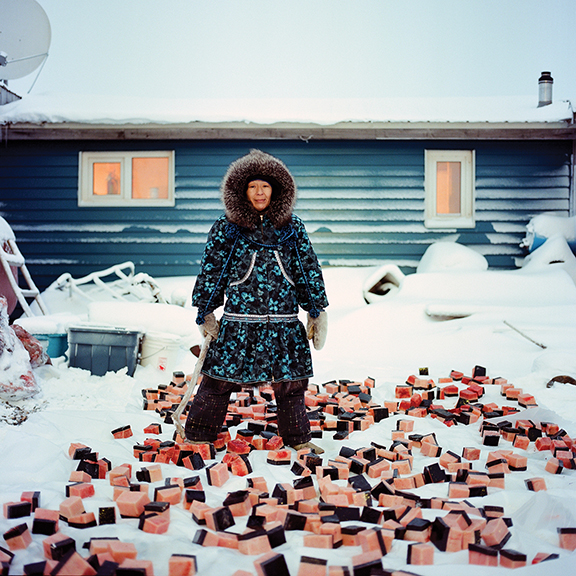
Of course, it’s unlikely to view Indian art without Indian mention of power struggles, protest, land theft, boarding schools, broken families, addiction and tragedy. Some depictions are subtle, like Erica Lord’s (Athabascan) photo of the back of a woman with “I tan to look more native” written across her back. Or Rosalie Favell’s (Metis) “my first day of assimilation” which shows the early 1960s snapshot of a little Indian girl in a dress on her way to the first day of school. Or James Brady’s (Metis) “Anti-War and Fascism Demonstration” photo dated 1934.
Like excellence in any medium, these works will pick you up from where you were and drop you in a new place. That place is not always comfortable, not pretty, but always provoking and inspiring.