
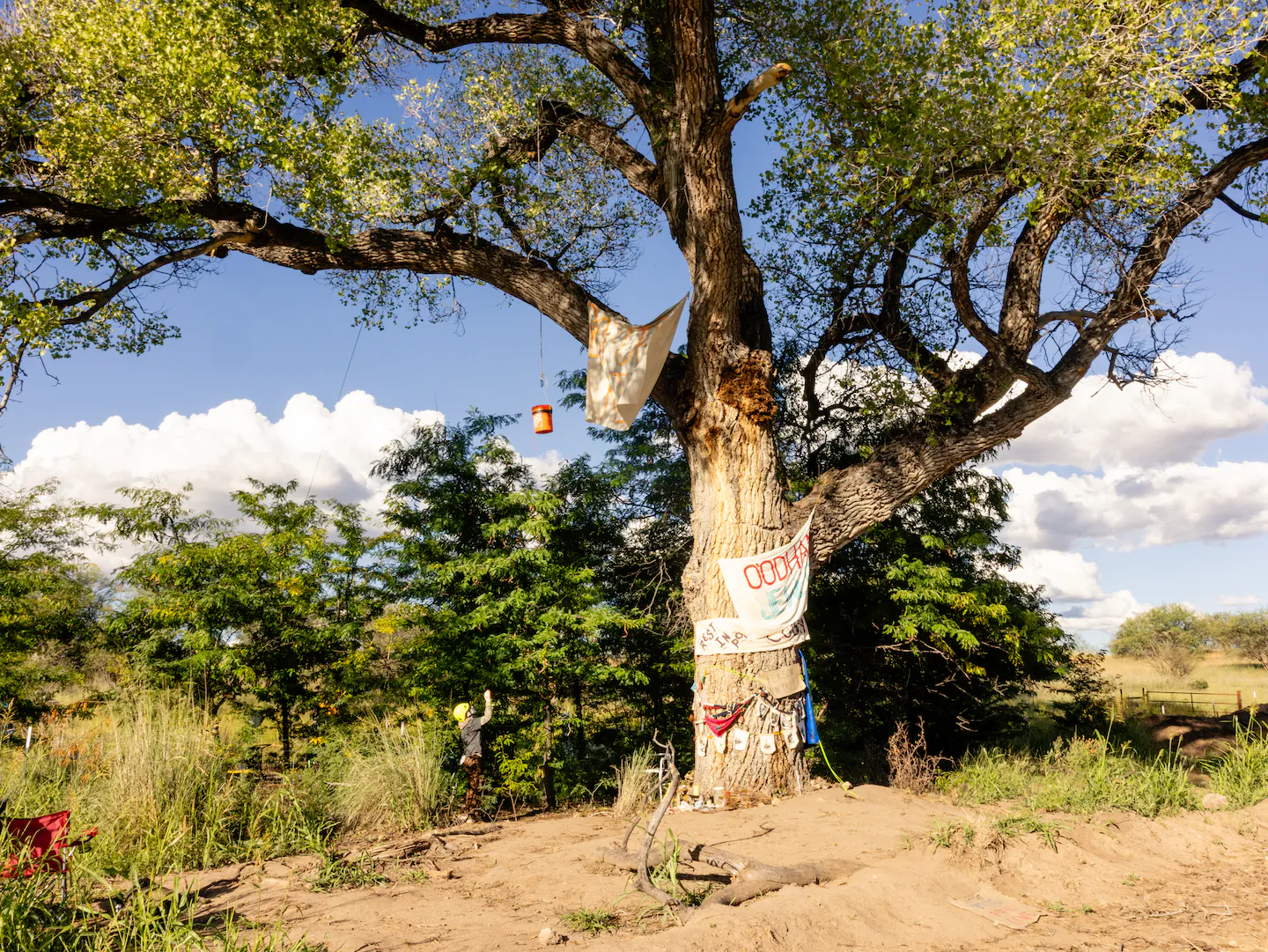
Lochiel, Arizona — A centuries-old cottonwood known as the “grandmother tree” was cut down Oct. 5, after activists spent 71 days protecting it from border wall construction.
The tree stood near the U.S.-Mexico border in the San Rafael Valley, southeast of Tucson. Protesters took turns occupying a platform in its branches, keeping someone in the tree around the clock while supporters camped on nearby private property.
Kate Scott, co-founder of the Madrean Archipelago Wildlife Center, helped organize the effort after learning contractors planned to remove the cottonwoods. With support from Indigenous activists, the camp began holding daily sunrise prayers for the land.
Scott said Border Patrol agents entered the camp during that morning’s prayer ceremony. Activists reported about 10 arrests and alleged that agents pushed people into barbed wire and damaged tents. U.S. Customs and Border Protection did not answer reporters’ questions about the confrontation.
CBP confirmed that all four cottonwoods on federal land marked for removal in Lochiel had been removed for planned wall construction. The agency said it recognizes the importance of protecting environmental and cultural resources.
The protest also raised concerns about wildlife corridors and habitat along waterways. Russ McSpadden of the Center for Biological Diversity described the area as one of Arizona’s remaining riparian ecosystems, which support large trees such as cottonwoods.
Solidarity crossed the border: activists in Mexico held their own tree-sit for about a week. Elsewhere in Arizona, some Tohono O’odham members maintained a camp and prayer fire while monitoring border activity.
After the tree was cut down and uprooted, Scott said activists would continue direct action, carrying forward the prayers, songs and relationships built during the protest.
Sources:
- Stephanie Casanova, “The ‘grandmother’ cottonwood trees bulldozed for the border wall,” High Country News, Oct. 7, 2026.
- Jake Spring, “They sat atop a ‘grandmother’ tree for months. Border agents knocked it down,” The Washington Post, Oct. 5, 2026.