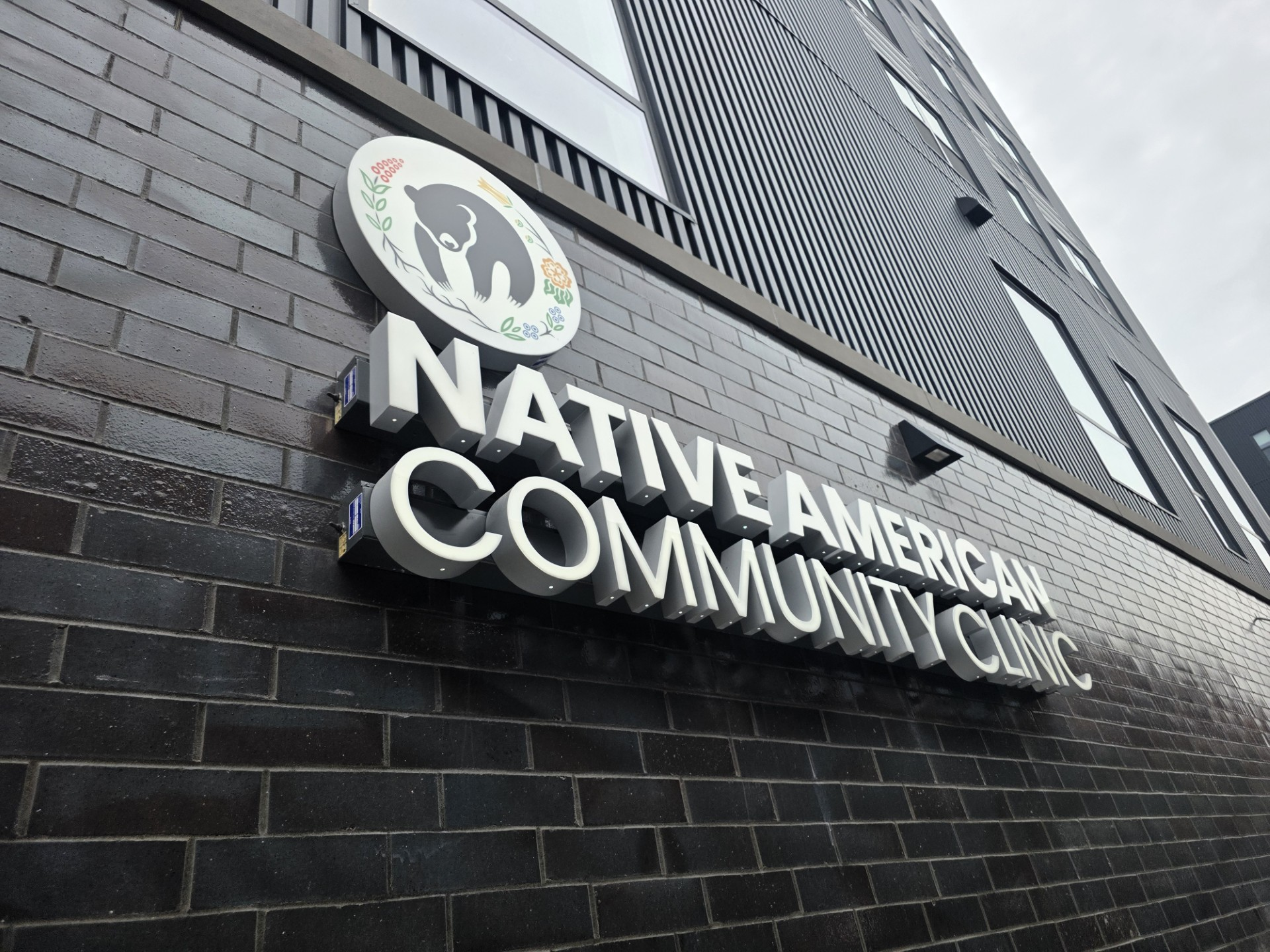

 This past April over 200 participants of all ages entered a 12 week weight loss challenge at the Native American Community Clinic (NACC) in Minneapolis. The person who lost the most weight would win a grand prize of $500.00, provided by Ucare. Enrollment only cost $1.00 (all of which went towards the second place prize) and anyone was able to participate whether you were a patient at NACC or not. Participants kept food journals, counted calories, exercised regularly and weighed in weekly.
Shannon Fahey, a registered dietician at NACC, worked one on one each week with participants on goal-setting, exercise routines, and nutrition information – after evaluating their food journals at the weigh-ins.
Although the weigh-ins were held weekly, Fahey and staff were available anytime participants needed, thereby creating a highly individualized program.
A collective total of 610 pounds were lost at the end of the program, which ended in June 29. Kasa Hohenstein was the first place winner, having lost 16% of her body weight. James Seals came in second place, having lost 13% of his body weight. Participants lost between 8-15 pounds, making an average loss of 5.7% of body weight in total.
"I joined a gym and I feel better and I look better. It was a wonderful experience for me at 50 years old," James Seals said. "I’m halfway to my goal but I’m still continuing my weight loss… I’m in the gym four to five days a week."
Throughout the competition, the participants’ progress was measured and posted for everyone to view. Small prizes such as a Target gift card or a Calorie King Book were given to those who reached various goals as an added incentive to keep up the weight loss. The challenge provided the extra motivation and support to keep participants on track, especially when individuals encountered setbacks and saw no change in the scale despite their hard work.
While weight loss measures a person’s progress the ultimate goal was a lifestyle change. "Mostly you care about if people are eating healthy and exercising, not if their weight is changing," Fahey said. The biggest and most common challenges were breaking bad habits that were often formed in childhood, and resisting everyday temptation.
Many healthy changes were economically friendly as well, "It was cheaper carrying snacks everywhere and refilling my water bottle instead of going to the vending machine," Hohenstein said.
Many participants used walking as their main form of exercise or biking. And those that were able to join a gym did," Fahey said. "It really shows that it doesn’t matter what you have as long as you have the discipline and motivation."
Hohenstein had a new year’s resolution to lose weight and a goal of dancing traditional dance at Shakopee powwow this summer, but it was seeing her mother go through gastric bypass surgery that really motivated her. "After surgery she was not enjoying food and it really didn’t help her self-esteem," Hohenstein explained.
Through her example Hohenstein hoped to inspire others, especially her mother. However, Hohenstein explains that the real change should be first and foremost for you, "If you have a weight loss goal it should start with yourself and not for another person’s expectations or public expectations…it starts on the inside with yourself."
Prior to running the community wide challenge, the NACC employees had gone through the challenge themselves. And after the successful employee version, they decided to open it to the community.
"We wanted something catchy and everyone had heard of the Biggest Loser and we had done it with employees and it was successful because we got a little competitiveness going on," said Fahey. Fahey and staff hope to run another weight loss challenge in the future.
"People felt a lot more empowered, even if they didn’t win they seemed much more confident," Fahey said.