
{mosimage}
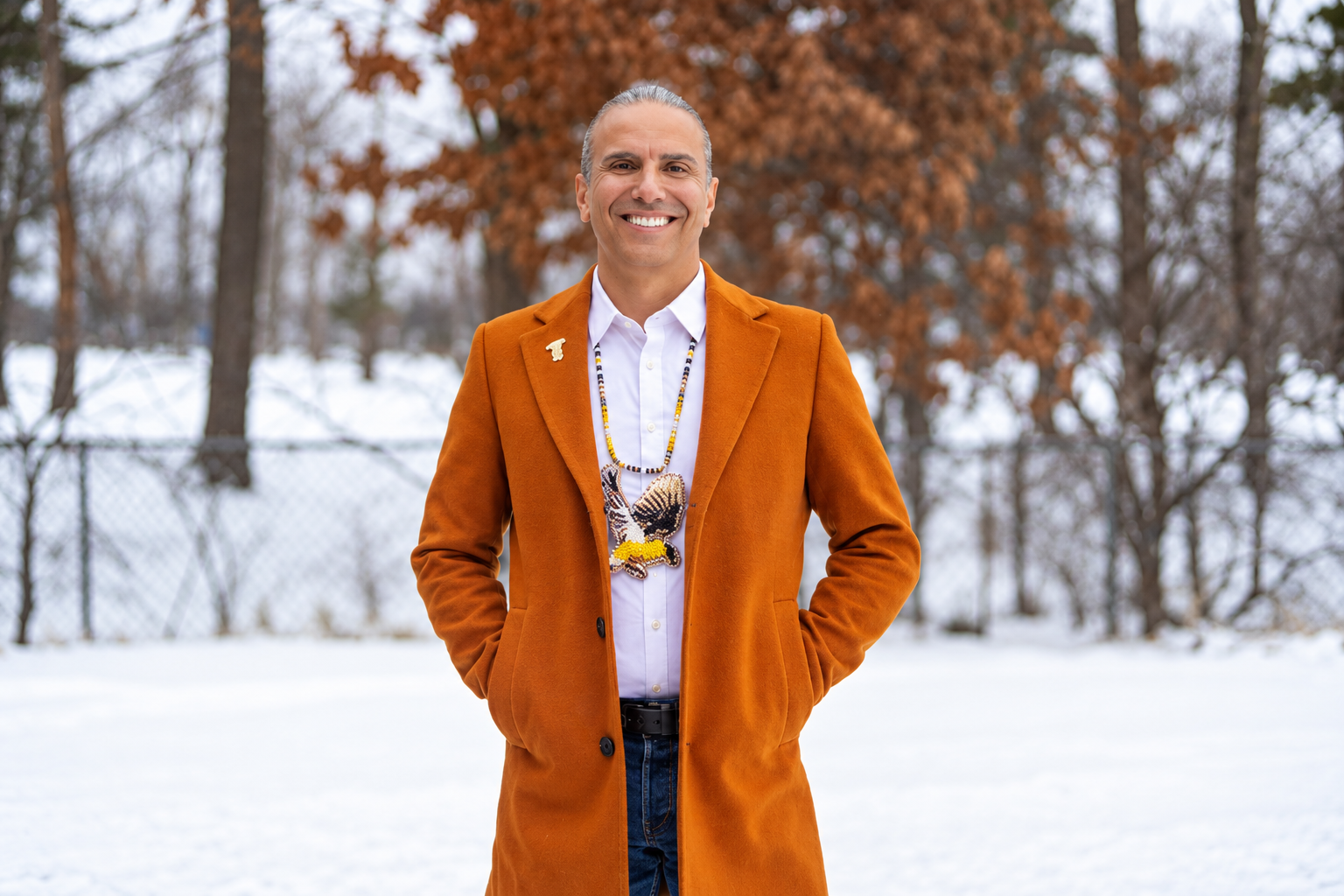
“We will return to our ceremonies, and we will gain back our strength and our values,” said Justin Kii Huenemann (Navajo), President and CEO of the Native American Community Development Institute (NACDI). “We are just at the beginning of this new prosperity.”
That is the prophecy that Huenemann learned as a young man and re-told to the Oct. 22 American Indian Community Development Symposium. According to the prophecy, the Native people of North American would endure seven generations of extreme hardship – they would lose their language, turn away from their ceremonies and traditions, and experience terrible tragedies, death, and famine, but at the end of the seven generations, there would be a period of prosperity.
According to the prophecy, it will take seven more generations to bring about the resurgence or culture, language, and strength to the Native American people in North America. Huenemann’s description of the prophecy mirrors the goals of NACDI, a community development group based in Minneapolis’s Phillips neighborhood that aims to transform the American Indian community and “to effectively respond to 21st century opportunities,” according to its website.
The symposium was a part of that vision as NACDI engages the American Indian community and its partners in embracing and shaping changes coming to Franklin Avenue in light of its new development. NACDI envisions an American Indian Cultural and Economic Corridor, which, under current plans, would start at the intersection of Cedar and Franklin Avenue (next to the Light Rail Station) and proceed west along Franklin Avenue to 11th Avenue, approximately one half-mile.
A major focus of the symposium was the relationship between community development and community organizing. In a conversation between Andy Mott, from Community Learning Partnership and film producer Syd Beane, Mott said that sometimes in community development “people get left behind.”
According to a fact sheet on NACDI’s website, the Hiawatha Light Rail Line has served customers 10.9 million times, or 65 percent higher than ridership projections since it opened June 26, 2004. The website states that the corridor has a development potential of 7,150 new housing units, more than 19 million square feet of new commercial space, with up to 68,000 new jobs by 2020. Property values are increasing along the Hiawatha LRT as well, the website claims.
One of the concerns of the Symposium was how to tap into the economic potential of the light rail without leaving the Native American Community behind. How do you lift up the community and at the same time avoid gentrification to force Native Americans to leave the neighborhood because of rising costs?
Diana Yazzie Devine, a speaker at the Symposium, shared her experiences from the Urban Indian Community Development organization in Phoenix. She talked about some of the strategies her organization used to hold onto traditional values when a similar rail line was built in Phoenix. In that case, Yazzie Devine’s organization partnered with two other Native American organizations in order to purchase real estate together. The three organizations created a limited liability corporation in order to purchase property. She said building ownership was essential “so we couldn’t get kicked out.”
Collaborating with two other organizations wasn’t always easy, but Yazzie Devine said that the three organizations together had a lot more power than they would have alone. “Consolidation is scary,” Yazzie Devine said, “but what does it matter who owns it, if it’s all for the community?” Yazzie Devine discussed the need for new strategies and technology, as well as difficult paperwork and intense collaboration. She suggested that NACDI and other Native American organizations in the Twin Cities look into New Market Tax Credits, which permit taxpayers to claim a credit against Federal income taxes for projects that benefit low income communities.
Yazzie Devine said that it was difficult work making sure that the Native American community benefited from the increased prosperity of the rail line built in Phoenix, and it took community organizing “family to family” to ensure that Native Americans in her community were able to secure affordable housing in a booming market.
So what does this mean for the Native American community here? Is NACDI’s vision for a American Indian Cultural and Economic Corridor along Franklin Avenue possible? The organization is still in the planning stages, but already there are some ambitious plans in development, including a Regional American Indian Cultural Center, which would host American Indian langauge, arts, history, music, performance, research, education, and story telling. The plans also include a partnership with Minneaplis Community And Techinical College offering community development courses that specialize in indigenous cultures.
To learn more and can see some of the initial design concepts for the corridor, go to: www.NACDI.org.