By Lee Egerstrom
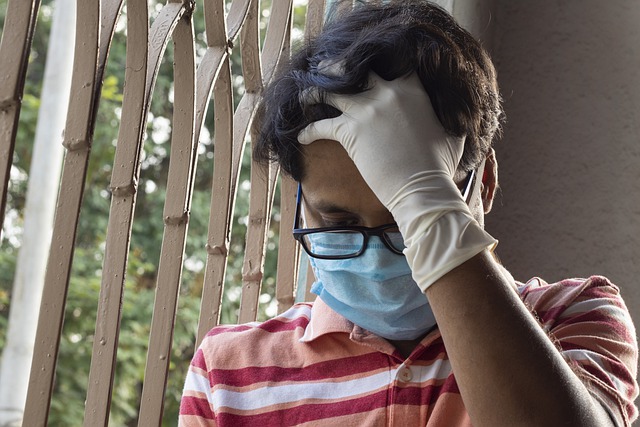
Minnesota health officials, the Mayo Clinic, and experts from the Centers for Disease Control and Prevention (CDC) are voicing concern about how the novel coronavirus pandemic may be playing with your mind.
Staff at the Mayor Clinic in Rochester put it this way: “The COVID-19 pandemic has likely brought many changes to how you live your life, and with it uncertainty, altered daily routines, financial pressures and social isolation. You may worry about getting sick, how long the pandemic will last and what the future will bring.”
And if that isn’t enough, Mayo adds: “Information overload, rumors and misinformation can make your life feel out of control and make it unclear what to do.”
That describes what many if not most Americans are experiencing to some extent, and probably people throughout the world. A quick look at who is being impacted in Minnesota shows this is clearly a likely problem for Native Americans and members of other minority communities.
The Minnesota Department of Health on July 16 released data showing members of minority communities are disproportionately impacted by the virus. At that point, health officials counted 30 Native deaths from COVID-19, which made a rate of 168 per 100,000 population, or seven times higher than the death rate of 23 per 100,000 for the white population.
The St. Paul Pioneer Press reported hospitalization rates for Minnesota Black people were the highest among race and ethnicity communities, at 313 per 100,000 people. Hispanic people were close behind at 311 per 100,000, followed by Native Americans and Asian people with 213 and 175 rates.
There is help for those impacted.
The CDC has issued “Coping with Stress” guidance and has especially helpful suggestions for people caring for someone sick at home. It provides check lists for both the sick person and for a caregiver to both cope with the physical problems with the virus and also the stresses on their mental health.
In what is nearly a summary of guidance from all health experts, the Mayo staff notes self-care strategies “are good for your mental and physical health and can help you take charge of your life.”
Such a strategy should include getting enough sleep, participating in regular physical exercise, eat healthy, avoid tobacco, alcohol and drugs; limit screen times for electronic devices – television, tablet, computer and phone – and “relax and recharge” with time for yourself.
To reduce stress pressures, Mayo recommends keeping a regular routine, stay busy, focus on positive thoughts, use your moral compass or spiritual life for support, make connections with others – usually through virtual socializing; do something for others, such as friends, family members and neighbors, especially the elder; and support a family member or friend, using electronic devices or phones, or by sending a note “to brighten the day.”
The Mayo had one more suggestion for reducing stress triggers, and this isn’t easy for a life-long journalist to write: “Limit exposure to news media. Constant news about COVID-19 from all types of media can heighten fears about the disease. Limit social media that may expose you to rumors and false information.”
The latter may well be reaching epidemic proportions if not yet a pandemic social scourge that will linger from the coronavirus for years to come.
Resources:
Minnesota Department of Health information on keeping mentally healthy is available at https://www.health.state.mn.us/communities/mentalhealth/support.html; and state health support services can be found at https://mn.gov/covid19/for-minnesotans/get-help/mental-health.jsp. The latter includes links to the National Alliance on Mental Health (NAMI) Minnesota, Minnesota Association for Children’s Mental Health, Crisis Text Line, Crisis Services, Minnesota Warmline, National Suicide Prevention Lifeline, Substance Abuse and Mental Health Services Administration Disaster Distress, and Peer Support Connection Warmlines.
Helpful definitions for assessing your mental health condition can be found at https://www.health.state.mn.us/communities/mentalhealth/index.html.
Mayo Clinic explanations and guidance for taking care of your mind and body is available at https://www.mayoclinic.org/diseases-conditions/coronavirus/in-depth/mental-health-covid-19/art-20482731.
The CDC “Coping with Stress” guidance is available at https://www.cdc.gov/coronavirus/2019-ncov/daily-life-coping/managing-stress-anxiety.html.