


By Mordecai Specktor
Water is life
In a victory for Minnesota’s Ojibwe bands and environmentalists, the Biden-Harris administration took action in late January to protect the Boundary Waters Canoe Area Wilderness and the surrounding watershed from potential mining pollution.
The U.S. Department of the Interior announced in a Jan. 26 press release that Secretary of the Interior Deb Haaland (Laguna Pueblo) “signed Public Land Order 7917 withdrawing approximately 225,504 acres in the Superior National Forest in northeastern Minnesota from disposition under the United States mineral and geothermal leasing laws for a 20-year period, subject to valid existing rights.”
The Interior press release explained that the order “will help protect the Rainy River watershed, including the Boundary Waters Canoe Area Wilderness and the 1854 Ceded Territory of the Chippewa Bands, from the potential adverse impacts of new mineral and geothermal exploration and development.”
Minnesota Public Radio (MPR) reported that the decision “places another roadblock in front of the proposed $1.7 billion dollar Twin Metals project, an underground copper-nickel mine near Ely, just south of the Boundary Waters and within the mineral withdrawal area.”
MPR noted that the Biden administration canceled two federal mineral leases held by Twin Metals along Birch Lake in the Superior National Forest last year. The leases are required “to mine the valuable metals underground,” according to MPR.
A spokesperson for Twin Metals Minnesota said the company was “deeply disappointed” by the federal government’s decision.
Yucatán, land of the Maya
I hadn’t taken a winter vacation in many years; but Maj-Britt, my wife, and I, ahead of our 39th wedding anniversary, flew down to Mérida, the capital of Yucatán, in early January. Our friends Bruce and Maren have been living in Mérida for the past two years, so we stayed in their roomy rented house. Their place in the Itzimná neighborhood is a stone’s throw from the iconic Monumento a la Patria, a massive historical marker that incorporates design motifs from the Mayan civilization. Mérida, with a million residents, is known for its Spanish colonial architecture. It is built on the ancient Maya city of T’ho, and carved Maya stones were used to build the main cathedral and other buildings.
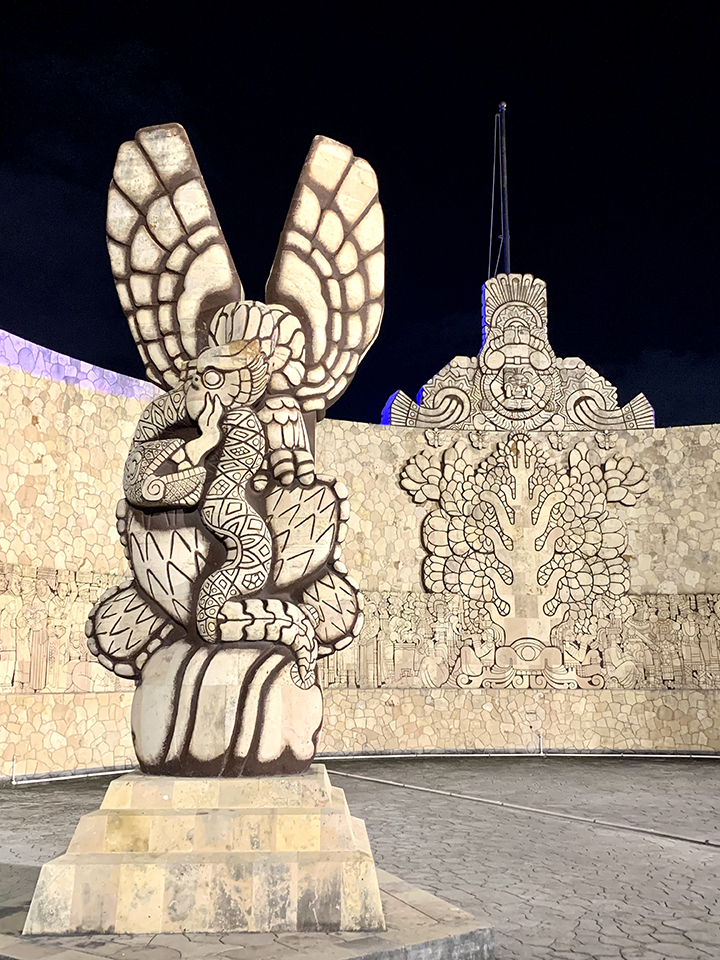
We also spent three nights in an Airbnb rental on the beach in Celestun, a fishing village on the Gulf of Mexico. The weather was perfect, in the 80s most days, and it was wonderful to have a beautiful beach right out the back door. I hadn’t visited Mexico in 50 years, and I’d never been to Yucatán, which offers numerous attractions for the locals and visitors. Adding to the fun, my son Max and Silvia, his Italian girlfriend, flew in from Copenhagen to join us.
We popped for two guided tours during our visit: a boat tour of the Ria Celestun estuary, where we saw hundreds of flamingos mating, among other tropical birds; and a tour of Uxmal, a Late Classical Maya city. At Uxmal, which dates back 1,500 years, as per the Maya chronicles, Gregorio, our tour guide, began with a Mayan language lesson, pointing out that lengthening vowel sounds changes the meaning of words.
A visitor to Uxmal first encounters the towering Pyramid of the Magician, which rises more than 130 feet above ground level. Gregorio had a binder of photos showing how the ruins looked nearly 100 years ago, prior to the clearing and reconstruction of edifices. We later visited the Maya World Museum in Mérida, and the displays corroborated much of what Gregorio had shown us about Mayan advances in architecture, language (many Mayan words have entered the Spanish spoken today in Mexico), mathematics (a numbering system that included zero), etc.
I have long been fascinated by the Maya, both the ancient civilization and the more recent struggles in the face of deadly repression, especially the dirty and criminal actions of dictatorial regimes in Guatemala.
In the 1980s, I met Mayan activists from Guatemala through American Indian Movement conferences, and wrote about the resistance to massacres and other depredations. I recall meeting a young Mayan man in Minneapolis who survived the Jan. 31, 1980 siege of the Spanish Embassy in Guatemala. Government forces burned the building, resulting in deaths of 37 Maya who had occupied the premises in protest of the repression of their communities under the regime of General Efrain Rios Montt.
I’m can’t make any definitive statements about the conditions of the Maya people of Yucatán, where 30 percent of residents speak the Mayan language. However, Minority Rights Group International (minorityrights.org) finds that the situation of the Maya in Guatemala remains grim: “In reality, apart from the few remedial policies of recent years and the gradual emergence of a slightly more tolerant climate, little that is concrete has occurred to improve the lot of the indigenous population following the end of the 36-year civil war.”