

By Hannah Broadbent
There have always been leaders who have paved the way in the fight for tribal sovereignty. Leaders who have thought of different solutions in which to provide economic growth and independence to our communities. There’s one not-so-new plant that has leaders today more hopeful than ever, that is, cannabis.
Well, hemp– a strain of cannabis – to be more specific. There are notable indigenous leaders who launched this movement like John Trudell and Alex White Plume. They’re hemp fields being met with fire.
Due to their work and the work of countless others, times have changed. Industrial hemp farms are now legal and protected by the 2018 Farm Bill. Essentially this bill made further amendments to U.S. narcotic control laws to authorize the USDA to develop and regulate the production of commercial hemp.
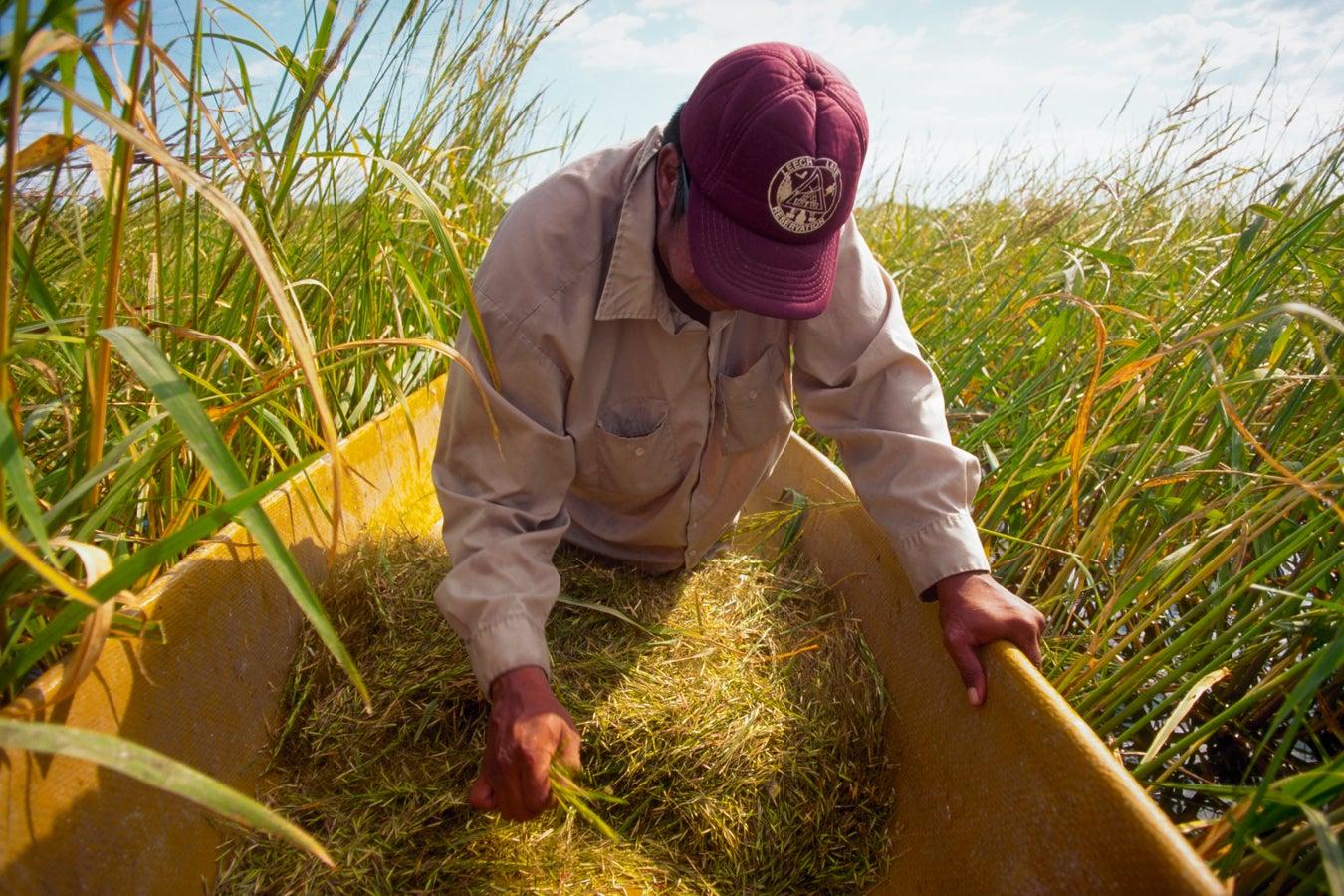
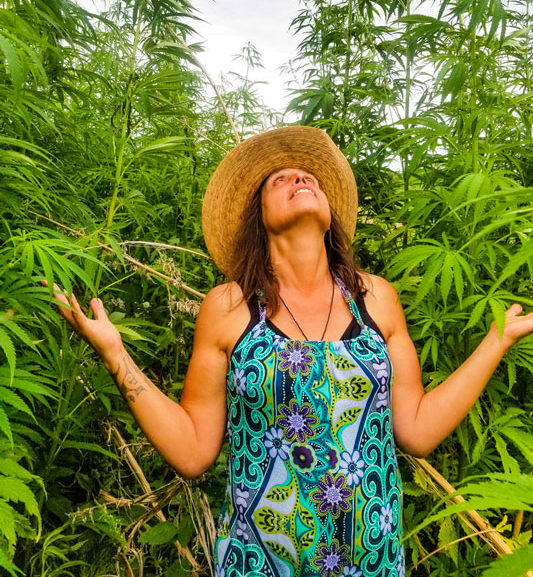
Today, Winona LaDuke (White Earth Ojibwe) is doing her part to continue the innovative work in this holistic approach to community growth, via Winona’s Hemp Heritage Farm. She says both White Plume and Trudell inspire her in the work she does on her 80-acre farm, 8 of which are currently growing hemp on the White Earth Reservation.
“Fiber hemp is what I am primarily interested in, and that’s good for cloth, rope, building materials, bio-remediation and breathing in carbon. I am not sure if you could get a more magical plant. That’s not even talking about the medicinal and health benefits of cannabis.”
While the cannabis industry’s revenue was $820 million in 2018, indigenous organizations like the Intertribal Hemp Association can agree it’s not about profit – despite its ability to transform food, energy and material industries. No, the ability to farm this plant is about transforming our communities.
“I believe she is a plant to be courted and treated well. If we treat her well she will help us. She has the ability to transform people and worlds. Much of the plants’ magic is in the females. That’s a powerful medicine. I am grateful to know her, if only a little. She’s complex,” LaDuke said.
Winona harvests seeds for fiber hemp, but other parts of the farm are also harvesting for CBD oil – a medicinal trend that has grown an international demand. CBD revenue in 2018 was over $600 million dollars in revenue in the U.S. alone.
Google “Hemp Benefits” and the results are endless, from individual benefits of hemp seeds in food, vitamins, skin products to the undeniable sustainability of the plant’s agriculture. It doesn’t take much research to see that hemp is quite possibly the future for our tribal economies.
“We are working to learn about different varieties, and different ways to grow them because we are going to want a lot of hemp if we are going to change the world. Since we want to build a hemp fiber mill, and eventually move into food products, we are going to want to work with other tribal and non-tribal people in our area who want to grow organic hemp and grow the next economy.”
In 2015 the Red Lake Nation conducted a feasibility study of the industry. On May 20 of this year, the members of Red Lake will vote to legalize the production and distribution of cannabis. Should this bill pass, that will be 2 out of 11 federally recognized tribes in Minnesota that will be producing the plant.
LaDuke, like many others, believes cannabis will restore our culture and communities. Her work on White Earth involves the whole community to plant and harvest, therefore also reaping the benefits.
“The present multiple crises of pandemics, climate change and concentration of wealth and power needs to be remedied with re-localization. You have to start somewhere, so I pick here. We want the Anishinaabe people, and all of our relatives to live well. This is a model, a learning place. We will make mistakes and we will also learn and do some epic things. We will eat good food and enjoy our lives.”