

By Arnie Vainio MD
(Editors note: written in 2014.)
I just got back from Atlanta, Georgia. As a board certified family practice physician I need to recertify for my boards this year. The exam covers all of medicine and no one knows for sure what will be on it. I am a member of the American Academy of Family Physicians and they offer an intensive course to prepare for the exam.
The course was serious business and the lectures cover the high points of hypertension, strokes, bleeding disorders, endocrinology, musculoskeletal, hyperlipidemia, maternity care, pediatrics, newborn issues, acute coronary syndromes and everything else we see. Family practice covers the entire field of medicine and we refer out to specialists for specific diseases if they need procedures or a higher level of specialized care.
My flight left early in the morning and I was in Atlanta the day before the course began. I knew I wouldn’t have time once lectures started so I took a train, then a bus to the Ebenezer Baptist Church where Martin Luther King, Jr. was the preacher. There is a historic center there run by the U.S. National Park Service with a monument and other things for tourists, but I did not come here to be a tourist. From the moment my hand touched the door handle, I wanted to stand where Martin Luther King, Jr. stood and I wanted to walk the streets he walked.
I opened the door and a woman behind a small counter invited me in. I climbed a short flight of stairs and stepped in to the church. Stained glass windows lined both sides and the light streamed in to the congregation area. I was alone and recorded gospel music and sermons by Dr. King played over the speakers. It didn’t take much imagination to see him standing at the pulpit and I remembered the brutal images of the police turning fire hoses on black people and of a little black girl walking into a public school with U.S. Marshalls on both sides to protect her from being assaulted. I thought about four innocent girls dying in a church bombing in Birmingham in 1963. I thought about their families and their overwhelming grief and I couldn’t stop myself from crying.
Five middle aged women came in together, but they sat far apart from each other. I didn’t want them to see me crying, but I heard them weeping, too. We sat in the church, alone and together and none of us said anything.
I decided not to go back to the bus stop, but to walk a mile or so through blighted neighborhoods to the train station. Certainly Dr. King would have walked these streets and alleys. Graffiti, broken bottles, a syringe and other signs of poverty were everywhere. I was clearly out of place here and as I walked several groups of people stopped talking and simply watched me walk past. I did not feel threatened, but I did not feel welcome, either.
A woman came up and asked me for money.
I grew up looking for pennies on the ground and a heads up penny was good luck if you gave it away. I was thinking about a friend of mine and I wanted to find one for her in this neighborhood and send it to her. I didn’t find it.
The next morning the boards review sessions started right to the minute at 8:00 and after every two sessions there was a sixty second break to stand and stretch. After every four sessions there was a fifteen minute break, but this was also the question and answer period and I didn’t want to miss any of it. Those breaks in reality were less than five minutes long. The lunch break was an hour, but with the question and answer period turned out to be about forty minutes and lunch had to be fast.
The sessions were very well organized and the doctors presenting the material covered it quickly. They were stopped if they went over thirty minutes and the next presenter was ready to start as soon as one stopped talking. I cannot believe how much information there is in four years of medical school and three years of residency and we were covering it all in three and a half days. By 5:30 I was exhausted and totally overwhelmed with the information presented.
I went online and found a soul food restaurant about a mile from my hotel and I walked there for dinner. On the way back it was dark and the neighborhood was run down. There were four men standing on a street corner and I crossed to the other side of the street so I wouldn’t have to walk through them. An old man with no teeth stepped out of the bushes and asked me for money. He told me he had AIDS and was living in a homeless shelter. I walked past an abandoned church that had a chain link fence around it. There was a man smoking a cigarette on the steps and he asked me for money.
I was almost to my hotel and a man was kneeling on the sidewalk pulling a trumpet out of its case. I was well past him and was about to cross the street when he started to play.
Jazz? Blues?
I don’t know, but it was beautiful and haunting and sad and there was no way I could not go back to him. We looked into each other’s eyes and he played just for me. His trumpet was dented and tarnished and the green velvet in the case was worn through in places. The notes went past me and into the darkness behind me and I could hear them echo off the buildings down the street. He came to a slow passage and he closed his eyes as he played. I don’t know if the song was his or if it was passed down to him, but I could hear strains of Africa in his music and he played from generations of lost and taken dreams. I was close enough to hear the clicking of his fingers on the keys. One of them seemed to stick a little, but he was used to it and played through.
The last notes were fading into the night when he opened his eyes. They were glistening and moist and he nodded at me. I bent down and put money in the trumpet case. I told him he had a gift and that his music was beautiful. We shook hands and his was dry and callused when I held it.
As I turned around I saw something on the sidewalk. I bent down and picked up a heads up penny. It was only a few years old but had definitely seen better days. I put it in my pocket and started walking. The trumpet started to play as I crossed the street and the echoes followed me for a couple of blocks, then the sounds of the city swallowed them.
The review course went fast and each day was as intense as the one before. I have a 752 page syllabus of the slides presented and each page has six slides. I have notes scribbled on every single one of them.
This trip was a pilgrimage. The review course was everything I hoped for and is only a part of the studying I need to do. To stand where one of the greatest men in my lifetime stood and to walk the streets he walked will stay with me forever.
I gave money to everyone who asked. The opportunity to give money to a homeless man with a trumpet was an education in itself.
He gave me much, much more than I gave him.
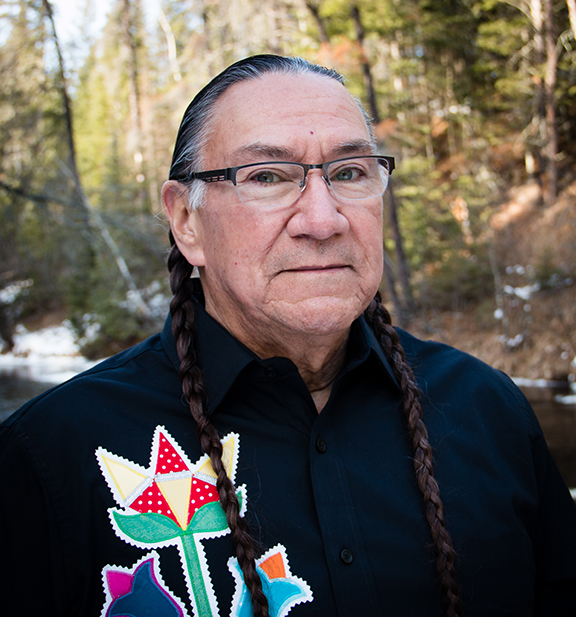
Arne Vainio, M.D. is an enrolled member of the Mille Lacs Band of Ojibwe and is a family practice physician on the Fond du Lac reservation in Cloquet, Minnesota. He can be contacted at a-vainio@hotmail.com