
 Independence Day 2015. We were
Indigenous, Eritrian, Nigerian, Korean, Sudanese, Black-American,
White, Puerto-Rican, Columbian, parents, dancers, teachers, artists,
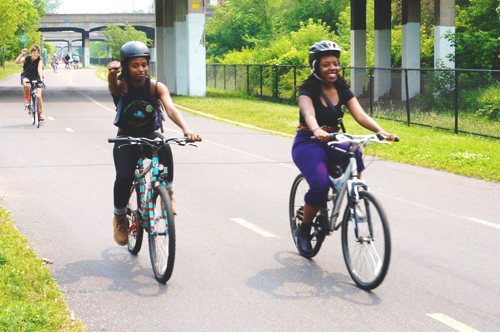
queer, avid cyclists, borrowing bicycles for the day, babies riding
in the bicycle chariot of a parent.
And we were Minnesotans. We believed
that the beautiful waters previously known by the Dakota of this land
as Mde Maka Ska should no longer honor John C. Calhoun. This charmer
enslaved Black people and fought to protect enslavement in the south.
We were riding to change the name and we were beautiful, unexpected,
and powerful.
Jeremy Little is the director of the
Minnesota Black Riders Association. He is a dynamic young man in love
with bicycling and the community. Little reached out to me and other
activists and artists to help him organize a “Freedom Ride” on
the 4th of July to Lake Calhoun in order to bring attention to this
issue. We also had a culminating community BBQ.
We didn’t have much time to plan but
once we got the ball rolling, the support and interest was amazing!
We had beautiful bicycle caravans hailing from north and south
Minneapolis as well as St. Paul. Volunteers were ready with food at
Lake Calhoun for hungry riders and games for children. We wanted it
to not only be revolutionary, but celebratory and joyful.
After we sang a protest song together,
an older white man who approached the crowd and told us to “get
over it,” that “George Washington owned slaves,” “those were
the times” and all sorts of other white supremacist brainwashing
that is used to justify naming public places for celebrated
murderers, rapists, and enslavers.
“It shouldn’t surprise us that
white supremacy has arrived to rear its ugly head,” said with
elegance and earned wisdom by Nekima Levy-Pounds, Minneapolis NAACP
president, activist and lawyer to the diverse group of peaceful and
joyful bicyclists enjoying the day as we were interrupted by the
irate and hateful bystander.
The audacity for him to address his
fellow Minnesotans and suggest we continue to absorb the violence of
honoring these terroristic figures is telling. His white supremacy
was being challenged and he couldn’t help but attack the strength
and love that we were centering towards the indigenous and Black
ancestors, who have been erased and dishonored anytime we utter the
name, “Calhoun.” We sang and chanted and escorted this man and
his dying legacy down the road. Some of the white folk allies who
part of the ride gathered to think of how to engage white ignorance
and take responsibility for the education and healing of white folks
who are troubled and confused like that man.
As a lifetime Minneapolitan, I never
even considered where the name came from. “Calhoun” to me was the
exhale of water, an offering and oasis at the end of a long and
exhaustive Lake Street. When I was growing up my parents would drive
us around the lakes and I would admire the mansions as big as our
neighborhood library, complete with pillars and vibrantly manicured
landscapes. My siblings and I would select which ones we were going
to buy when we grew up and were rich. We would marvel at the large
windows that were immodestly curtain free, expressing wealth that was
confident it was protected even when flaunting itself.
Perhaps naming the lake, “Calhoun,”
was to energetically ensure a sense of primacy to the White elite of
our city, which it has. I hope that one day, not only the name will
be changed, but our world will. I hope we will see indigenous
families and families of color live in the homes around that lake and
feel as entitled to that space as anyone and utter the original name,
Mde Maka Ska, when we acknowledge those sacred waters.
PHOTO: Cyclists on their way to Lake Calhoun for a "Freedom Ride" to raise awareness about the history of the name. (Photo by Jenny Jenkins.)