
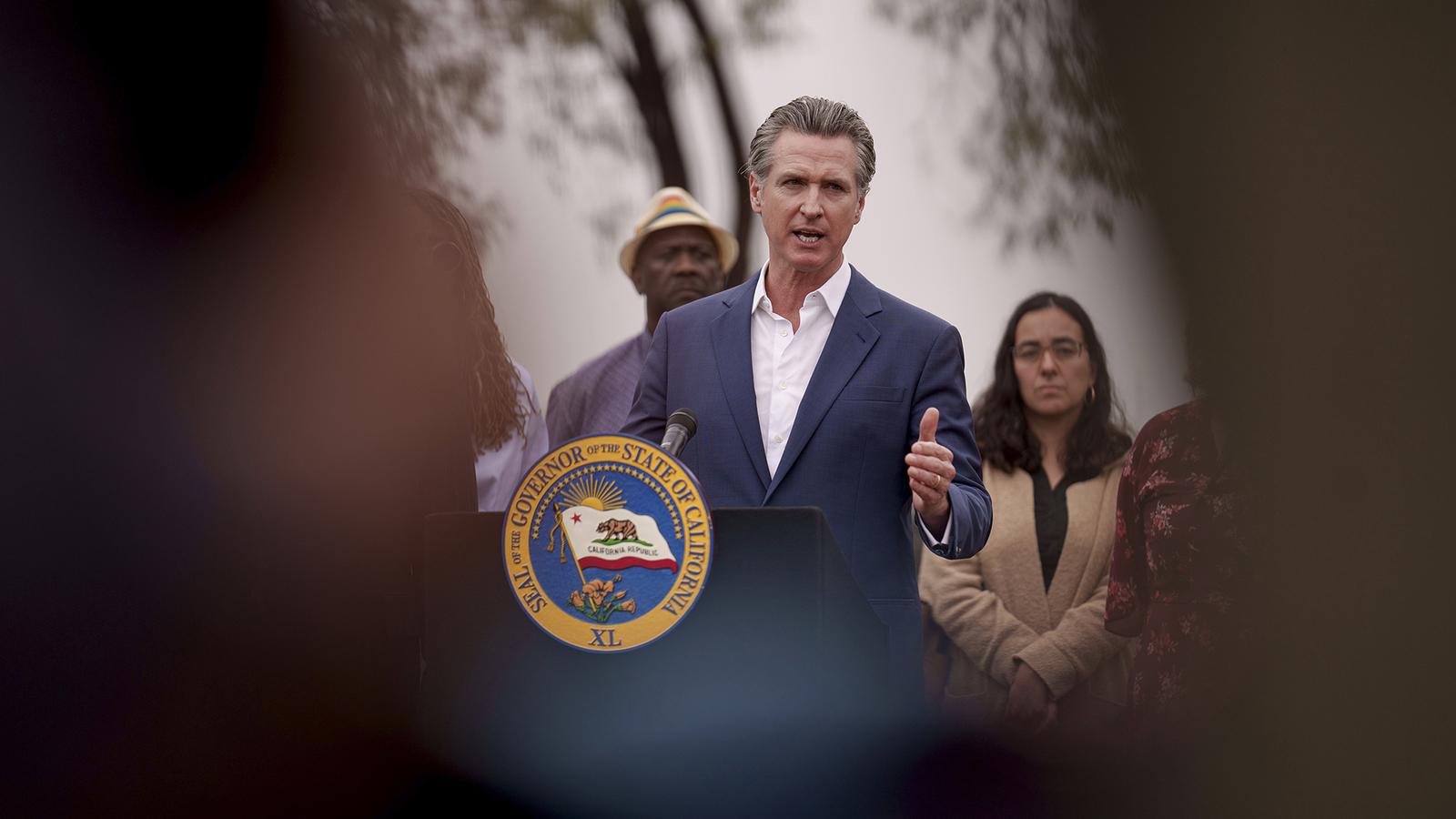
SACRAMENTO, Calif. — California Gov. Gavin Newsom signed a package of legislation Sept. 25 advancing a range of tribal priorities, including establishing Native American Day as an official state holiday, formalizing an apology to California Native Americans and making the Governor’s Office of Tribal Affairs permanent.
Newsom announced the legislation on California Native American Day, which was observed Sept. 25 this year. The governor separately issued a proclamation recognizing the 59th annual observance under the theme “Inherent Sovereignty: Tribal Nations Fighting to Protect Our People and Defend Our Land.”
The legislative package includes 10 bills addressing issues ranging from tribal-state relations and public safety to higher education and protections for Indian children.
Native American Day becomes an official state holiday
Assembly Bill 1841, authored by Assemblymember James C. Ramos, establishes Native American Day as an official California state holiday and lays the groundwork for it to become a paid holiday for state employees.
Under the new law, state employees would be entitled to the fourth Friday in September as a holiday upon an appropriation by the Legislature. The law also allows state bargaining units to negotiate for a paid holiday on Native American Day.
California already recognized the fourth Friday in September as Native American Day before AB 1841. Under previous law, state employees could elect to use certain accrued leave or holiday credit to observe the day. AB 1841 creates a mechanism for Native American Day to become a state employee holiday rather than requiring employees to make that election.
In announcing the legislation, the governor’s office said the measure recognizes the role Native communities have played in shaping California’s culture and identity.
This year’s Native American Day proclamation also highlighted tribal sovereignty, land stewardship, public safety, Missing and Murdered Indigenous People, housing and efforts to return and provide access to ancestral lands.
State formalizes apology to California Native Americans
Another significant measure, AB 2115, is known as the Rowena Mae Ramos Act.
The law builds on Newsom’s 2019 apology to California Native Americans. It states that California recognizes and accepts responsibility for harms and atrocities committed by state representatives who promoted, permitted, facilitated and enforced policies of violence against California Native Americans.
The Legislature also formally apologizes for harms resulting from policies it enacted, sanctioned or tolerated throughout the state’s history.
The law identifies harms including violence, forced displacement, cultural suppression, land theft, family separation and erosion of tribal sovereignty. It also requires a plaque memorializing the apology to be installed at the State Capitol and requires the Legislature to prepare a formal apology for preservation in the State Archives.
When Newsom issued his apology in 2019, he also established the California Truth and Healing Council to examine the historical relationship between the state and California Native peoples and recommend steps toward truth, healing and repair. According to the governor’s office, the council is expected to release a report this fall.
Office of Tribal Affairs made permanent
AB 2507, authored by Assemblymember Stephanie Nguyen, formally establishes the Governor’s Office of Tribal Affairs in state law.
The Newsom administration created the office and Secretary of Tribal Affairs position in 2022, building on an earlier Governor’s Tribal Advisor structure. AB 2507 institutionalizes the office and establishes requirements intended to strengthen government-to-government relationships between California and tribal governments.
Under the law, state agencies with programs, services or responsibilities affecting tribal governments must designate a tribal liaison and adopt a tribal consultation policy.
It also creates a nine-member Tribal Advisory Committee consisting of tribal chairs, with three members nominated by tribes from each of California’s northern, central and southern regions.
Nguyen said the legislation is intended to bring tribal governments into state discussions earlier and make engagement more consistent across state government.
Legislation extends beyond three major measures
The package signed Sept. 25 includes seven other measures concerning tribal police, the California Indian Heritage Center, tribal colleges and universities, student transfers involving tribal colleges, protections for Indian children in guardianship and conservatorship proceedings, federal tribal contracting authority and short-term rentals.
The governor’s office said the legislation builds on other tribal-state initiatives undertaken during Newsom’s administration, including expanded access to traditional healing practices, Native American studies curriculum and the return of more than 100,000 acres of land to California Native American tribes.
The measures signed on Native American Day formalize several changes in California’s relationship with tribal governments while also addressing the state’s historical treatment of Native peoples.
Sources:
- Governor of California – Newsom signs legislation supporting California Native Americans
- Governor of California – 2026 Native American Day proclamation
- California Legislature – AB 1841: State holidays: Native American Day
- California Legislature – AB 2115: California Native Americans: formal apology
- California Legislature – AB 2507: Office of Tribal Affairs