By Chandra Colvin | MPR News
Originally published November 2nd, 2026. Republished with permission from MPR News.
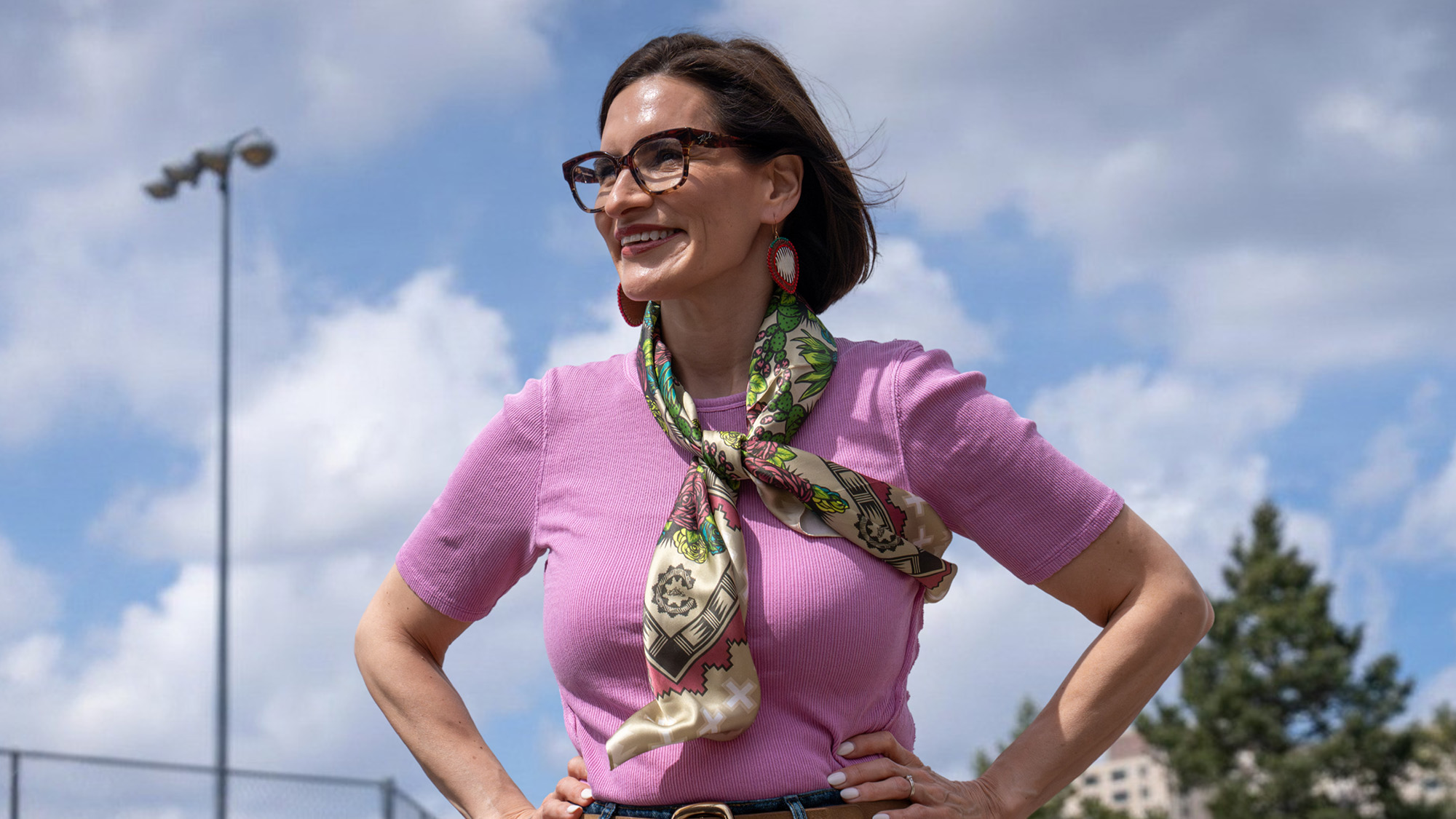
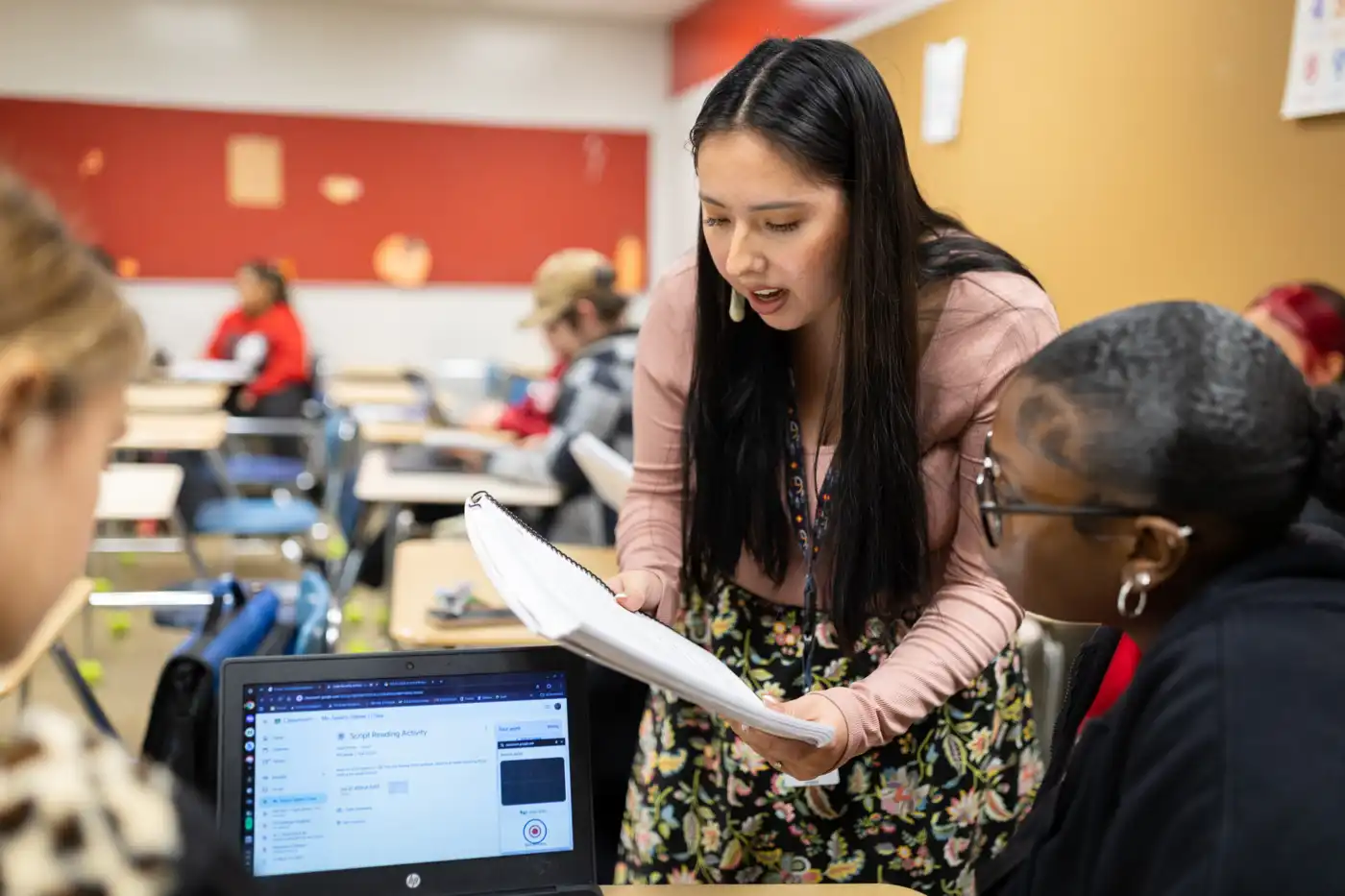
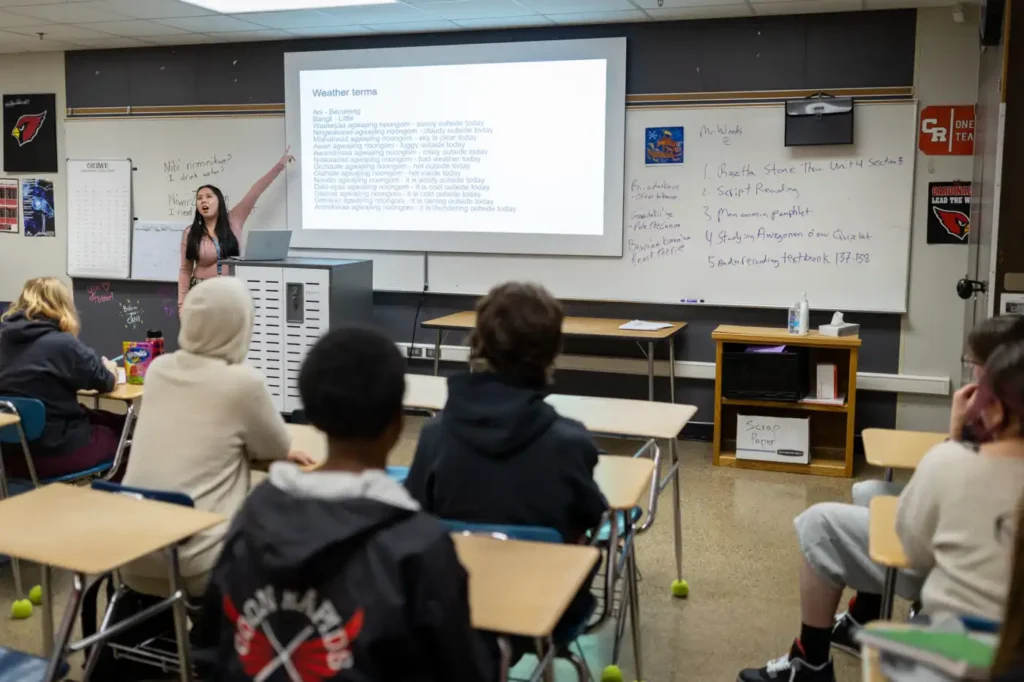
Ojibwe teacher Tayah Reyes takes attendance while speaking the language at Coon Rapids High School, just north of Minneapolis. About 20 students, from freshmen to seniors, respond to their names with “indaaya oma” to announce their presence.
Reyes is a citizen of the St. Croix Band of Chippewa Indians. She is also a descendant of the Ho-Chunk Nation. She teaches level one Ojibwe classes at both Coon Rapids and Anoka High Schools. The classes are grant-funded through the state.
“When I came here for open house, the parents, guardians were like, ‘We are so excited, and thank you for taking this job, and thank you for doing this.’ And they said that their student was so happy,” Reyes said.
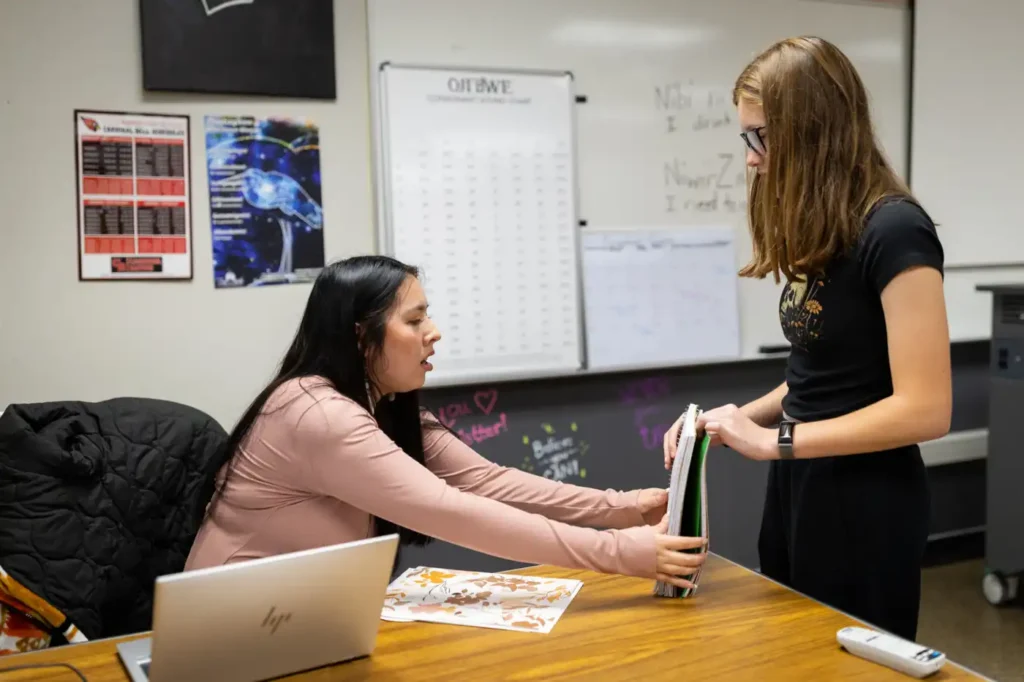
Anoka-Hennepin School District serves just under 1,200 students who identify as Indigenous. Mindy Meyers is the school district’s American Indian Education Coordinator.
“Many of our students have been asking, through our American Indian Education Program, they’ve been asking for more access to language, whether that be Ojibwe or Dakota language,” Meyers said.
She says the district chose Ojibwe for a variety of reasons, including feedback from language tables and the availability of resources.
The district’s program worked with the Midwest Indigenous Immersion Network, a nonprofit dedicated to revitalizing the Ojibwe language. The organization supports immersion schools and public educators by providing resources, professional development and training programs.
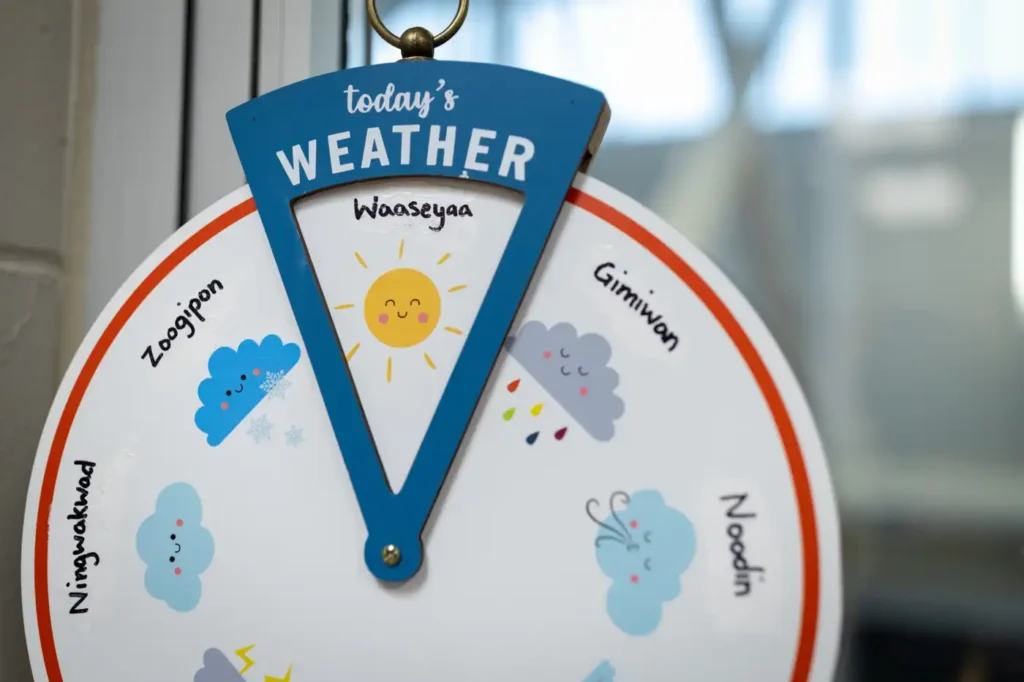
Executive director Gimiwan Dustin Burnette says the work is about creating access to language and culture.
“Realistically, more than half of our population live off of the reservations,” Burnette said. “When we look at descendancy as part of that count as well, we have a much larger population outside of the reservation.”
However, a study conducted by the Midwest Indigenous Immersion Network found that Minnesota schools have fallen short of requirements for American Indian language and culture classes.
State law requires public schools to offer language and culture classes when at least 5 percent of students are American Indian. The study says districts statewide would need to hire 150 more language teachers to reach compliance.
Burnette says that offering Ojibwe as a language option opens opportunities for youth that may lead to a career path in language revitalization and perhaps to becoming teachers themselves.
“We need to cast a really wide net of access,” Burnette said. “Public schools is the perfect place to do that.”
Vincent Green signed up for the class to gain a better understanding of the language. As a descendant of the Red Cliff Band of Lake Superior Chippewa and White Earth Nation, the 11th grader says language is embedded in his culture.
“It’s important to me that I’m learning it because I’m lucky to have it free, and because I want to preserve it since it is part of me,” Green said.
With the option to take the class at the school, he feels hopeful that more people will learn Ojibwe.
“It’s not unimportant compared to any other language,” Green said. “It’s not as popular, but it’s still a language that you know is valuable to learn.”
Fellow classmate, ninth grader Isaiah Kingbird, is a descendant of Red Lake Nation and Seneca. He says he tries to stay active in his community, and learning the language is one way to do that.
“I really hope that maybe we could all speak it one day,” he said.
Beyond language preservation and cultural connections, Reyes says offering the class builds positive representation in the school setting.
“We have an identity that’s political, our whole culture, our spirituality, our languages are political, and then you build an institution where we are not thought of, and it’s kind of built against us,” she said. “It is really important that this is going towards them graduating and for them to get further in life.”
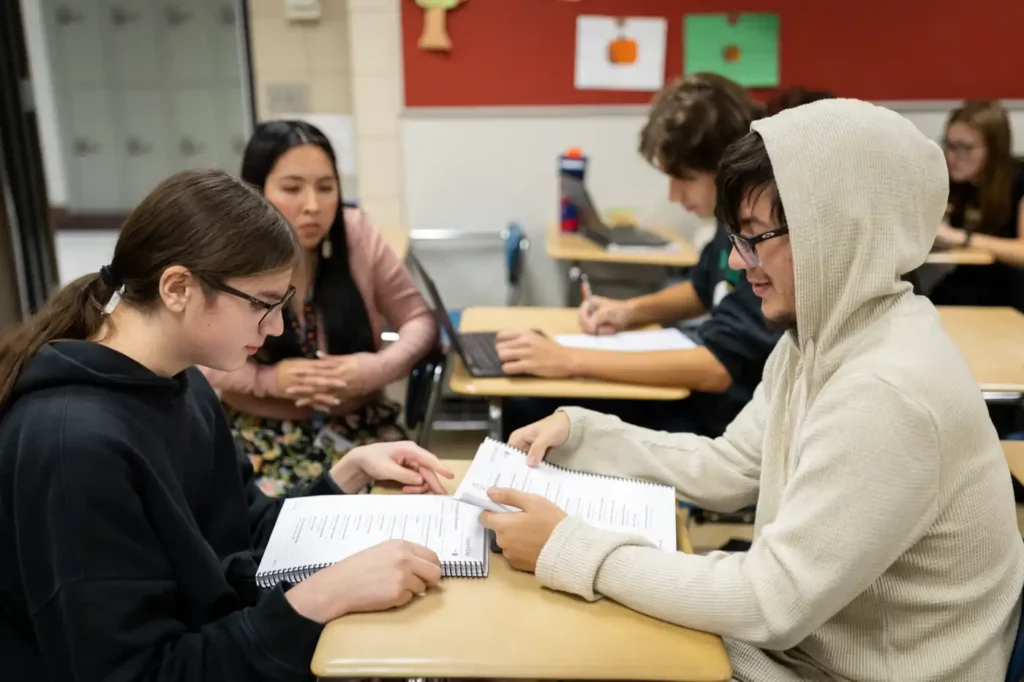
Not all students in the course identify as Native. Meyers says normalizing Indigenous languages in school curriculum opens learning opportunities.
“When non-Native students take an Indigenous language course, they’re seeing contemporary examples of Indigenous people, and they’re also getting to step into this other worldview that they may not get access to in their other courses,” said Meyers.
For now, only a level one class is offered, but many of the Ojibwe language students hope the benefits will continue with a level two course next year.
This article was originally published by MPR News on November 2, 2026, and is republished by The Circle with permission from Minnesota Public Radio.
© 2026 Minnesota Public Radio. All rights reserved.
Original article: https://www.mprnews.org/story/2026/11/02/valuable-to-learn-students-take-first-ojibwe-class-offered-at-anokahennepin-schools