

MNsure_TheCircle_1800x150

Nothing irks some white people like accurate history

Staff Reporter
Share :
Facebook
X
MNsure_TheCircle_1800x150

By Bob Collins/MPR News

The usual suspects have gotten their feelings hurt – again – because the Minnesota Historical Society has pointed out that Minnesota history didn’t begin with them.
KSTP reports that the latest “controversy” is over signs that went up at Fort Snelling historic site that say “Historic Fort Snelling at Bdote.” The old signs said only “Historic Fort Snelling.” Bdote is the Dakota word meaning the point at which two waters meet.
See pearls. Clutch pearls.

“Without any public input that I am aware of, the Historical Society has changed the name of historic Fort Snelling, which is a military installation, to historic Fort Snelling at Bdote,” Sen. Scott Newman, R-Hutchinson, told 5 Eyewitness News.

He said he’s also heard from veterans who are upset by the signs, and consider it “revisionist” history.

“I think it’s a rewriting of our history and I’m not in favor of it,” he said.

Nobody is rewriting anything, of course. Nothing was removed from the original sign. Fort Snelling is still there. It’s just that additional information has been added.

“And some people don’t like that because they like what we were told in kindergarten or first grade or fifth grade what our history is about. And our history isn’t exactly what our history was about,” said Sen. John Marty.

The Minnesota Historical Society says the name hasn’t been changed. The Society is simply expanding the stories it’s telling.

“Lots of history has happened there over many generations,” said the director of government regulations for the organization. “We want to tell all of those stories, and by telling those stories we absolutely are not diminishing military history or the contributions of veterans.”

A $30 million revitalization project is underway at the fort. The lawmakers are supporting a bill to cut the Historical Society’s budget. Officials with the Society say up to 80 people could be laid off.

“I want the Historical Society to come to the table and talk to us,” Newman said. “And be willing to listen to what our concerns are and act on those concerns. And to date, in my estimation, they have not.”

Nothing irks some EuroMinnesotans like accurate history. And nothing is too small for the daily dose of outrage. Just look at WCCO’s Jason DeRusha, who posted an innocuous photo of a beautiful sunrise over Bde Maka Ska this week and found, as he described it, “a surprising amount of rage” in the accompanying comments. That shouldn’t have surprised anyone, actually.

Bde Maka Ska, of course, was previously Lake Calhoun, in honor of John C. Calhoun, who tried his best to keep slavery alive in the nation. The lake’s name was restored to its previous name in January 2018 in recognition that an accurate historical name is more important than honoring someone who described slavery as a positive good.

Minnesota Public Radio News can be heard on MPR’s statewide radio network or online.

 

Staff Reporter,
Environment & Politics
Elaine Strongbow is a member of the Leech Lake Band of Ojibwe and has covered environmental and tribal sovereignty issues for The Circle since 2019. She is a graduate of the University of Minnesota School of Journalism and was a 2023 fellow of the Institute for Nonprofit News.

This reporting is made possible by readers like you.

The Circle is a nonprofit newsroom with no tribal affiliation, no corporate ownership, and no paywall. Independent Native journalism depends on reader support.

Advertisement

MNsure_TheCircle_1000x2110

Recent Stories

Advertisement

RWRE-Battery-Digital_1000x2110

More From News

Minnesota Tribes Lead Research Into Water Contaminants and Impacts on Traditional Foods

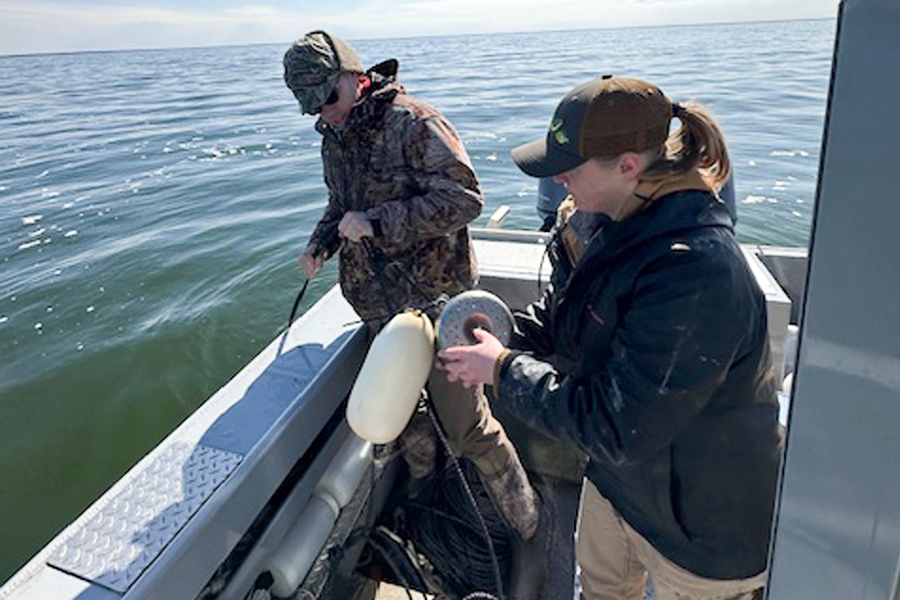
Three Minnesota tribal nations are working with researchers to investigate contaminants in lakes, waterways, and fish to protect water quality, traditional food sources, and the health of their communities. The Red Lake Nation, Fond du Lac Band of Lake Superior Chippewa, and Grand Portage Band of Lake Superior Chippewa are participating in a tribal-led research […]

New Dakota Youth Fellowship Offers Opportunities to Share Community History and Culture

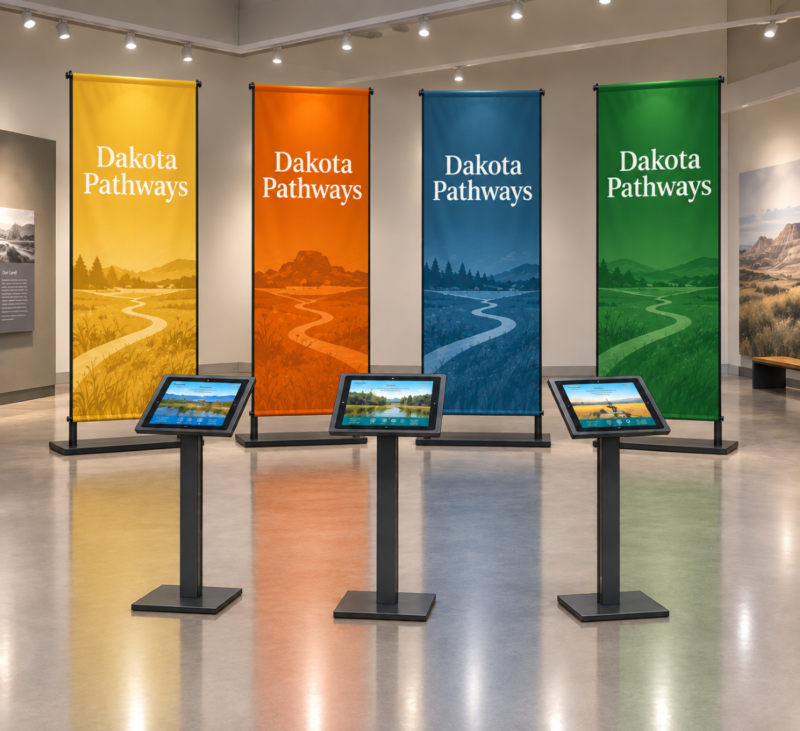
A new fellowship program in southeastern Minnesota is offering Dakota young adults the opportunity to explore their communities’ histories, develop research skills, and share stories through creative projects. The Winona County Historical Society has announced the Dakota Pathways Fellowship, a five-month program beginning in 2027 that will select six Dakota participants ages 18 to 24. […]

Minnesota Hosts First American Indian Health and Research Workforce Summit

Tribal leaders, healthcare professionals, researchers, and educators from across Minnesota gathered in Hinckley on October 27–28 for the state’s first American Indian Health and Research Workforce Development Summit, aimed at addressing longstanding workforce shortages and expanding opportunities for Native Americans in healthcare and research careers. The two-day summit, held at Grand Casino Hinckley, was organized […]

MNsure_TheCircle_1800x150

Search The Circle

Find stories, columns, events, and magazine features.

Help The Circle Recover & Preserve Native History

FIRE RECOVERY & ARCHIVE PRESERVATION FUND

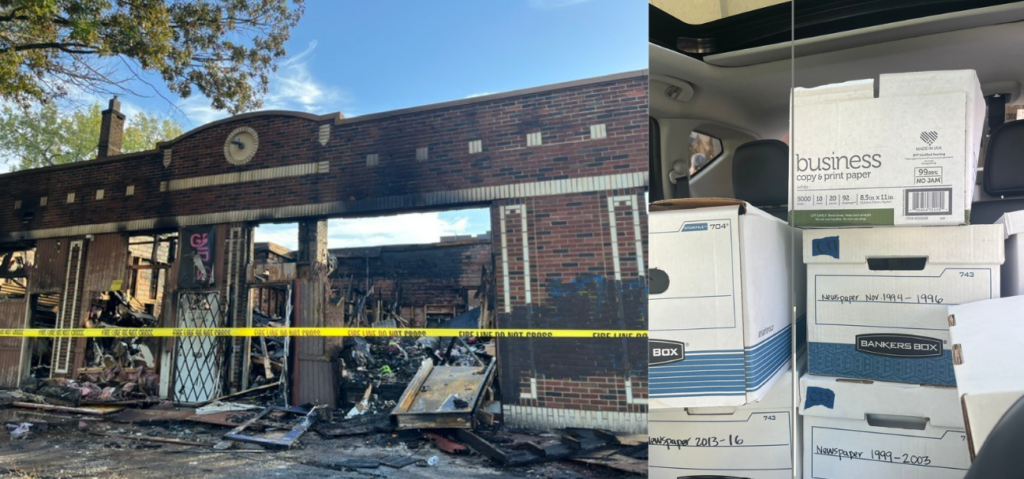
A recent fire at the building housing The Circle’s office has created unexpected challenges for our independent Native newspaper.

Thankfully, with the help of community members, we were able to recover our newspaper archives dating back to the 1980s. These irreplaceable records preserve decades of Native community history, cultural knowledge, and stories.

Your donation will help The Circle recover from the fire, protect our historical archives, and continue sharing Native voices for generations to come.

Every contribution makes a difference.

Pinagigi — Thank you for helping preserve generations of Native stories.