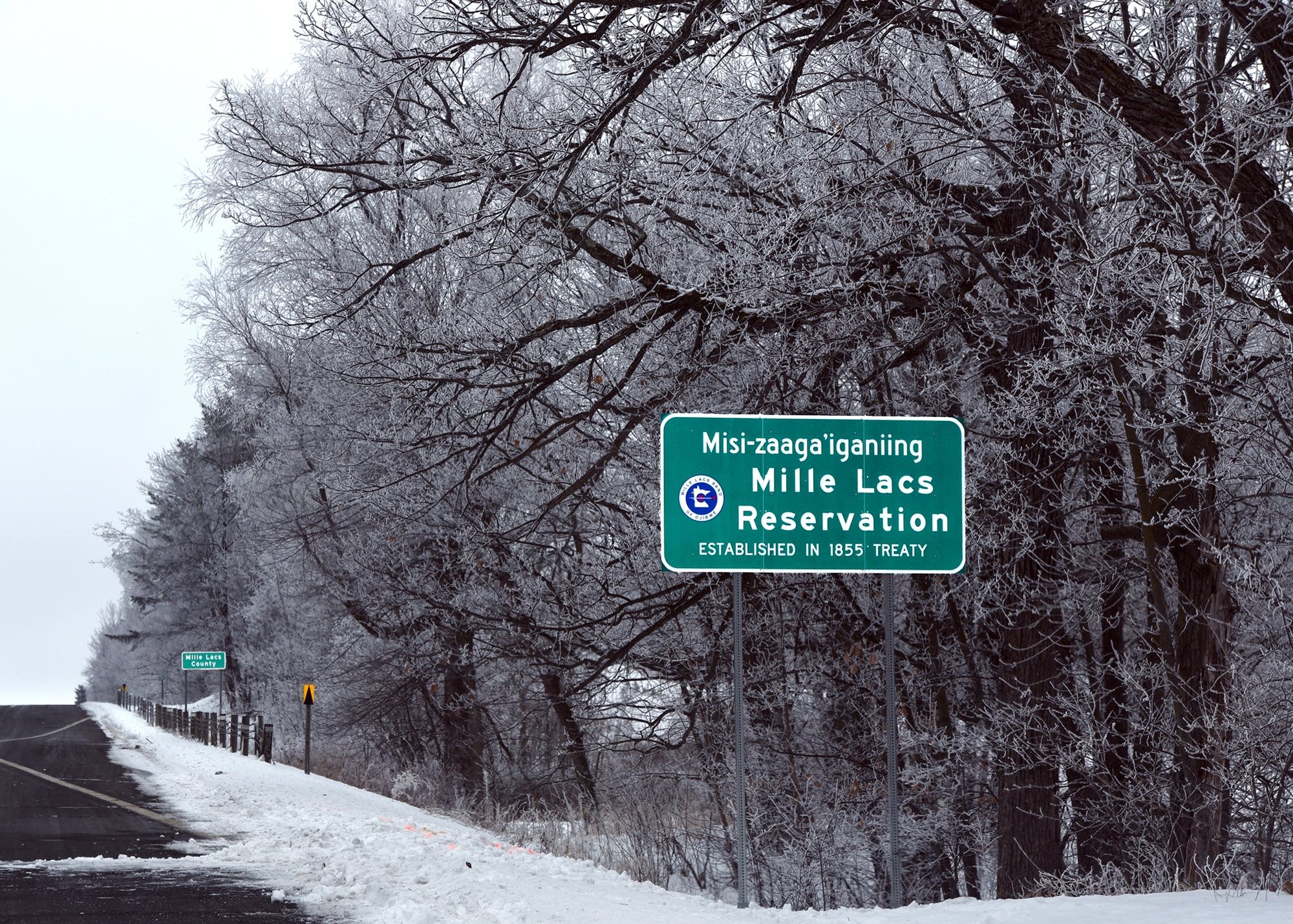
Indian activists are gearing up to fight a planned oil pipeline that would cross the Leech Lake Reservation in northern Minnesota.
The 6-inch diameter pipeline, to be built by Enbridge Energy, would run almost 1,000 miles from Alberta, Canada, to Superior, Wis. Dubbed the Alberta Clipper, the pipeline would cut diagonally across northern Minnesota. The Minnesota Public Utilities Commission has approved the route for the pipeline project.
The Leech Lake Tribal Council has agreed to allow it to cross their reservation, in exchange for a $10 million payment from Enbridge Energy.
But some tribal members are collecting signatures hoping to put the
matter to a vote in attempt to block the deal, saying they are worried
about the potential for oil leaks. They say some of the pipes that have
been in the ground for 50 years or more and are getting rusty.
Enbridge Energy spokeswoman Denise Hamsher says any rust spots on the surface don’t threaten the integrity of the pipes.
In addition to the Indian activists’opposition, several environmental
groups have taken the project to court. They say taking oil from the
tar sands in Canada is too environmentally destructive. They say the
large pipeline would contribute significantly to global warming – not
so much from the oil itself, but for how the oil is extracted in
Canada. The oil comes from tar sands, which are considered a process
that is damaging to the enviroment on mutiple levels.
According to activists, one barrel of tar sands oil requires between 2
and 4 barrels of water and two tons of tar sands scraped from below
the surface, creating two barrels of toxic waste for one barrel of oil.
Tar sands producers also burns 600 million cubic feet of natural gas to
produce tar sands oil, enough natural gas to heat 3 million homes.
Opponents say that comunities are also at risk to exposure to oil
spills. Between 1992 and January 2008, the project has experienced a
number of spilled oil accidents. In 2003, the Enbridge pipeline
spilled 100,000 gallons of oil into a tributary of Lake Superior. In
2007, 235 barrels of oil were spilled near Clearbrook, Minn., resulting
in a fire and explosion and the deaths of two repair crewmembers. And
another spill in 2002 released 48,000 gallons of crude oil at the Cass
Lake pumping station.