
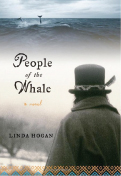
 A young man and young woman from a fictional coastal tribe fall in love, conceive a child and are separated only to meet again years later in confrontation. Their tribal council has determined that they should reinstate the hunting of whales. The aftermath of war and conquest tell heavily in Hogan’s novel. Damaged characters turn from what they love toward greed and power. But when we get into the point of view of even the worst behaved of her characters we find they want more than anything “to be a people” again, want to be family again and will cross continents to be so. Hogan’s detailed and lovely prose gives us a dramatic and intimate view of the sea and her creatures. From the opening scene in which an octopus walks on land to bring a blessing to the people to descriptions of houses white with whale bone, through political dirty dealings and personal vendettas, Hogan creates a believable tribal culture built around whales in a time past whaling. At times, such as when the women seem so much more virtuous than the men, we have to wonder if the fictional tribe’s members are not a kind of metaphor. Do they stand for human relationship to the natural world? And if so, can we accept Hogan’s message that humans have essentially dualistic views: either you are for the earth and suffer with it or are against it and happy exploiting it. Perhaps too simple. Complicating our entire read of The People of the Whale is the underlying comparison to the Makah, an actual Northwest Coast people who did determine to hunt whales again, under some of the same circumstances as described by Hogan.What are we to make of her less-than-flattering
(and just barely understanding) reference to a people who (for their own reasons and within their sovereign rights) choose to institute hunting practices that fly in the face of accepted conservationist, animal rights and environmental norms? You will have to read this familiar, though heavily fictionalized, portrait of a tribe at war with itself to see if it answers the implied question: how a people can be both stewards of endangered animals and their only natural threat? – Review by Heid Erdrich