

By Niharika Bhavsar
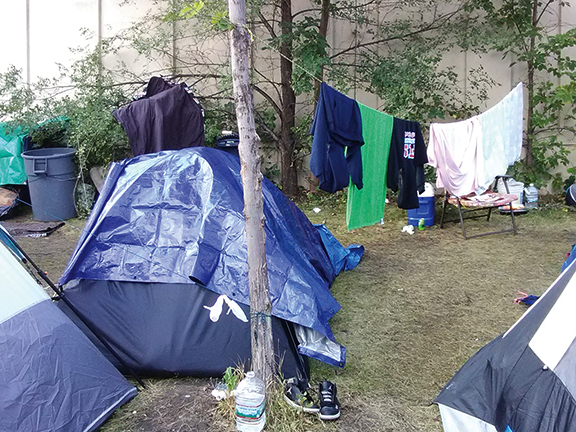
“He’s on heroin, and there’s nothing I can do. His mom died of an overdose. You’d think that would make someone want to quit,” said Greg Franson. Mr. Franson’s son had joined the over hundred Native Americans gathered near East Franklin and Hiawatha avenue in Minneapolis, Minnesota. Homeless, jobless, and hopeless, many Native Americans had nowhere to go. Imagine driving down the highway and seeing the overwhelming despair. No individual should have to endure these conditions.
According to the Pew Research Center, one in four Native Americans live in poverty; yet, their poverty is not a result of a lazy work ethic or a lack of motivation; rather, it is a result of decades of misguided government policies depriving American Indians of economic opportunities.
For example, the Dawes Act of 1887, and later the Burke Act of 1906, intentionally placed reservations in areas that have very little fertile land. The little workable land that tribes do have “ownership” of is often licensed to non-Natives for commercial purposes.
Furthermore, one of the most common misperceptions about reservations is that they pull in a mass of wealth from casinos as the federal government does not regulate gaming in Indian country. While some tribes do benefit from casinos, the majority of tribes do not profit from the gaming business because they simply do not have casinos, or the money earned is not distributed within the reservation.
Some tribes report unemployment rates as high as 85 percent. Unfortunately, the high rate of substance abuse in Native communities only compounds the unemployment problem on Native American reservations. Approximately 2.5 percent of adults admitted for substance abuse treatment are Native Americans, even though Native Americans make up less than one percent of the US population, according to the Treatment Episode Data Set Report. This drastic imbalance reflects the impacts of poor health care and extreme poverty amongst Native American communities. This is not a newfound phenomenon either. Homelessness and drug addiction have plagued the American Indian community for generations.
Native Americans also have the lowest high school graduation rate of any ethnic group in the United States. According to the Civil Rights Project, on average, less than 50 percent of American Indian students graduate. Additionally, the EPA reported in 2012 that over 120,000 homes on reservations lack access to basic water and sanitation services. The Indian Health Service confirmed this report and stated that about one in ten Native homes are without safe and reliable water. There is even the issue of internet access, which, according to the National Congress of American Indians, is estimated to be less than 10 percent on reservations. These five areas, employment, a drug free environment, education, housing, and internet access, are essentially the five missing rungs on the ladder out of poverty. And they have missing been for decades.
All of this goes to show that the encampment we saw this winter in Minneapolis is really a microcosm of what is occurring on reservations. Issues such as unemployment and drug abuse are easy to forget when they affect people far away on reservations, but those issues are impossible to ignore when they are literally displayed and lined up against a wall next to a major highway for everyone to see.
In fact, this movement has pulled several groups to work together to help the Minneapolis homeless encampment. For instance, when the encampment began to draw significant attention in early August 2018, the mayor of Minneapolis, Jacob Frey, acknowledged the problem when he said, “We collectively are perpetually keeping them as homeless, and that’s wrong, we have to step up.”
Many other city leaders also pledged their commitment to find shelter for the largest homeless encampment in recent Minnesota history. Construction crews even began building an off-site facility to provide sheltered housing. But shelters are only a temporary solution; the ultimate goal is to create lasting change through material improvements.
Frey articulates the solution is pushing for more affordable housing, “We will be pushing for more funding for housing at the 20, 30, 40 percent of area median income levels which is what we need so desperately right now.”
In fact, Minneapolis officials constructioned the temporary “navigation center” where people were able to go to find warmth, food, and security. The center held three buildings that held one hundred and forty people.
More importantly, the project has been predominantly led by Native leaders themselves, and the shelter is built on land owned by the Red Lake Nation. Even though the navigation center is only chartered to remain open until June 2019, it represents a significant step in the direction of cooperation between Native and state governments to work on sustainable policies that improve lives.
The Wall of Forgotten Natives must not be forgotten. It is a shame it took over a hundred people lined up in tents for us to take ownership and recognize the problems of affordable housing and substance abuse not only as Native problems but also as everyone’s problem.
Now, it is incumbent on all of us to raise awareness to affect positive change for the Native American community. Whether it’s advocating for legislation, or taking up an informed position in a classroom discussion, we all must play our part in shaping the future.