

MNsure_TheCircle_1800x150

Women Water Protectors exhibit will highlight Native women warriors

Staff Reporter
Share :
Facebook
X
MNsure_TheCircle_1800x150

A new photography exhibit by photograher John Kaul will highlight Native American women Water Protectors, which will be on display in December. Kaul has photographed and interviewed 20 Native American women about why they work to protect the water. The exhibit will tell the story of the Indigenous women he met at the Line 3 protests.

Kaul writes in his press release: “In March, I participated in a Line 3 protest in Park Rapids. Jane Fonda was there, but the faces that riveted my attention were those of the indigenous grandmothers who came to peacefully protest an oil pipeline that violated the terms of a treaty signed many decades ago and ignored just like the other 409 treaties with Native Americans. I decided on the spot that day that I would pull together a portrait exhibit honoring these indigenous women water protectors.”

Each portrait in the exhibit is accompanied by a brief biographical sketch that explains who the water warriors are, what motivates their involvement in protecting water, and something about their lives.

Kaul says there are two types of activists. First, there are the water walkers who cover the entire lengths of our rivers, like the Mississippi, Ohio, Missouri, Red, Potomac, Wisconsin, and many others. The second type are those who attempt to disrupt the construction of oil pipelines by sitting in front of bulldozers or handcuffing themselves to fences and the like.
The Unity Unitarian Church, 732 Holly Avenue in St. Paul is hosting the exhibition during the month of December.
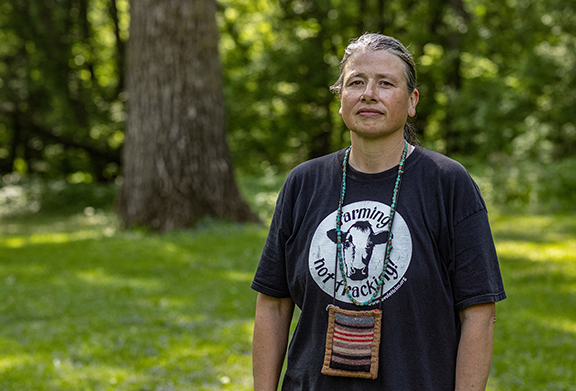
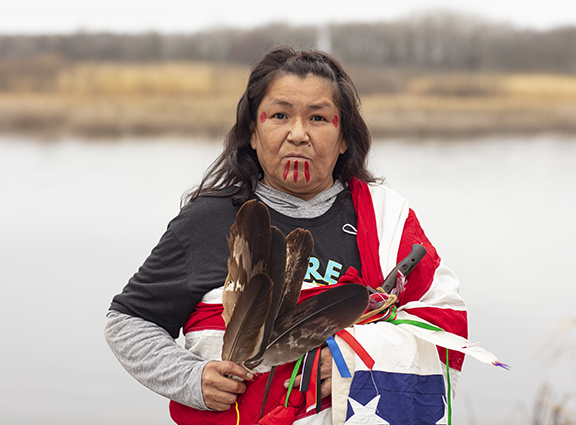
Chas Jewett are part of the exhibit honoring women Water Protectors. (Photos by John Kaul.)

Exerpts from the exhibit for Chas Jewett:
“Chas Jewett (Mnicojan Lakota) lives on a reservation that is just south of Standing Rock in a little town called Jewett Creek which is named after one of her ancestors. She is an environmental activist and an outspoken and articulate critic of our time. Her family has an interesting history in that one of her grandfathers had the unenviable task of serving on the first council that was forced to allot land on an ever-shrinking reservation. Her grandmother helped shelter Indians fleeing the Wounded Knee Massacre. Her father and grandfather were forced to attend boarding schools.”

Exerpts from the exhibit for Tania Aubid:
“When I took this portrait, Tania was still recovering from a 35-day hunger strike. She said she had been ‘on a hunger strike to protest the treatment of Mother Earth, and the threat to wild rice and water posed by Line 3.’ She was, at that time, optimistic that the courts would uphold provisions of the 1855 treaty regarding Native sovereignty in that area. Her hopes with dashed by the court decision.

Tania grew up on a reservation in the town of East Lake, which is in Aitkin County. She refers to that part of the state as “The Deep North,” because the hatred for Native peoples remains strong there and because of the prejudicial and aggressive tactics of local law enforcement. It is also the heart of Trump country with banners proclaiming continuing fealty to the former president plastered on homes, farms, pick-ups, and stores – daily reminders that prejudice surrounds the reservation.”

Staff Reporter,
Environment & Politics
Elaine Strongbow is a member of the Leech Lake Band of Ojibwe and has covered environmental and tribal sovereignty issues for The Circle since 2019. She is a graduate of the University of Minnesota School of Journalism and was a 2023 fellow of the Institute for Nonprofit News.

This reporting is made possible by readers like you.

The Circle is a nonprofit newsroom with no tribal affiliation, no corporate ownership, and no paywall. Independent Native journalism depends on reader support.

Advertisement

NOV-JAN Federal Changes Ad (1080 x 1080 px) - The Circle (1)

Recent Stories

Advertisement

RWRE-Battery-Digital_1000x2110

More From Arts & Culture

New Dakota Youth Fellowship Offers Opportunities to Share Community History and Culture

A new fellowship program in southeastern Minnesota is offering Dakota young adults the opportunity to explore their communities’ histories, develop research skills, and share stories through creative projects. The Winona County Historical Society has announced the Dakota Pathways Fellowship, a five-month program beginning in 2027 that will select six Dakota participants ages 18 to 24. […]

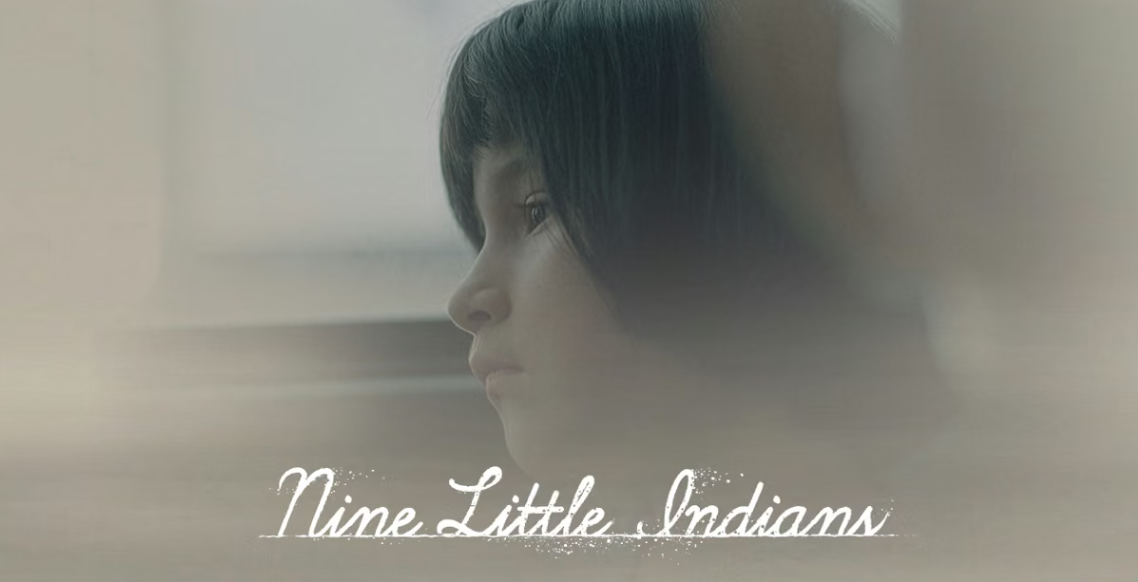
Documentary ‘Nine Little Indians’ to Screen at Turtle Mountain During Native American Heritage Month

The Turtle Mountain Band of Chippewa Indians will host a screening of the documentary Nine Little Indians on November 17 at the Sky Dancer Event Center in Belcourt, North Dakota, highlighting the experiences of nine Native sisters who survived abuse in the American Indian boarding school system. Directed by award-winning filmmaker Shannon Kring and executive […]

Honoring Native American Veterans: A Legacy of Service and Sacrifice

As communities across the country observe Veterans Day on November 11th, The Circle joins tribal nations in honoring the Native American men and women who have served, and continue to serve, in the United States Armed Forces. Native Americans have a long history of military service, with participation rates historically among the highest of any […]

MNsure_TheCircle_1800x150

Search The Circle

Find stories, columns, events, and magazine features.

Help The Circle Recover & Preserve Native History

FIRE RECOVERY & ARCHIVE PRESERVATION FUND

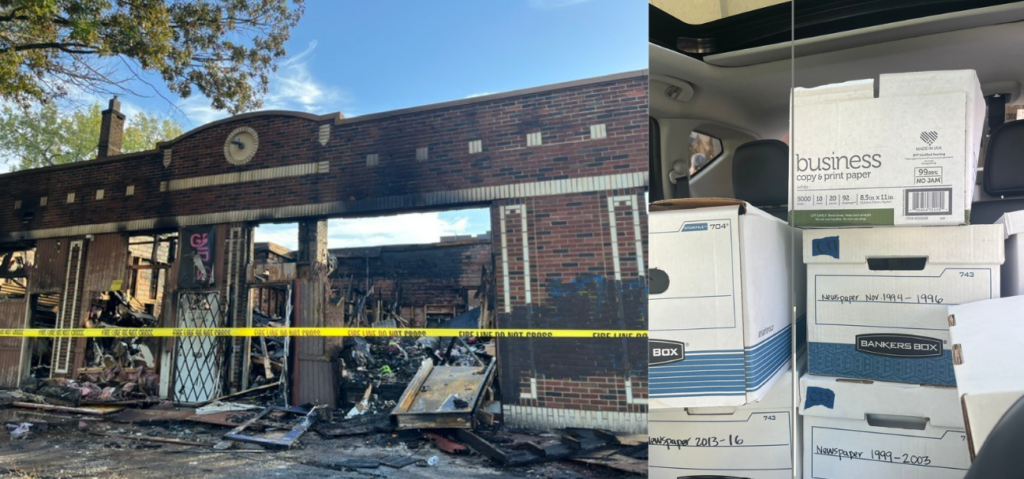
A recent fire at the building housing The Circle’s office has created unexpected challenges for our independent Native newspaper.

Thankfully, with the help of community members, we were able to recover our newspaper archives dating back to the 1980s. These irreplaceable records preserve decades of Native community history, cultural knowledge, and stories.

Your donation will help The Circle recover from the fire, protect our historical archives, and continue sharing Native voices for generations to come.

Every contribution makes a difference.

Pinagigi — Thank you for helping preserve generations of Native stories.