
 The paradigm of Native American
manhood shifted with New Native Theatre’s production of “Native Man
the Musical, Phase I,” performed at the Minnesota Fringe Festival
with its last performance on Aug. 9.
The stories were authentic accounts
from Native men from around the Twin Cities and the region. New
Native Theatre’s artistic director Rhiana Yazzie (Dine) sought to set
the expectation from stereotypes to previously unimagined identities
by non-Native audiences.
“Some of it isn’t pretty. And it’s
certainly not what the mainstream has dreamed up. Defying the
stereotype of the Indian brave, the warrior, the oppressed, these
stories are open and vulnerable moments necessary to be share in
order that we might understand ourselves better, and possibly, the
non-Native world can re-adjust its boundaries, fantasies, fears and
misconceptions about Native male-hood.”
The performance features the life
experiences of each cast member and interviews from men in the Twin
Cities Native community. Among those in the live performance were
Jeff Jordan (Boise Forte Ojibwe), Wade Keezer (White Earth Ojibwe),
Jase Roe (Northern Cheyenne), Sisoka Duta (Sisseton-Wahpeton Dakota),
Raphael Szykowski (Kuna) and rapper Tall Paul (Leech Lake Ojibwe).
The production also featured filmed interviews with Dennis Banks
(Leech Lake Ojibwe), Black Fox (Oglala Lakota), Chema
Pineda-Fernandez (Nahuatl Mayan), Cole Premo (Mille Lacs Ojibwe) and
Jim Thunder Hawk (Oglala Lakota).
One of the more compelling moments of
the performance came when Keezer opened up on screen about his hatred
for the warrior mentality that’s expected of young Native men. He
spoke in his video segment about the culture that he was raised in
that praised stoicism and emotional repression among men and that he
combats that by telling his children that he loves them, allowing
them to feel their emotions, instead of shaming them.
In his performance piece, Keezer
talked about his relationship with his own father who sobered up and
later became a born-again Christian. “Some people started calling
me ‘the preacher’s son.’ I really hated that, I really didn’t care
for any kind of Christianity, for a lot of different reasons, but
mostly what it’s done to Indians. I’m sick of all the Christians, the
Muslims, the pipe carriers; it doesn’t mean nothing to me. All these
ultimatums and stereotypes that they use, it doesn’t work on me.”
When asked what he believed in, he closed with a air-guitar
performance of Twisted Sister’s “We’re Not Gonna Take It.”
Sisoka Duta’s piece opened with a
traditional Dakota greeting, giving his family history and
upbringing. He spoke about his love of his cultural identity and the
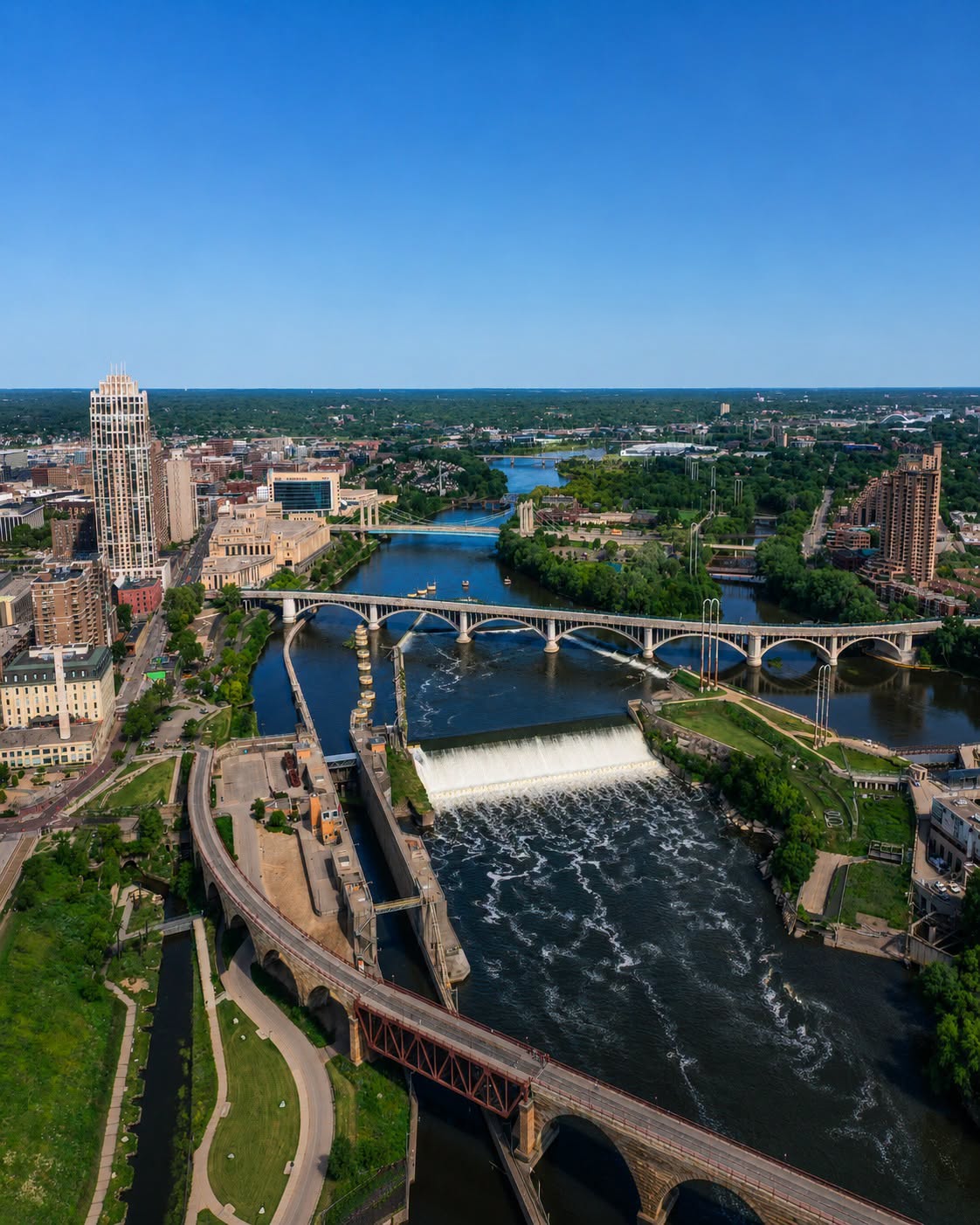
river. “It’s where my ancestors are from, it’s where I’m from and
whenever I’m feeling sad, I go to the river, I start to feel better.
One time, I got into an argument with my ex, I went to the river, I
stopped by the shore and I said a prayer in my Dakota language. I
felt better, I could just let it go, it was stress relief. Kind of
like that river, everything washes away and goes downstream; try not
to hold onto that stuff I was going through, because it hurts you
more to carry all that pain."
Jordan’s segment took on a TED Talk
theme on authenticity. He began by explaining how growing up in the
suburbs of the Twin Cities, he felt disconnected from his tribal
identity. “Right away, I knew we were different. My dad was a
really, really brown man, a very dark guy. One day I came home from
school – my teacher was black – and I asked my dad, ‘daddy, are
you black?’ And he said, ‘no, I’m Indian and so are you.’ Right away,
I knew being Indian was something that had to be defended.”
He felt ambivalence about his cultural
identity; ultimately, he spent years battling his own alcoholism and
addiction. “I’m not white enough to be white, not Indian enough to
be Indian.” He eventually began drinking at 25 years-old. “I used
to be Mr. Academic Native Rights and now I’m under a bridge, drinking
‘Indian champagne’ mouthwash. That’s a joke I only ever hear from
other Natives, I don’t hear it from anyone else. Humor is one thing
that gets us by.” Ultimately, Jordan found peace with his identity.
“When I really stopped searching, caring, worrying and wondering
and just being what I am, where I am right now, I guess that’s as
close to being an authentic Ojibwe man as I can be.”
The Two Spirit identity was presented
with Jase Roe’s storytelling of his life. He born in Montana and was
adopted by a maternal aunt, who then moved to Eagan and tried to keep
him connected to his cultural background. But growing up in suburban
Minnesota, he felt isolated from any sense of cultural identity. At a
young age, Roe’s adoptive father died and his aunt was no longer able
to function as his parent, financially, emotionally or physically.
When he came out as gay, his adoptive
family continued to isolate him, which caused him to feel a sense of
alienation, both culturally and in the LGBT community. “You see
these white guys who are ripped with little dogs and nice cars,
that’s what it is to be gay,” he said the video component of his
story.
Roe fell into addiction and spent many
years traveling across the country, looking to escape the emotional
trauma that was a result of the fallout of his family’s breakup and
his alienation. Through many years, he eventually found a sense of
recovery and has been sober for nearly two years. This recovery led
him to reconnecting with his biological family through social media.
Roe’s biological father, Vincent White
Crane and his wife Clara, traveled from Lame Deer, Montana to meet
his son for the first time on opening night. In his final moments on
stage, Roe acknowledged his journey’s beginning from adoption to his,
“family of choice, which grows every day,” looking at his father.
Banks’ contribution to the performance
included a story from his childhood. He talked about how when he was
a young boy, he and his friends would tease the older boys who dated
girls. When he came of age, he noticed a girl on the playground. They
sat on the swings and as they drew closer for a kiss, he said, “She
looked at me, she came closer and I said ‘Oh my god!’ I was
flabbergasted, she put her arms around my neck and she kissed me. And
I passed out! All the boys were laughing at me. That was my first
kiss and it was not initiated by me … I was resistant to it at
first, but there it was, my big moment in life and I just collapsed
right there.”
The next phase of “Native Man The
Musical” is set to begin work in November of this year through
January of 2015. Yazzie intends to collect as many stories from
Native men and women as possible. For more information on how to take
part, email Yazzie at info@newnativetheatre.org.