
 November 08, 2012
Robert Albee is a retired school teacher and Minneapolis resident who was diagnosed with Type 2 diabetes in 1995. I met Albee on a cold and rainy morning for a monthly Diabetes Breakfast in the culturally diverse Phillips neighborhood at the Phillips Community Center.
On that Thursday morning traffic all around the Twin Cities screeched to a very slow halt as the unexpected heavy rain came during rush hour. The rain was no deterrent to 35 participants who showed up to eat a hearty breakfast burrito bowl layered with beans, eggs, sausage, lettuce, fresh cilantro, tomato and a side of fresh apple slices.
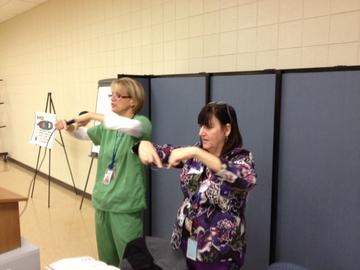
Participants crowded around tables with hot coffee in hand to hear a psychologist and nurse practitioner from the Native American Community Clinic talk about diabetes and how it can affect their mental health. Topics at past breakfasts have included foot care, dental hygiene, and nutrition. The approach that Albee and his wife Sharon took in forming their two-year-old group, A Partnership of Diabetics (A-POD), is one of sharing in community with other diabetics. In addition to a monthly diabetes breakfast with speakers, A-POD holds weekly meet-up style groups. Each meeting starts with members recording their blood pressure and weight. During the meetings, members share their successes, struggles, and tips for better management of a sometimes very complex disease. Albee says about 100 people per month attend the breakfast and/or meet-up groups.
Click for information about Albee & A-POD (http://www.meetup.com/A-Partnership-Of-Diabetics/) and information about diabetes. (http://www.diabetes.org/)
Albee has no medical background outside his personal experience with diabetes. He believes that a medical background is not necessary to help those with diabetes succeed. “We come mostly from mostly inspiration, not from an academic background. Innovation comes from people willing to take risks… It’s not a medical model at all, it’s a community model, and some would call it a promotoras (Latino lay health educators) model in some ways. In other words, villages have always kept people healthy. We learn by indigenous wisdom and experience.â€
Richard Jacobi is a southeast Minneapolis resident, Type 2 diabetic and A-POD member since its inception. When he was diagnosed in 2009, Jacobi was thankful for the initial support from a diabetes educator and dietician. What was missing was very practical advice. “How do I journal food intake?" Jacobi asked. "I had to figure it out myself.†Through A-POD and self determination, Jacobi started to incorporate cooking, exercise (including yoga 2-3 days/week), and a food journal to eventually lose 100 pounds. His diabetes is now completely controlled with a healthy diet and exercise.
Carol Manchester, Advanced Practice Clinical Nurse Specialist and Certified Diabetes Educator at University of Medical Center and Amplatz Children’s Hospital, says diabetes can’t be cured presently. She said, “I tell my patients you have no current clinical signs of diabetes if you continue on this path of healthy eating and exercise you will likely be okay, but if you lapse ( diet and exercise) you will see the diabetes return.â€
Jacobi feels that the traditional medical system needs to seriously look at the benefits of the peer to peer exchange that is inherent in the A-POD model. “There is information that comes up in that kind of exchange that doesn’t come up in the lecture format where the medical professional sits the diabetics down and lectures them," he said. "Even with Q&A after (a medical appointment) it just isn’t the same. You receive and share information (at A-POD) that doesn’t come to mind in other contexts.â€
Manchester agrees that patients could benefit from more support, “With coaching and emotional support — it can come from family, a church group or community group, to really support an individual for the long haul so they aren’t feeling isolated, alone, or discouraged. Our system needs to be looking at how do we reach out to individuals in their home? People live at home and that’s where we need to help them succeed.â€