

By AP
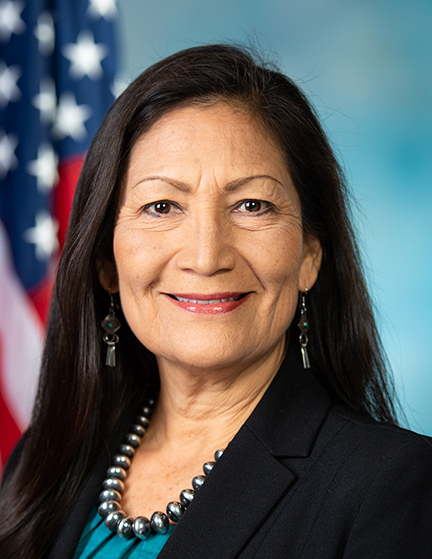
President-elect Joe Biden plans to nominate New Mexico Rep. Deb Haaland as interior secretary, according to two people familiar with the decision, a historic pick that would make her the first Native American to lead the powerful federal agency that has wielded influence over the nation’s tribes for generations.
Tribal leaders and activists around the country, along with many Democratic figures, cheered Haaland’s selection after urging Biden for weeks to choose Haaland. They stood behind her candidacy even when concerns that Democrats might risk their majority in the House if Haaland yielded her seat in Congress appeared to threaten her nomination.
With Haaland’s nomination, Indigenous people will for the first time see a Native American at the table where the highest decisions are made – and so will everyone else, said OJ Semans, a Rosebud Sioux. “It’s made people aware that Indians still exist,” he said.
Haaland, 60, is a member of the Laguna Pueblo and, as she likes to say, a 35th-generation resident of New Mexico. The role as interior secretary would put her in charge of an agency that not only has tremendous sway over the nearly 600 federally recognized tribes but also over much of the nation’s vast public lands, waterways, wildlife, national parks and mineral wealth.
The pick breaks a 245-year record of non-Native officials, mostly male, serving as the very top federal official over American Indian affairs. The federal government often worked to dispossess them of their land and, until recently, to assimilate them into white culture.
Her selection was confirmed by two people familiar with the decision who wasn’t authorized to speak about it publicly and spoke to the Associated Press on condition of anonymity.
Navajo Nation President Jonathan Nez described himself as “overjoyed” and said in a statement, “It is truly a historic and unprecedented day for all Indigenous people.”
Biden’s pick could further deplete, at least temporarily, the narrow majority Democrats maintain in the House. Biden has already selected several lawmakers from the chamber, including Louisiana Rep. Cedric Richmond and Ohio Rep. Marcia Fudge, to serve in his administration.
Some on Biden’s transition team had expressed concerns about dipping further into the already thinned out Democratic House majority for another senior administration posting. But Biden decided that the barrier-breaking aspect of her nomination and her experience as vice chair of the House committee on natural resources made her the right pick for the moment.
The president-elect has been methodically filling the posts in his Cabinet, adding North Carolina environmental official Michael Regan as his nominee to lead the Environmental Protection Agency, according to two people familiar with the selection process. Earlier this week, Biden introduced former South Bend, Indiana, mayor Pete Buttigieg as his transportation secretary, and he intends to make former Michigan Gov. Jennifer Granholm his energy secretary.
House Speaker Nancy Pelosi made it clear that Biden had her blessing to choose Haaland, saying she would make an “excellent choice” as interior secretary.
The speaker called the New Mexico congresswoman “one of the most respected and one of the best members of Congress” with whom she has served.
South Carolina Rep. James Clyburn, the No. 3 Democrat in the House and a close Biden ally, also supported Haaland for the job.
Haaland, one of the first two Native American women elected to the House, said she could see the difference her position made for ordinary Native Americans who came to her with business before the federal government.
“They felt comfortable just launching into the issues they wanted,” Haaland told The Associated Press in an interview before her appointment. They would say, for example, “Oh, we don’t have to explain tribal sovereignty to you,” meaning tribes’ constitutionally guaranteed status as independent nations.
Scores of tribal officials around the country and dozens of Democrats had written letters urging Haaland’s appointment.
Haaland, is vice chair of the House Committee for Natural Resources. She previously worked as head of New Mexico’s Democratic Party, as tribal administrator and as an administrator for an organization providing services for adults with developmental disabilities.
Born to a Marine veteran father and Navy veteran mother, Haaland describes herself as a single mother who sometimes had to rely on food stamps. She says she is still paying off student loans after college and law school for herself and college for her daughter.
When Democrats mentioned former Interior Department officials who were male and Native American as alternatives to Haaland, her supporters charged sexism and classism, and stuck with the New Mexico Democrat.
Haaland told the AP before her selection that regardless of what job she had, she’d be working to “promote clean energy and protect our public lands.”
Interior’s broad authority includes managing federal relations with tribes, administering tens of millions of acres of land and mineral rights held in trust for Native Americans and Alaska Natives, running national parks and making decisions affecting millions of miles of U.S. lands and waterways, wildlife, endangered species, and oil and gas and mining.
Biden has promised the nation’s broadest effort yet to curb the oil, gas and coal emissions that are causing the rapid deterioration of the climate, and Interior would play an important part in that.
Previously, the highest-ranking administration official known to have Native American heritage was Charles Curtis, who served as Herbert Hoover’s vice president and whose mother was one-quarter Kaw tribe.
Associated Press writer Aamer Madhani in Wilmington, Del., contributed to this report.