


By Mark Anthony Rolo
While illegal immigration is not a pressing issue for the American Indian (when infact, it should have been as in why weren’t the Puritans vetted before landing on our shores?) the issue of separating mothers from their infant children is most certainly relevant.
Recently, nationwide protests have erupted across this country in opposition to the White House’ policy of detaining Central American illegal immigrant women and separating them from their (often infant) children. Some children have been removed to places as far away as New York. Thanks to an order from a federal judge to reunite children with their families President Trump’s attempt to crack down on what he perceives is a threat to the American people is dead in the water. Imagine, a poor, victimized Central American woman and her two-year-old child coming to this country to terrorize Americans.
Demonizing illegal immigrants became Trump’s signature presidential rallying cry in 2016. He repeatedly referred to immigrants south of the border as rapists and murderers. It certainly pumped up his base of deplorable voters. But while his attempt and the Republican-led Congress failed in passing tough immigration reform, Trump went after the mothers and children, all to prove that he was tough on immigration crime.
Curious enough, the forced separation of families is not a new federal government idea. The Indian Boarding School Era at the turn of the century proved just how effective this policy of ripping apart families could be.
In an attempt to assimilate Indian children, ultimately putting an end to the “Indian problem,” the federal government forcibly removed Indian children from their homes. They invaded reservations and packed children on trains, sending them hundreds even thousands of miles from home to military style boarding schools. Their buckskin was replaced with wool military outfits, the boys had their hair cut and all Indian children were banned from speaking their tribal language. Faced with violent discipline, many Indian children died of homesickness and disease. Their bodies were buried in mostly unmarked graves next to the boarding school, never to be returned home.
Health professionals tell us that the forced separation of mothers from their children has a lifelong emotional impact – scars born from trauma. Survivors of Indian boarding schools can testify to this. Historical trauma has severely impacted our elders who survived the Boarding School Era. This policy of family removal may have some “social justification” at the turn of the century when whites feared Indians, but imagine, this country reviving this wicked policy. Unconscionable.
Last month, Democratic Senator Tom Udall of New Mexico submitted a statement into the record of the Senate Committee on Indian Affairs, “The Trump administration’s actions are an attempt to write another chapter of the Boarding School Era, this time for immigrant families. It is once again putting forward a federal policy that tears children from the arms of their mother and fathers – this time for immigrant families. It is once again putting forward a federal policy that tears children from the arms of mother and fathers – this time to solve the “border problem.”
Also, in 2016 then presidential candidate, Donald Trump vowed to put a stop to all of immigrant rapists and murderers by building a border wall from San Diego to the Gulf of Mexico. It was a central rallying cry to his base of deplorable voters. Trump promised that the American tax payer would not be fitting the bill for this mammoth construction project, Mexico would. But Mexico only scoffed at Trump, leaving the president to back away from his promise not to have the American people pay for his wall. After a year and a half into his presidency there is no wall. The best Trump can do is send more military troops to help guard the border. An immense failure that somehow does not disappoint his base.
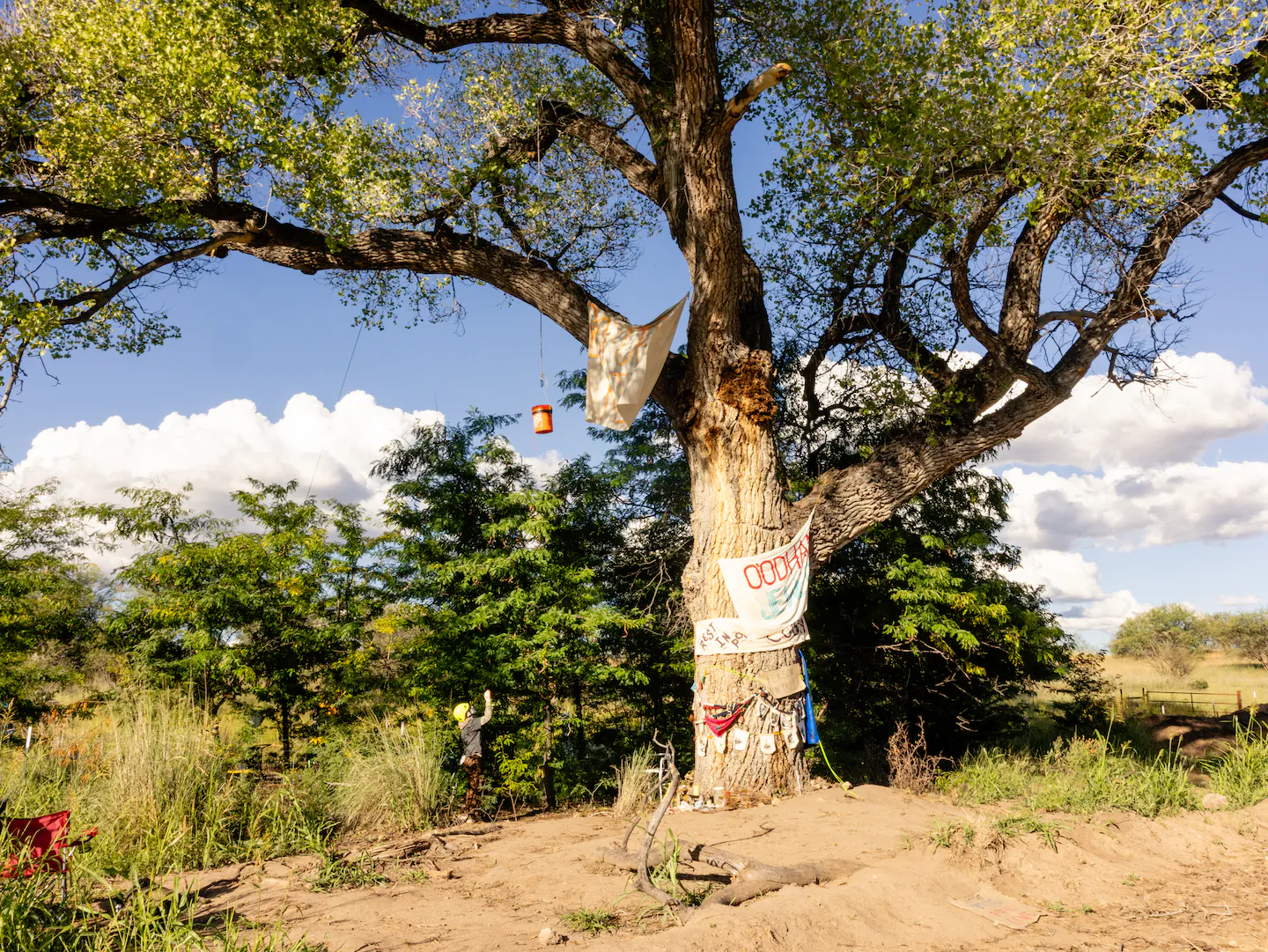
But even if plans for a border wall were funded there would be at least one major obstacle. The Tohono O’odham Nation, located mostly in Arizona, announced it would not allow a border wall to be built on their reservation. And for good reason. For generations many tribal members have resided in the Mexican state of Sonora. Freely crossing the border both ways to visit family members has been a common practice. And while the federal government has tried to restrict border movement the tribe has resisted.
It is difficult to imagine Trump will be successful in crossing sovereign Indian land with his border. Even congressional Republicans like John McCain and others recognize that the U.S. has a treaty with the tribe, giving the tribe political autonomy. Will Trump build his wall around the tribe in Arizona? Will tribal members have to get passports in order to shop at Wal-Mart?
Finally, after months of neglect, Trump has nominated a new person to head up the Bureau of Indian Affairs. Tara Sweeney, an Inupiat has the support of the Alaska Federation of Natives and the National Congress of American Indians. But Sweeney will have to resolve some issues with her home state of Alaska, mainly monetary shares in the Ukpegvik Inupiat Corporation.
However, potential financial conflicts aside, one wonders why someone like Sweeney would come on board with Trump in this vital position. Running the BIA is challenging enough with pressure from tribes to have the Bureau better advocate for their needs. Perhaps Sweeney will rise to the occasion.