

By Lee Egerstrom
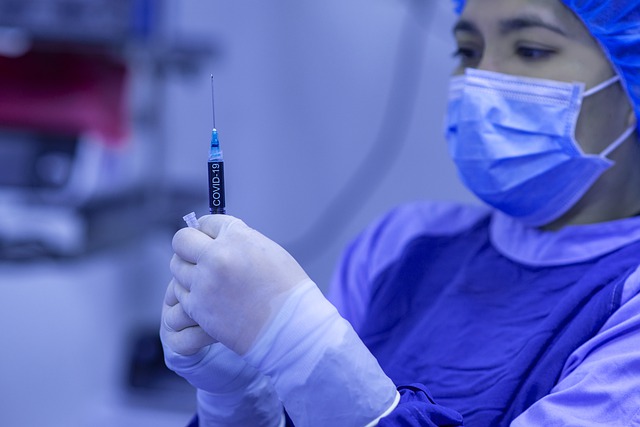
Health officials at both the federal and state levels are developing plans to assist Indian health providers in accessing and administering vaccines for the COVID-19 pandemic, regardless which treatments gain approval for release to the public.
Three potential vaccines now appear promising. Clinical trial data are being examined for federal health approval for a possible start of distribution that could come within the first half of December.
The federal Indian Health Service and Minnesota Department of Health (MDH) have both issued assurances that Indian Country – both at tribal locations and in urban centers – will not be ignored in making vaccine distribution systems.
The Indian Health Service (IHS) released a pandemic vaccine plan on Nov. 19 that explained how it has been working in consultation with tribal health organization and with urban medical groups in establishing plans.
“We’ll insure that safe and effective vaccines can reach Indian Country as quickly and equitably as possible,” Rear Admiral Michael Weahkee, the IHS director, said in releasing the still developing draft plan. IHS is an arm of the Department of Health and Human Services.
Minnesota state health officials made a similar pledge earlier as they worked on developing plans for distributing potential vaccines. COVID-19 clinical vaccine trials are including people from racially and ethnically diverse communities, they said, noting that people from these communities have been severely impacted by the virus.
Repeating what experts at the Centers for Disease Control and Prevention (CDC) and others have been stressing, Minnesota’s health officials said first doses of a COVID-19 vaccine will likely go to health care workers who are at risk of catching and spreading the disease.
“Other groups that may get some early doses include adults with high-risk medical conditions and older adults,” they added.
Federal guidelines will ultimately govern how the vaccine or vaccines will be distributed, and initially, for whom. To be ready for this day, however, MDH has formed a vaccine allocation advisory group with outside partners to help form fair and strategic decisions for distributing vaccine.
“The advisory group is made up of external partners who represent key populations in the state, such as local public health, long-term care, pharmacy partners, and more,” the MDH statement said.
This will involve an evolving balancing act at both the state and federal levels, including challenges to both logistics and storage.
Two of the early COVID vaccine developments, for instance, require extreme freezing temperatures for transport and storage (the Pfizer and Moderna vaccines). The most recent vaccine development, announced Nov. 23, is a British vaccine being developed by Oxford University and AstraZeneca plc., that can be kept at regular refrigeration temperatures.
IHS said in its draft plans and public statements that American Indian and Alaska Native health partners estimated as of Nov. 16 there are 2,056,347 who may need IHS vaccines when available.
These include 43,783 healthcare personnel serving the Native communities with direct, non-direct and emergency services; 120,671 essential workers from other emergency services, law enforcement, food and transportation, teachers and childcare providers; 374,411 elders, and 76,311 patients in tribal long-term care facilities.
All told, there are 894,260 patients who are described as having high-risk factors for COVID-19 illness.
IHS reached out to health partners during September and October to pull together thoughts and knowledge for developing distribution and access plans for when vaccines become available. This included consultations with tribal health officials and with urban Indian health organizations.
The large unit of IHS serving the Native population in the Upper Midwest is the Bemidji Area Office (BAO). It services 34 federally-recognized tribes and four Urban Indian Health programs located in Illinois, Indiana, Michigan, Minnesota and Wisconsin.
Indian Health programs are located in Minneapolis, Chicago, Detroit and Milwaukee. Tribes served by the Bemidji office include Ojibwe, Ho-Chunk, Menominee, Mohican, Oneida, Odawa, Potawatomi, and Sioux.
Bemidji also operates three Federal/direct service programs on behalf of the Leech Lake Band of Ojibwe, Red Lake Band of Chippewa Indians and the White Earth Band of Chippewa Indians of Minnesota; including Cass Lake Hospital, Red Lake Hospital, and White Earth Health Center.
Information on Minnesota Health Department and IHS vaccine access and distribution plans are available at https://www.health.state.mn.us/diseases/coronavirus/vaccine.html;
and https://www/health.state.mn.us/news/pressrel/2020/statementcovidvaccine.html.
Comprehensive Indian Health Service planning for COVID vaccine is available at https://www.ihs.gov/coronavirus/vaccine/.