

By The Native American Caucus and the Minnesota House of Representatives
In all the coverage of Enbridge Energy’s proposed Line 3 pipeline project, and in the recent and predictable pro-pipeline commentary by an Enbridge vice president, John Swanson, (Star Tribune: “Line 3 replacement is the safest option for northern Minnesota, July 2017”) we have heard little regarding how Enbridge’s preferred route would specifically harm Native American people and communities.
The current environmental-impact statement briefly acknowledges the disproportionate harm to Native people but fails to answer many of the questions specific to Native communities. Enbridge acts as it pleases without regard for Native people, and we as the Native American Caucus in the Minnesota House oppose its current proposed pipeline route.
Enbridge gives the misleading impression that by abandoning the current corridor, it is somehow compromising with the Leech Lake Band of Ojibwe. By Enbridge’s own admission, the current corridor is“congested.” The company now wants a pat on the back for choosing a route that snakes its way between reservation boundaries.
This new route highlights willful ignorance regarding Ojibwe history and rights in what we now call Minnesota. When the Ojibwe people signed treaties with the federal government, they explicitly retained the ability to harvest wild rice, hunt and fish on the waters and land of the ceded territory. There is a difference between reservation land and ceded territory. While skirting reservation boundaries is a nod to the affected tribal communities, Enbridge’s preferred route does not avoid the plants and wildlife Ojibwe people have a legal right to access. The new route is no compromise at all.
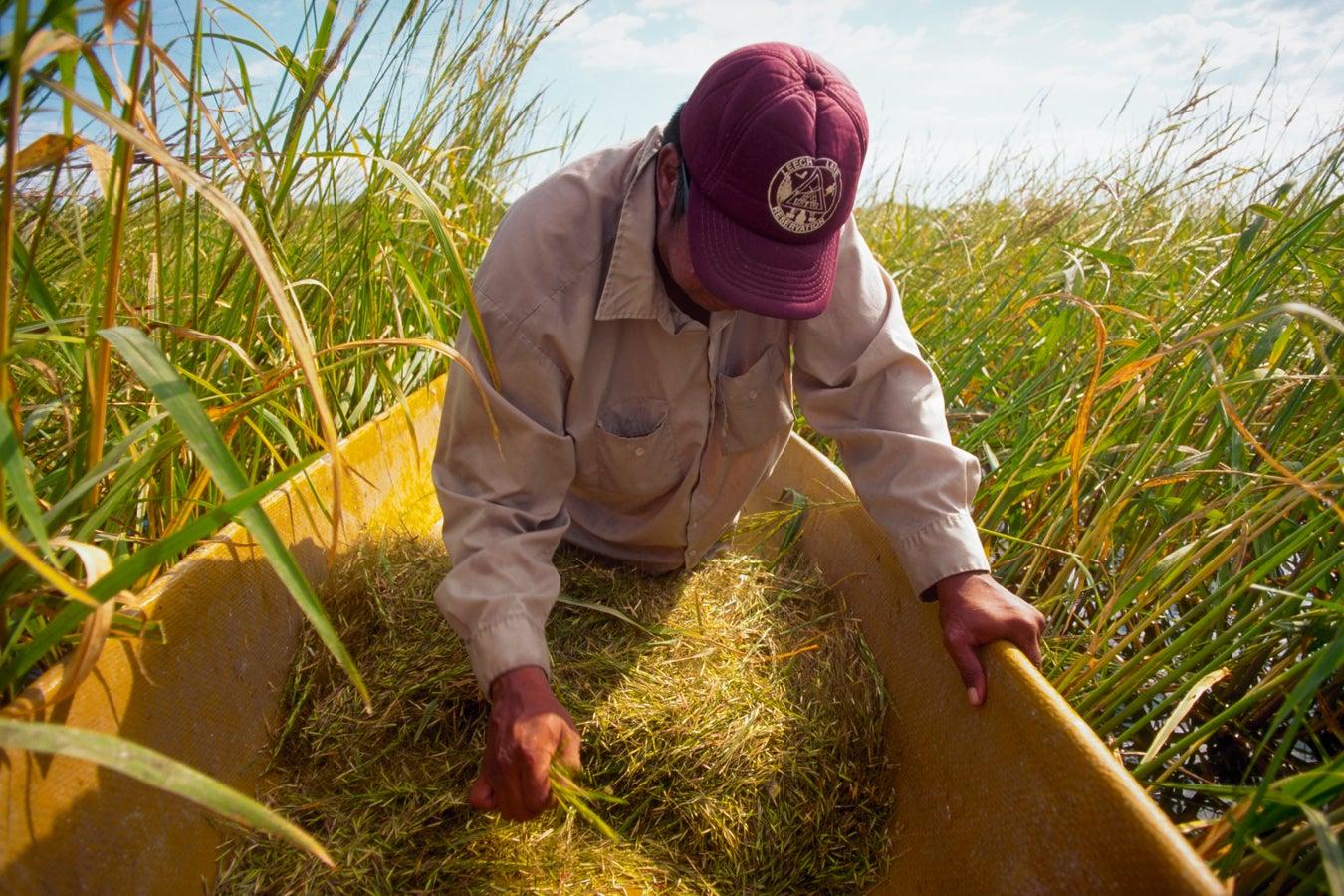
The importance of wild rice to Ojibwe culture, health, spirituality and history cannot be overstated. Wild rice is not just a crop that can be replanted. Wild rice is not just a food product.
It is clear that these truths have not been fully accepted by Enbridge or the authors of the environmental-impact statement.
Ojibwe people’s very existence in northern Minnesota is based on the existence of wild rice. Ojibwe spiritual teachings tell us that those ancestors raveled until they reached the place “where the food grows on the water.” That food is wild rice, manoomin, a unique grain that grows in very few places worldwide and differs greatly from the cultivated “wild rice” typically sold in grocery stores.
To thrive, wild rice requires very specific water and soil conditions. True wild rice is irreplaceable in the natural world.
When the inevitable oil spill occurs, there is no way Line 3 proposal shows willful ignorance of Ojibwe history and rights to be certain that the affected waters and soils could ever be properly rehabilitated to allow wild rice to thrive again. Enbridge states that any damages would be “mitigated appropriately.” But appropriately according to whose point of view? And how can we trust that these hundreds of miles of pipelines will be monitored forever? Because of the extremely high cultural and spiritual importance of wild rice to Ojibwe people, it would be impossible for Ojibwe people to be made whole again if wild rice beds were destroyed.
For some of us, our ancestors have lived in northern Minnesota for centuries. We are now tasked with making sure we are thinking seven generations a head so that the same resources – the water, the land, the wild rice – are available to our people for centuries to follow.
We reject the false premise that any new pipeline project absolutely must travel through northern Minnesota. Only a tiny percentage of the millions of barrels of oil that would be pumped through this Line3 pipeline would even be used in Minnesota. The majority of the oil would continue on to final destinations in other states. There are alternatives that would not risk the vital, unique existence of wild rice in northern Minnesota and that would not place the preferences of an international oil company above Ojibwe people and their legal rights.
It is our hope that this message will not only be heard, but also respected.
Susan Allen, DFL-Minneapolis (Rosebud Sioux), Minnesota House of Representatives Native American Caucus; State Rep. Jamie Becker-Finn, DFL-Roseville (Leech Lake Ojibwe); Peggy Flanagan, DFL-St. Louis Park (White Earth Ojibwe); and Mary Kunesh-Podein, DFL-New Brighton (Standing Rock Sioux), Minnesota House of Representatives Native American Caucus.