Amidst much community and neighborhood comment, collaboration, and outcry, The City of Minneapolis approved a new map of its wards on March 27. The bulk of Minneapolis’s Native American community resides in what are currently Wards 6 and 9. While the Native population in these two wards has hardly shifted in terms of raw numbers, the communities surrounding the American Indian Cultural Corridor on Franklin Avenue have changed dramatically.
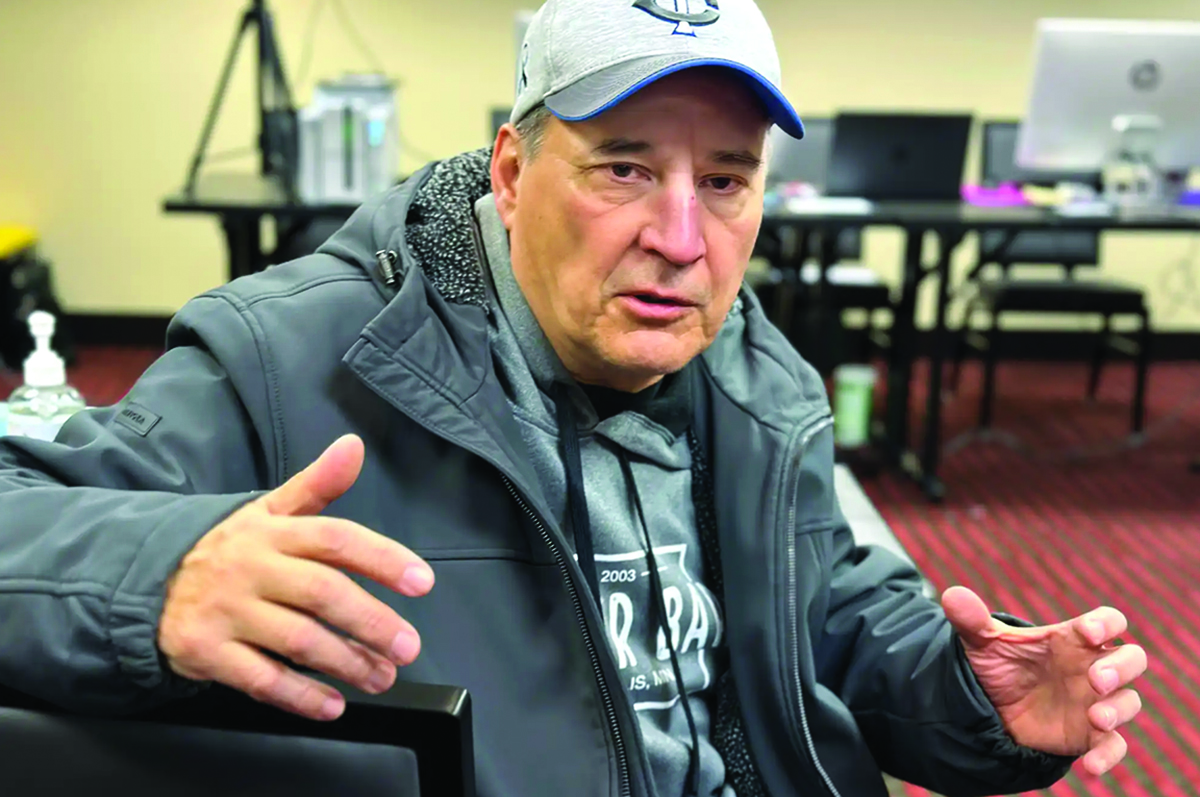
"It will create more competition for resources in certain wards in the city," said Jay Thomas Bad Heart Bull, Vice President of Little Earth of United Tribes. "Hopefully that challenge will be met with a sense of duty and obligation to speak up even louder and to be a part of the process even more."
Bad Heart Bull was one of the applicants selected to be a member of the Advisory Committee, a nine-person board that represented neighborhoods and other community interest groups in the redistricting process.
This is the first year the process has included such an advisory committee. It is also the first year the Commission has held public hearings. In the past, the decisions regarding new ward boundaries have been made solely by the City Charter Commission. The process is still headed by this Commission, which consists of 15 city residents who are appointed by the Chief Judge of Hennepin County.
According to the Minneapolis Charter, ward and park district boundaries must be redrawn every ten years after the U.S. Census is conducted. The boundaries must be reconstituted to reflect population changes, assuring that each of the city’s 13 wards contains an equal number of residents. Pursuant to these requirements, the 4th, 5th, and 6th wards needed to gain population and the 2nd and 7th wards needed to lose population.
The Commission was also required to follow the federal Voting Rights Act, which is designed to ensure that people of color and language minorities have an equal opportunity to elect their representatives. This means that the Commission had to avoid concentrating all minority populations into a few wards or, conversely, spreading them out in wards to diminish their voting power.
Aside from population requirements, the Minneapolis Charter dictates that the Commission draw contiguous ward boundaries and, whenever possible, keep old and new ward boundaries similar, create boundaries along the centers of streets, alleys, boulevards, and avenues, and leave neighborhoods intact.
In addition to representing all city residents and advocating for more minority opportunity wards in general, Bad Heart Bull served as a voice for the interests of the Native community in the redistricting process.
"As the lone American Indian in the redistricting group, I wanted to make sure that Little Earth was represented by what the community wanted," he said.
Little Earth of United Tribes, the largest Native American community in the Twin Cities, remained in Ward 9 as residents requested. However, the boundaries drawn for Ward 6, whose eastern border once ended at Hiawatha Avenue and now extends to encapsulate half of the Seward neighborhood, remained contentious.
"It was clear to me that [the Commission] was packing the Somali, American Indian, and Latino people into Ward 6, but that the rest would stay the same," said Sharon Day (Ojibwe), Executive Director of the Indigenous Peoples Task Force.
This "packing" negatively impacts communities of color because it causes representatives from each community to campaign against one another for seats on the city council. Although 40% of Minneapolis residents are people of color, there are currently only two serving as city councilmen – Don Samuels in Ward 5 (African American) and Robert Lilligren (White Earth Band of Ojibwe) in Ward 6.
In response to this disparity, Day and State Representative Susan Allen (Rosebud Sioux) teamed up with leaders in the Latino community to create and advocate for an alternate map. They recommended that the Commission shift the boundaries to create four minority opportunity wards. Although the Commission made some minor changes after reviewing these proposals, the approved map contains only two such opportunity wards.
"In a lot of ways, the American Indian community was disregarded," said Allen.
Although the City Charter Commission and the Advisory Committee offered four public hearings regarding drafts of the new map, posted meeting minutes and draft maps on the city’s website, and sent emails and mail to community members, the Native American turnout at these meetings remained small until the final meeting on March 20.
Barry Clegg, Chairman of the City Charter Commission, felt that the small window of time they had to complete the process contributed the lack of community engagement. While the City Charter Commission and the Advisory Committee began meeting in October of 2011, state law dictates that the city cannot officially begin its redistricting process until statewide redistricting is finished. Because of this, the City Charter Commission and the Advisory Committee could only work on the city map between February 21 and April 3. In the future, Clegg suggests creating a draft map and making it available to the public at a much earlier date.
"When you have such a short time line, there are a lot of people who don’t get the word," Clegg said.
Despite these barriers, Bad Heart Bull notes that several members of Minneapolis’s Native American community stepped forward to voice their concerns.
Ultimately, Bad Heart Bull is hopeful that the Native community will be more actively involved in city politics in the future as a result of their disenfranchisement during the redistricting process.
"I still have my voice, this community still has its voice, despite either being in one ward or a different ward, and it’s our responsibility to make sure that voice is carried through with integrity and dignity. I hope that this process will bear fruit for this community in the future – that it will entice community members to be more involved in city operations and to voice their concerns," he said.