

The Circle
The National Congress of American Indians (NCAI) is pushing back on Trump’s efforts to pressure the Washington Commanders and Cleveland Guardians into reverting to names and mascots widely denounced as offensive to Native Americans — a campaign tied to a high-stakes stadium deal in the nation’s capital.
In a statement issued July 21, 2025 the NCAI criticized Trump’s public threat to block a new stadium deal for the Washington Commanders unless the team restores its former name, the “Redskins” — a term Indigenous groups have long considered a racial slur. Trump also called for the Cleveland Guardians to revert to their previous name, the Cleveland Indians.
“Any attempt to distract by invoking our names and purporting to speak for our communities is an affront to Tribal sovereignty and is not taken lightly,” said NCAI President Mark Macarro. “For seventy-five years, NCAI has held an unbroken voice: Imagery and fan behaviors that mock, demean, and dehumanize Native people have no place in modern society.”
Recent reports indicate that Commanders co-owners Josh Harris and David Blitzer are privately considering Trump’s demands, driven by concern that Trump could derail their plans for a new stadium on the site of the old Robert F. Kennedy Memorial Stadium in Washington, D.C. The deal, approved in an initial vote by the D.C. Council on August 1, involves more than $1 billion in public funds and over $1 billion in tax incentives.
While the team has publicly reaffirmed its commitment to the Commanders name, internal discussions suggest apprehension over Trump’s influence, who could use his appointment powers — particularly over agencies like the National Capital Planning Commission — to delay or block necessary federal approvals for the RFK Stadium site, which is on federally leased land.
The stadium site transfer from the National Park Service to the District of Columbia was finalized in December 2024, but the deal remains contingent on several layers of federal oversight. A final vote on the stadium deal by the D.C. Council is expected in September.
NCAI’s statement warned that allowing political interference to dictate team branding would set a dangerous precedent.
“Conditioning federal policy or development deals on the revival of racist language contradicts the government’s responsibility to uphold tribal rights and dignity, threatens the integrity of lawful governance, and opens the door to further discriminatory policy demands,” the organization stated.
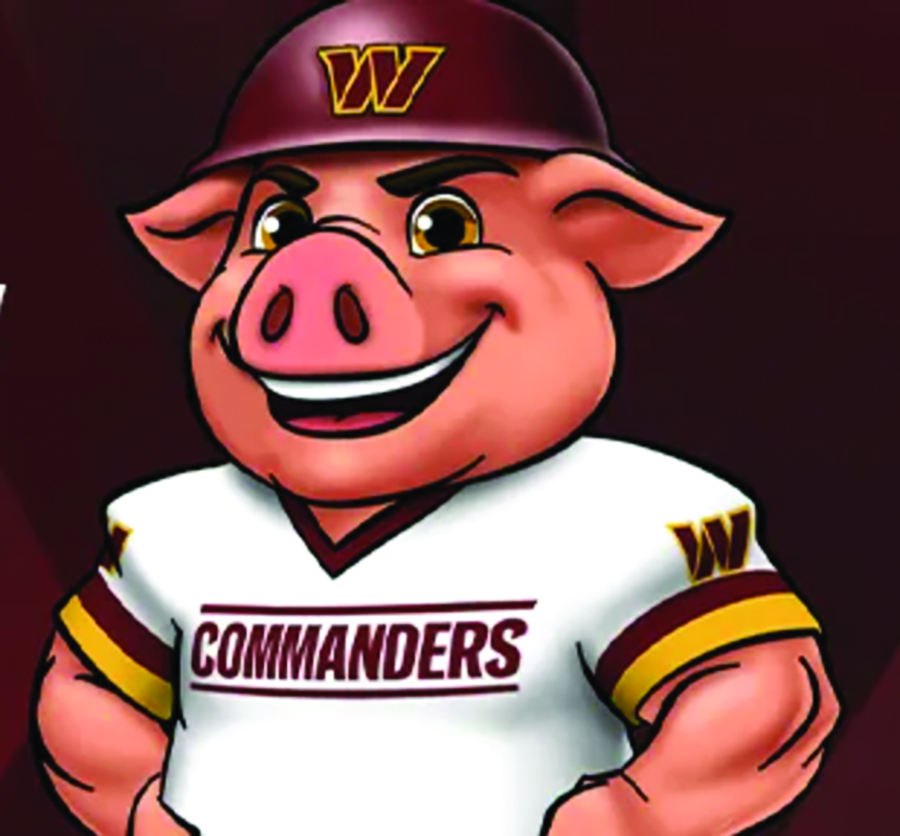
The Washington franchise dropped the “Redskins” name and related imagery in 2020 following decades of protest from Native American leaders, civil rights organizations, and fans. The team temporarily became the Washington Football Team for two seasons before adopting the name Commanders in 2022.
The Cleveland Guardians similarly retired their former name and mascot in 2021. At the time, NCAI praised both teams. In 2020, it commended Washington for “eliminating a brand that disrespected, demeaned, and stereotyped all Native people.” In 2021, it celebrated Cleveland’s move as “an important step forward in healing the harms its former mascot long caused Native people, in particular Native youth.”
“Our youth deserve to see themselves treated with dignity, not as punchlines or cartoonish relics of the past,” said NCAI Executive Director Larry Wright, Jr., referring to a related decision earlier this year by the U.S. Department of Education. “The continued defense of these mascots is a refusal to confront racism. Enough is enough.”
Trump, in contrast, has claimed Native American support for reinstating the old team names. In public remarks, he asserted that “[o]ur great Indian people, in massive numbers, want this to happen.” But NCAI firmly rejected that claim.
“… Indian Country has repeatedly come together to condemn the unsanctioned use of harmful Native ‘themed’ mascots, particularly those which sexualize, stereotype, or dehumanize American Indian and Alaska Native people,” the statement read.
The NCAI, established in 1944, is the nation’s oldest and largest organization representing tribal governments. Since 1950, one of its core priorities has been the eradication of racist and stereotypical portrayals of Native peoples in sports and popular culture.
“Our position and that of Indian Country broadly — rooted in unanimously passed resolutions reflecting the perspectives of hundreds of Tribal Nations — has not changed,” the group stated.
With the future of the RFK stadium project hanging in the balance, NCAI is urging team owners and political leaders to remain steadfast in upholding the dignity and humanity of Indigenous communities.
“We are not your mascot,” the statement concluded. “We are not your distraction.”