
FULL-WIDTH BANNER WEBSITE AD - American Indian OIC

Planned Archives Closures Raise Alarm Over Tribal Records

Writer
Share :
Facebook
X
FULL-WIDTH BANNER WEBSITE AD - American Indian OIC

The National Archives and Records Administration plans to close two facilities and relocate records from a third, prompting concern from tribal officials, historians, and archivists who say the agency made the decision without meaningful tribal consultation.

The agency plans to close its archival facilities in Chicago and San Francisco and transfer temporary federal records from its Seattle center. Permanent archival holdings in Seattle will remain there until the agency identifies a suitable replacement facility. According to Federal News Network, an internal June 23 email said the changes were intended to reduce expenses, shrink the agency’s real estate footprint and support its long-term financial health.

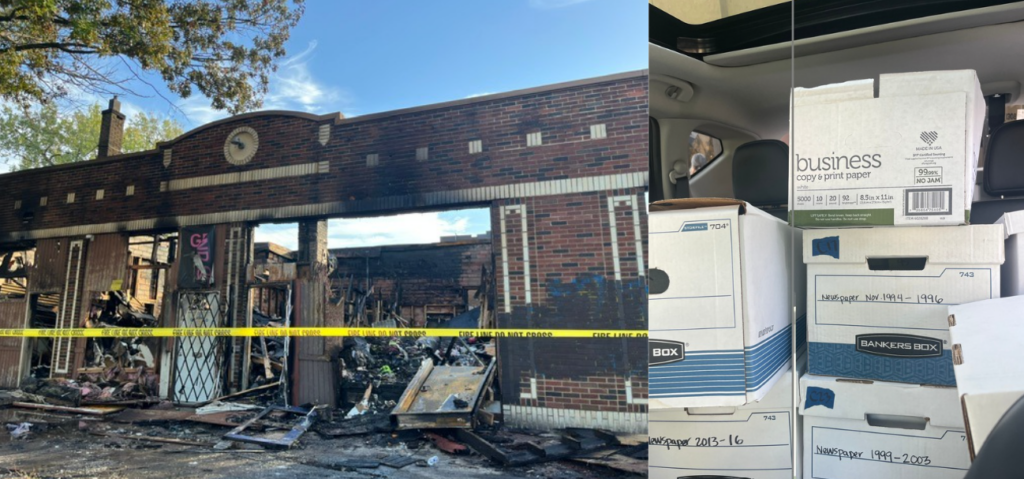
The Chicago facility alone houses 2,296 linear feet of Bureau of Indian Affairs records from agencies, subagencies and Indian boarding schools that operated across Minnesota, Wisconsin, Michigan and Iowa. The collections include enrollment and education records, land allotment files, financial documents, maps, photographs, genealogies and materials related to federal Indian boarding schools. Most have not been digitized and must be accessed in person.

Tribal historians have warned that some relocated records could remain inaccessible for two to three years, while moving them farther from the Native nations and urban Indigenous communities whose histories they document. Researchers have also raised concerns about transportation damage, copying costs, and the loss of experienced staff who understand the collections.

Tribal advocates argue that relocating these materials without consultation disregards the federal government’s trust responsibility and its nation-to-nation relationship with tribes. Some tribal governments and coalitions have requested greater transparency, while advocates are calling for congressional intervention and possible legal action.

A similar effort to relocate Seattle’s archival records was halted in 2021 following litigation involving tribes, states and historic preservation organizations. Advocates say the current plans require the same scrutiny because access to tribal history, treaty rights, and family records is again at stake.

Sources: ICT, Native News Online, Federal News Network

Writer,
General News
Victoria Fox is an enrolled member of the Ho-Chunk Nation and a communications and operations professional with a background in administration, community outreach, and organizational support. She is passionate about helping lead The Circle News into its next chapter while honoring its longstanding legacy of independent Indigenous journalism and advocacy.

This reporting is made possible by readers like you.

The Circle is a nonprofit newsroom with no tribal affiliation, no corporate ownership, and no paywall. Independent Native journalism depends on reader support.

Advertisement

PWFH Web Banner Ad (1000x2110)

Recent Stories

Advertisement

PWFH Web Banner Ad (1000x2110)

More From National BriefsNews

Orange Shirt Day: Every Child Matters

Every year on September 30, people across Canada and the United States wear orange shirts to honor Indigenous children affected by residential and boarding schools and to remember the survivors, families, and communities who continue to carry their impacts. Orange Shirt Day began in Williams Lake, British Columbia, Canada, following the 2013 St. Joseph Mission […]

Minnesota investments support Dakota and Ojibwe language revitalization

Efforts to preserve and strengthen Dakota and Ojibwe languages continue across Minnesota through schools, Tribal Nations, immersion programs, and community organizations. Minnesota is supporting that work through multiple language revitalization programs during the current biennium, including grants administered by the Minnesota Indian Affairs Council and Minnesota Department of Education. The Minnesota Department of Education made […]

Grand Portage, Bois Forte call for broad review of mining impacts in 1854 Treaty territory

The Grand Portage Band of Lake Superior Chippewa and Bois Forte Band of Chippewa are calling on Minnesota to take a broader look at the cumulative effects of mining and other extraction across northeastern Minnesota’s 1854 Treaty Ceded Territory. The two Tribal Nations announced Sept. 23 that they will formally request the Minnesota Environmental Quality […]

FULL-WIDTH BANNER WEBSITE AD - American Indian OIC

Search The Circle

Find stories, columns, events, and magazine features.

Indigenous news, community stories, events, and updates—delivered to your inbox.