

By Brad Hagen
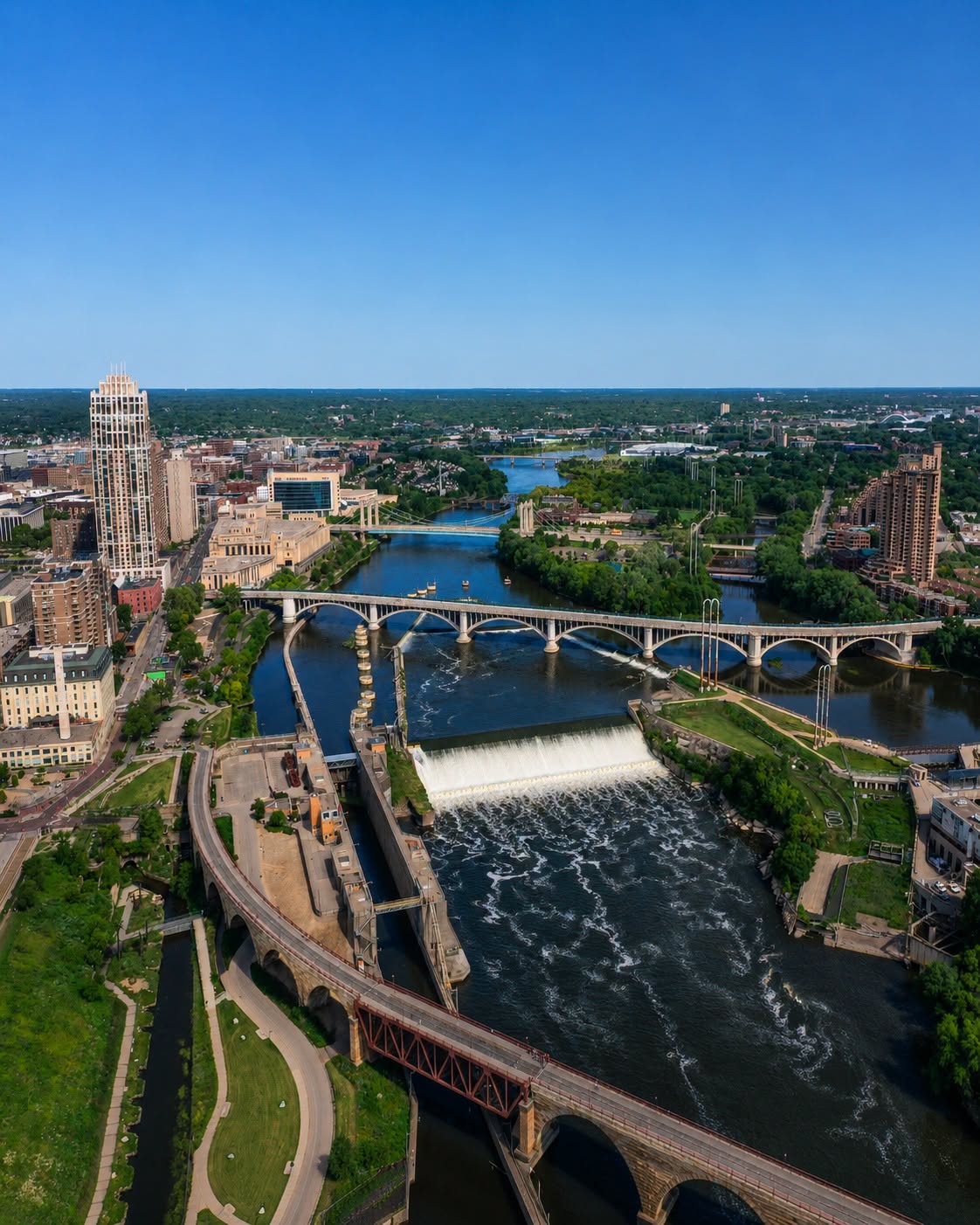
I’m walking down the path alongside West River Parkway, a trail I’ve taken dozens of times. I walk under the third avenue bridge, admiring the much needed construction that will continue into the Fall, and under the Hennepin Avenue bridge, it’s thick concrete and green steel girders looking like they belong in Manhattan instead of Minneapolis. My destination is a restaurant that will be opening soon, called Owamni.
As I round the bend and see the steps of Water Works Park, I see the newly renovated site. For over a year, it appeared to be nothing but an archaic brick structure from the days when Minneapolis was known for its flour mills, a derelict and unused building on the side of the river. Now, the old brickwork remains, with modern architecture added onto it, creating a marriage of the past and the present – a theme fitting for such a restaurant.
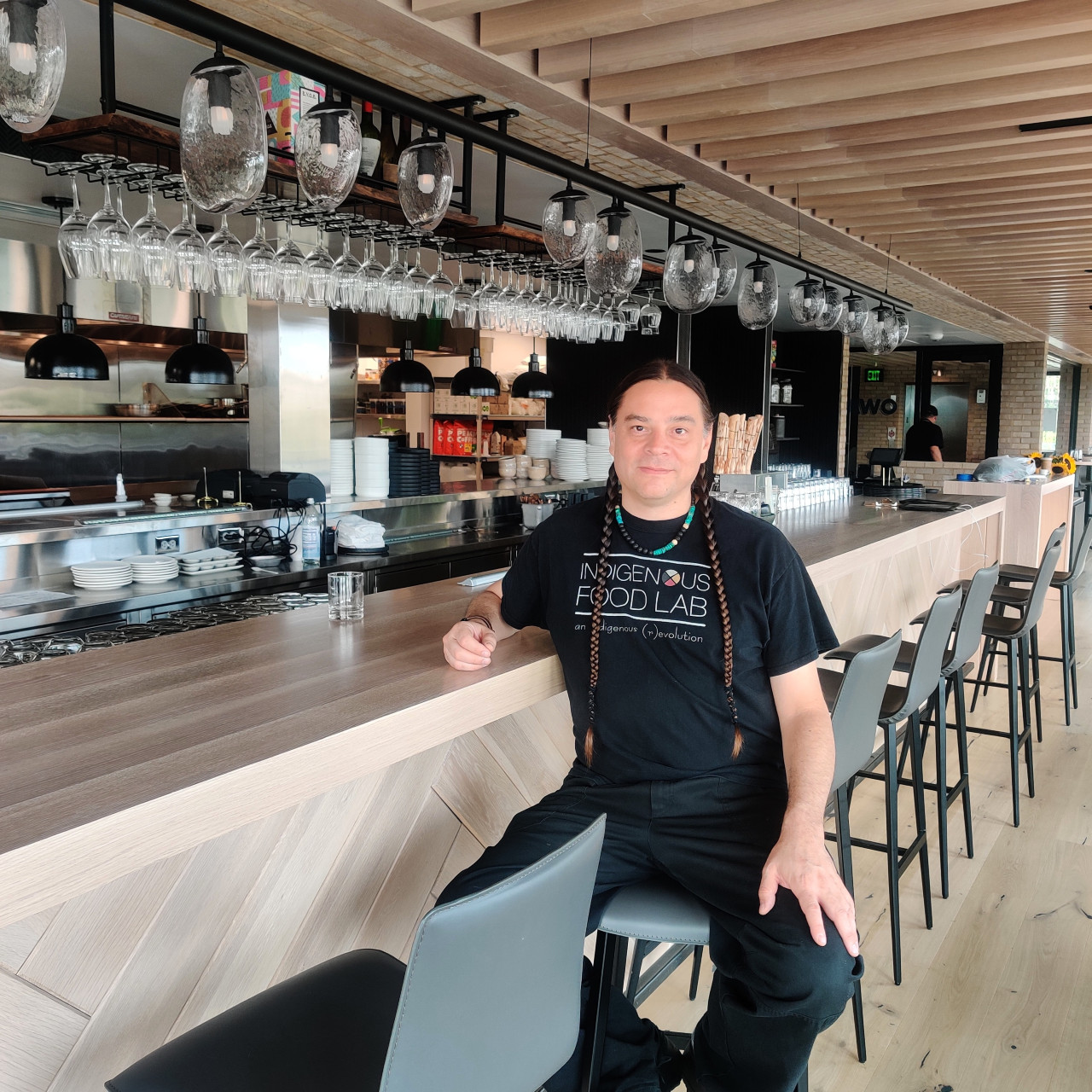
Owamni is co-owned by Sean Sherman (Oglala Lakota), known as The Sioux Chef, and Dana Thompson. The restaurant specializes in Indigenous cuisine and is one of only a few Native-owned eating establishments in Minneapolis. With the Powwow Grounds and Gatherings Cafe coming before it, Owamni is adding its name to a growing list of restaurants catering to Indigenous people.
The menu is unique in that it uses no “colonized ingredients,” meaning any food products and crops introduced by Europeans. This means there is no dairy, wheat flour, beef, processed sugar, or any other ingredient not native to North America used in any of the dishes. It offers a decolonized alternative to what is for many of us our daily diets.
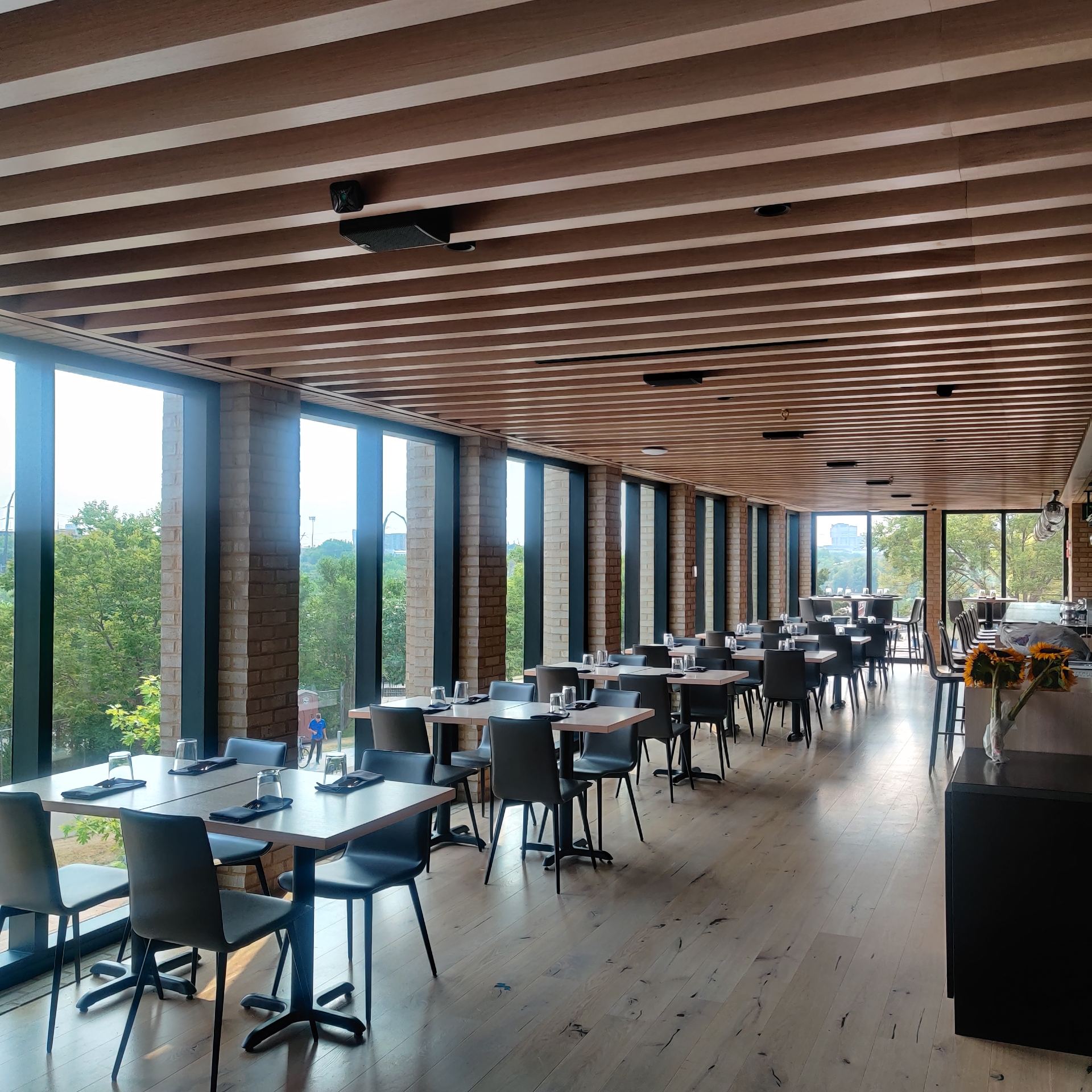
I take the steps to the upper patio just as Sean is opening the door to let in one of the employees. What I notice first are the floor to ceiling windows, allowing for a beautiful view of the river no matter where one is seated. I then notice the visible back kitchen, where one can easily see the magic happen.
Sherman gives me a quick tour of the building, the first floor housing a community room for the public to rent out called Gichi-gakaabikaa, and the second floor being the restaurant itself, Owamni. He prepares a shot of espresso for us before we begin talking about the menu.
“We have a simple menu upstairs – it’s just a lot of shareables, a lot of game and a lot of plant-based stuff. We’ve got some simple sandwiches, some entrees, some salads, and some grain bowls, which are kind of all in ones.” He hands me a menu from a stack near the front desk and a couple of items that stood out to me were the Red Lake Walleye, Butcher’s Cut Bison, and the Nixtamalized Native Corn Tacos. And the sides sounded quite promising – sunchoke puree, hazelnut crusted carrots, and mustard greens were just a few of the many items on the menu.
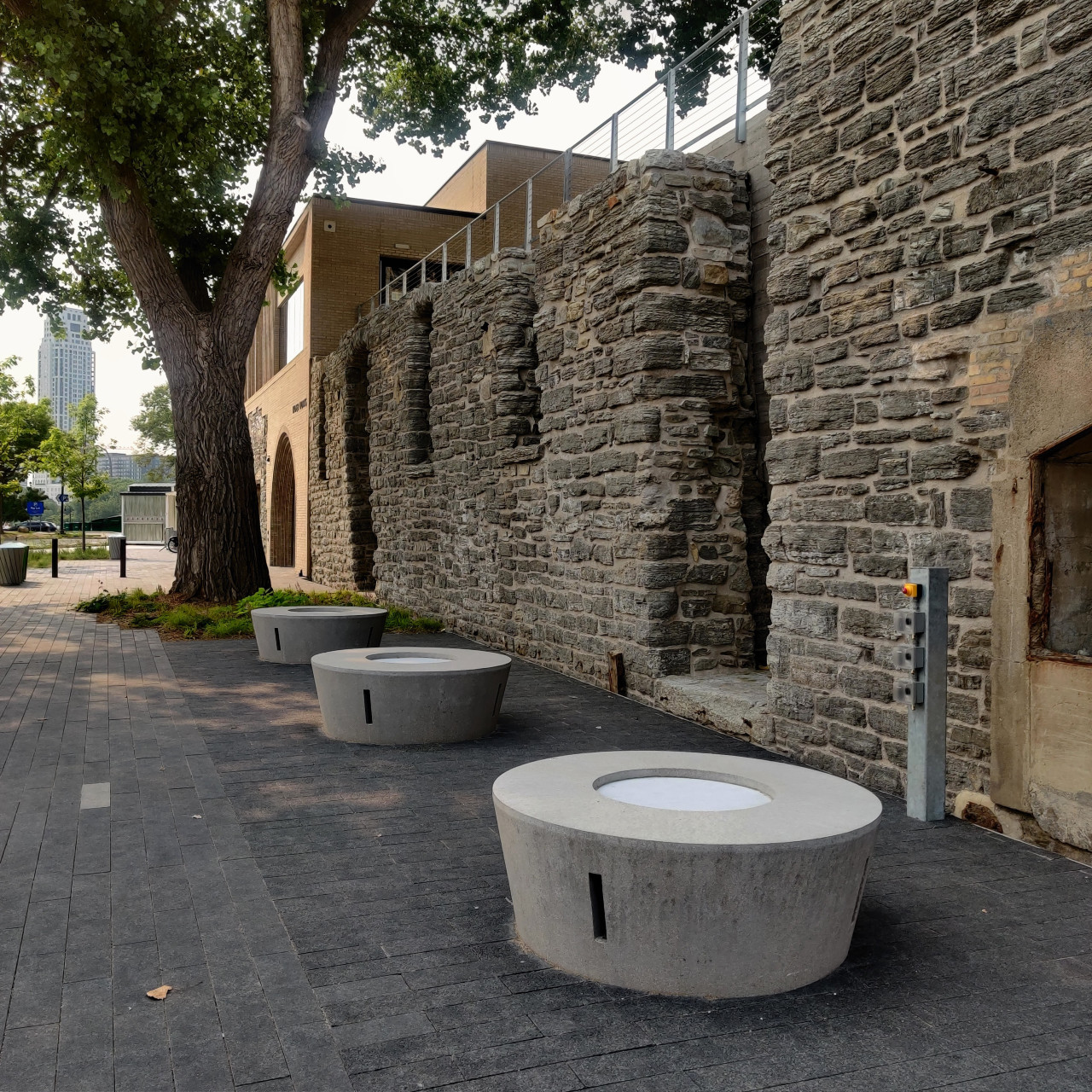
the Water Works Park, which has been newly renovated.
In addition to the food items on the menu, Sean is excited to speak with me about the variety of teas they’ll be offering. When you walk through the front door, you can see different blends of loose leaf herbal teas in large jars. He brings one off the shelf for me and opens the lid. “You can see the labrador and cedar in there,” he said, motioning to the variety of colors in the jar. “This tastes just like walking around up north.” Like their food menu, Sean is only using plants endemic to North America for Owamni’s tea blends; plants like cedar, balsam fir, sumac, labrador, sarsaparilla, juniper, and lavender – ingredients that have been present in our diet well before the creation of the United States of America.
Because the foods we traditionally consumed consisted of ingredients like those found on Owamni’s menu for so many generations, Sean is determined to reintroduce them into Indigenous peoples’ daily diets. “If we’re able to get people to really accept and take in Indigenous foods into their communities, it’s only going to help us because our Indigenous foods are so healthy. Once we lost our traditional diets and were put on a more European diet, it became way too carb-heavy for us as Indigenous peoples, and we don’t have the enzymes to break down all of that glucose, which just turns into health issues, so you get diabetes, obesity, heart disease, you name it.
“A traditional Indigneous diet would be pretty low glycemic, an extreme amount of plant diversity, lots of seeds, nuts, fish, and game. So it’s just a really healthy, super balanced clean diet, and that’s what the menu reflects.”
Sean went on to say that in addition to helping our people, having a restaurant on a street with such heavy foot traffic increases our visibility and presence as Indigenous people, reminding them that yes, we’re still here, “We’re not trying to recreate the past. We’re not trying to just do traditional recipes. We’re creating a playground for chefs to be able to create a whole new generation of what indigenous food can be that better represents our region, better tells the story.”
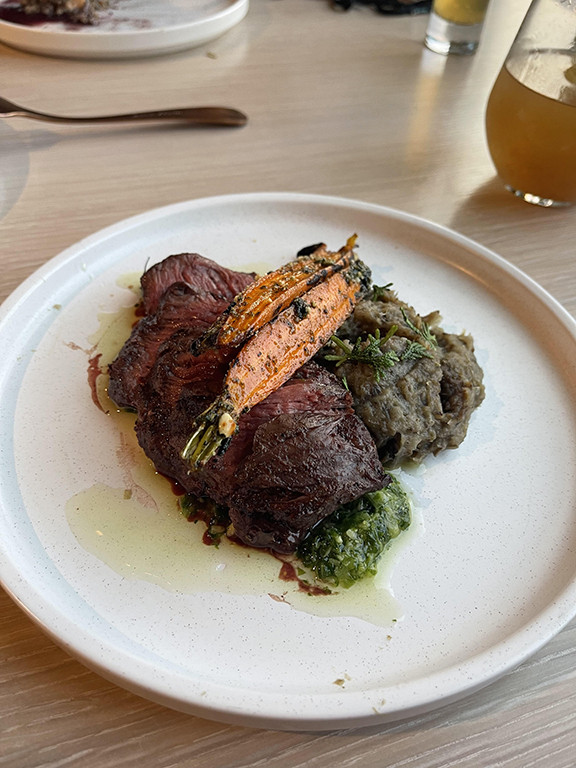
uses no “colonized ingredients,” meaning any food products and crops introduced
by Europeans.
On my walk to Owamni, I saw a plaque on the side of the river with the title “Indians at The Falls,” referring to Saint Anthony Falls. The plaque informs those walking by that there were no records of an “Indian village” at this site. When I tell this to Sean, he’s baffled at the inaccuracy. “There’s a photo of it [the village] at the turn of the century where they’re still right over there by Hennepin and Washington. So many of these things need to be updated just for our presence.”
One thing Owamni is doing to highlight our presence is the planting of an ethnobotanical garden along Water Works Park. “We talked them into putting all Indigenous plants across the whole park, and there’ll be little placards all over that will show the Dakhota name of the plant first, because that’s the true name of the plant in the land that it’s sitting in, and then it’ll have the English name underneath it and a little description of what the plant can be used for.” Owamni’s website also has an option for Dakhota, as well as English, with an Anishinaabemowin (Ojibwe) version on the way.
Fast forward a week after my conversation with Sean and I’m again walking to Owamni, though this time it’s during the evening and I’m with my partner – we’ve been invited to the soft opening of the restaurant. As soon as I pass the third avenue bridge, I see patrons milling about on the upper patio and hear the dull buzz of conversation. Inside, I peer through the pane of glass separating the lobby and dining room and see smiling faces bent over dinner plates at tables for two. Lieutenant governor Peggy Flanagan (White Earth Ojibwe) is seated at a table enjoying a meal with her husband. The staff greets us warmly and I suddenly realize that I’ve been subconsciously longing for something while at other restaurants– the chance to speak with someone like myself.
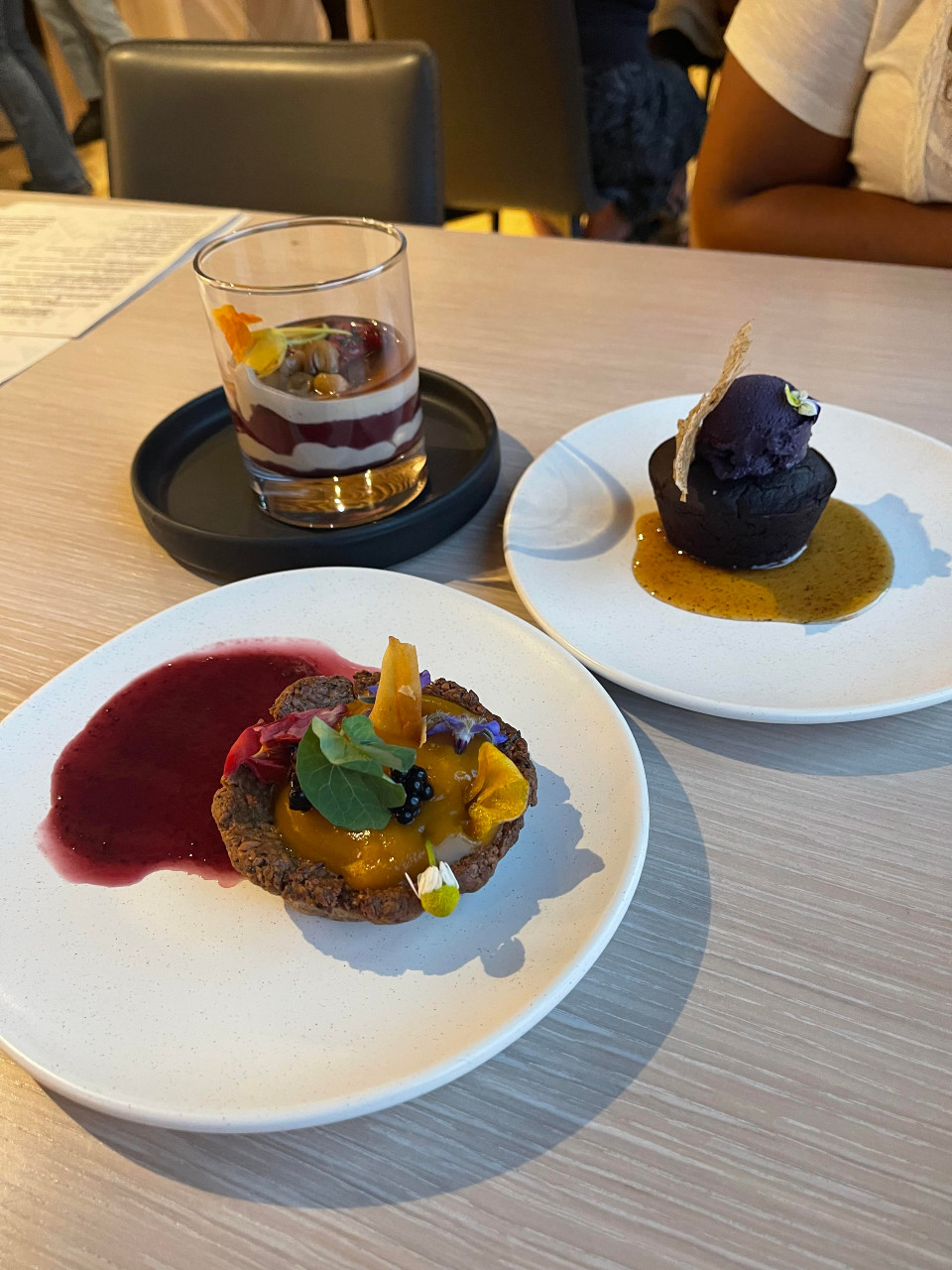
uses no “colonized ingredients,” meaning any food products and crops introduced
by Europeans.
The reservations are a bit behind schedule as they’re still working out the finer details of the restaurant, so we stand around in the lobby for a while waiting to be seated. I overhear a woman say, “I’m uncomfortably full, but in the most wonderful way,” which is an oxymoron I plan to fully investigate, and despite what I’m sure has been a hectic day at the office, the employees have an ease about them that’s contagious. When we’re shown to our seats, I don’t feel like I’m at a high-end restaurant despite the aesthetic – I feel like I’m among friends.
Throughout the night, my partner and I try the Bison Flank Steak, the Red Cliff Lake Trout, and Nixtamalized Native Corn Tacos, along with a myriad of side dishes and a few desserts. By the end, I’m left understanding what that woman in the lobby meant. Yes, I’m quite full, but in a way that makes me feel satisfied, instead of lethargic.
As we finish our mocktails, I look out those big windows at the river and the falls, the inspiration for the restaurant’s Dakhota name Owamni. It was, and still is, an important place for the Native peoples of the region. My thoughts turn to my grandfather and those who came before me – I wonder if they would have thought this was possible, sitting here in a high-end restaurant eating our traditional foods, foods we were at one time deprived of. It feels like an arrival of sorts, to be sitting here. As I look at the moonlight reflecting off the water’s surface, one word comes to mind: “finally”.
For information and reservations: https://sioux-chef.com/owamni-by-the-sioux-chef, https://resy.com/cities/msp/owamni