
By Hannah Broadbent
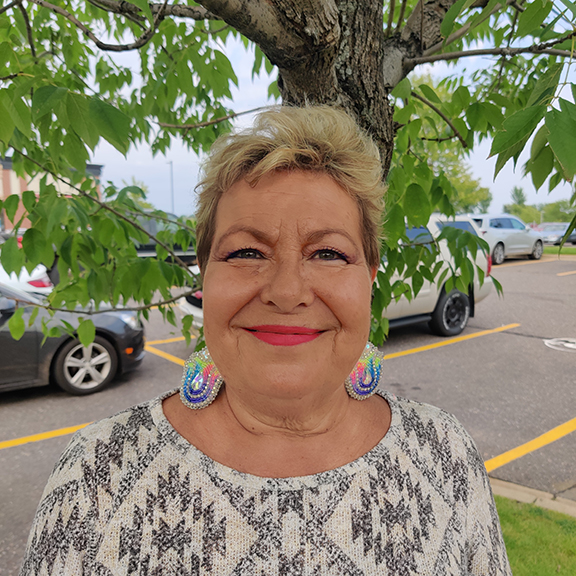
Raven Ziegler is a young Native American women who is making a big impact in her community as an activist and young graduate. She is a member of the Lower Brule Sioux Tribe (Kul Wicasa Oyate) in South Dakota. She completed her Master of Human Rights (MHR) degree in the spring of 2020.
Ziegler began working with Amnesty International this summer, where she works with the International Secretariat of Amnesty International in partnership with the University of Minnesota’s Human Rights Lab. Ziegler conducts research on business and human rights accountability and corporate crimes.
She talked to us about the things that keep her going, inspired and motivated throughout these trying times.
HB. Tell us about yourself. What tribe are you and where did you grow up?
RZ: My name is Raven Ziegler (Wambli Okas’a Win). I am a Lakota Sioux woman from the Kul Wicasa Oyate Tribe (Lower Brule Sioux Tribe). I grew up on my reservation throughout my childhood. Around age 12, I moved to Minneapolis with my family for access to better education.
HB. Why was going to school so important to you? In what areas of Human Rights and Advocacy do you focus on and why?
RZ: School is essential to my growth because it has given me the practical skills necessary to advance the wellbeing of my community. Despite accessibility barriers, I view education as an equalizer in the face of systemic oppression. As our community has understood for generations, knowledge is the single most powerful tool we have. The knowledge I’ve gained through higher academia is something that cannot be taken away from me. More importantly, it does not begin and end with me. I’m now able to take this knowledge I’ve learned from a uniquely privileged space and bring it back to my community. I’m able to help us decipher dense texts and strategize on how to best protect our rights. Although the accumulation of knowledge can happen in many spaces, it has been most impactful in my educational journey.
HB. What inspired you to follow the path you are on now in human rights?
RZ: In May, I graduated with a Master of Human Rights from the Humphrey School of Public Affairs. I concentrated on the nexus of business and human rights, in order to gain the technical skills necessary to hold corporations who violate human rights accountable. This career move is heavily influenced by the continuous exploitation and environmental racism experienced within the Indigenous community.
HB. What things do you do to help you feel grounded and energized?
RZ: I am grounded and energized by the same space – my community. I’m endlessly inspired by our resilience, dedication and love we’ve invested into each other. We deserve to live in a world that recognizes, celebrates and protects our community. I’m hoping to help move us closer to that world.
HB. Now that you are done with school, what’s your plan? Long-term plans?
RZ: I have accepted a contractual research position with the International Secretariat of Amnesty International. I am working with the business and human rights team on the “Prosecuting Corporate Crimes” project – which looks at the boundaries of international law when
prosecuting corporations for human rights violations. I’m a few weeks into the position and it has been incredible. This field is a decade old and we are closer than ever before to begin to hold corporations accountable for a myriad of violations – including environmental exploitation and violence against peaceful protestors.
HB. With all the current events happening in our city, what positive changes do you see already?
RZ: The mobilization of communities to protect and support each other has been exceptional. I’ve never felt more connected with Minneapolis. We are living through an example of how investment in community-led initiatives a viable alternative to traditional law enforcement can be.
HB. What is your hope for the Native community in Minneapolis? What do you see as the possibilities?
RZ: My hope for the Indigenous community in Minneapolis is that we finally get the space to move beyond survival mode. The centuries of trauma held in the Indigenous community (i.e. colonization, poverty, state violence) has impeded on our ability to live fulfilling lives collectively. I hope we will soon get to a space where we can be radically vulnerable without the threat of danger. I hope we will soon get the opportunity to live in our bodies and in this world peacefully.