

By Lee Egerstrom
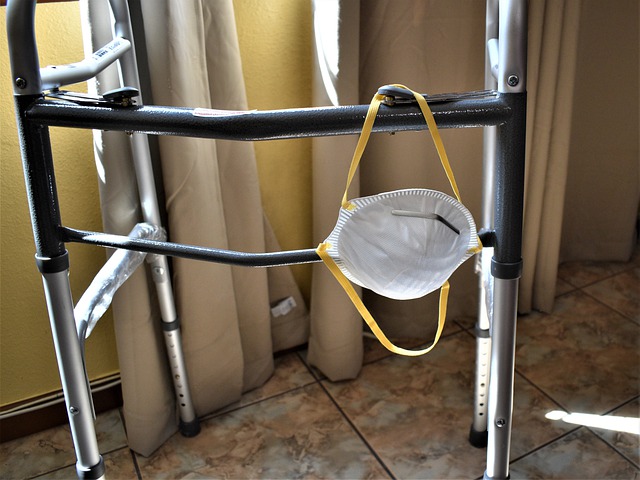
With cold weather fast approaching, and after months of isolation for many elders throughout the state, the Minnesota Department of Health (MDH) has issued new guidance for allowing families to visit loved ones in nursing homes, assisted living facilities, and others being assisted by home care providers.
The new guidance and restrictions become effective on Oct. 17. This is important throughout Minnesota and definitely in Indian Country as well. COVID-19 infestations are on the rise after “superspreader” events around Bemidji and Duluth near Ojibwe communities, and with high levels of infestation in Redwood County, near two Dakota communities.
In announcing the new guidance, the department (MDH) acknowledged that isolation from closing doors to visitors for many elderly in assisted living earlier this year led to a variety of physical and emotional problems.
Blue Cross and Blue Shield of Minnesota said in late September that a statewide survey of 500 Minnesota seniors, 64 and older, found a majority was still optimistic for life past the pandemic. In releasing the report for the Blues, former Twin Cities radio personality John Hines said, “And who knows? As the temperatures continue to drop, we might find the masks to be welcome addition to our winter outerware. We can’t all grow a beard for extra warmth.”
That doesn’t diminish that isolation of the elderly hasn’t proven an emotional and physical drain for many.
Lindsey Krueger, director of MDH”s Office of Health Facility Complaints, told media in releasing the new guidelines that the purpose for easing visit restrictions is to help care residents and families to reconnect.
The new state guidance includes details for both indoor and outdoor visits, how to handle essential caregiver visits and how to report and respond to positive COVID-19 tests – for both seniors and their visitors.
Care providers should read all of the new MDH guidelines referenced below. Anyone caring for a loved one or family friend in their own homes should study the guide as well as national, state and local health officials are all concerned the pandemic may worsen in tightly closed environments in the months ahead.
As a quick overview, MDH said there are core principles and best practices for reducing risk of disease transmission as visits resume. Most are familiar themes from the start of the pandemic, and include:
Screening for all who enter a facility, such as temperature checks; questions or observations about signs or symptoms, and denial of entry to those with signs or symptoms. Safety measure should include hand hygiene and face covering or mask, social distancing of at least six feet, and cleaning and disinfecting high frequency touched surfaces in the facility and designated visitation areas after each visit.
In addition, facilities should have instructional signage with proper visitor information, hygiene requirements for visitors, appropriate staff use of personal protective equipment (PPE), and effective “cohorting “ of residents, such as separate areas for COVID-19 care.
Assisted living facilities should have ongoing testing to identify infections, including for staff weekly or for every other week, especially for staff who work at more than one love-term care facility; testing for staff who may have had contact with a household member or social contact with someone who has tested positive, and testing for residents who may occasionally leave the facility for medical or other reasons.
“While not required, we encourage facilities in medium or high-positivity counties to test visitors, if feasible,” the MDH guide states. “If so, facilities should prioritize visitors that visit regularly…”
The guide clearly states the importance of “essential caregivers” who may be family members or friends who provide outside emotional support or advocate for an assisted living resident. It strongly recommended assisted living facilities develop a process to designate essential caregivers, reverting back to an earlier guidance (see below).
Further, the guide also describes “compassionate care visits” that are often but not always a compassionate visit in end-of-life situations. This could be important for many families who have until recently been residing in multi-generation households, as is common in Indian communities.
Examples, the guide explains, include a resident who was living with their family until recently moving to assisted living facility, a resident who is grieving a recent loss of a friend of family member, a resident who needs encouragement with eating or drinking for weight loss or dehydration, and a resident who used to talk with others if experiencing emotional distress, such as seldom speaking or crying more frequently.
The new guide can be found at https://www.health.state.mn.us/diseases/coronavirus.hcp/ltcvisit.pdf.
Additional, related health information is available at https://www.health.state.mn.us/diseases/coronavirus/hcp/ltccaregiver.html;
and from the U.S. Department of Health and Human Services at https://www.cms.gov/files/document/qso-20-39-nh.pdf.