

By Steven karnowski / AP
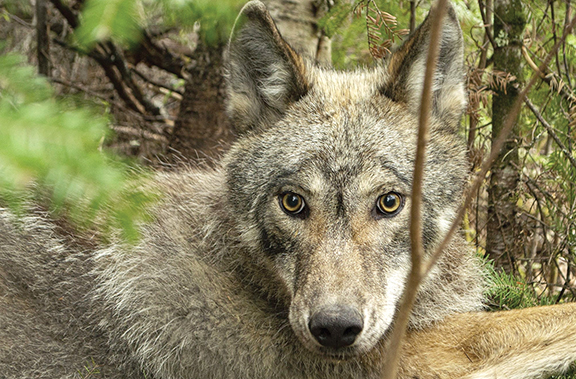
Six Native American tribes sued the state of Wisconsin in September to try to stop its planned gray wolf hunt in November, asserting that the hunt violates their treaty rights and endangers an animal they consider sacred.
The Chippewa tribes say treaties give them rights to half of the wolf quota in territory they ceded to the United States in the mid-1800s. But rather than hunt wolves, the tribes want to protect them.
The tribal lawsuit comes three weeks after a coalition of wildlife advocacy groups sued to stop Wisconsin’s wolf hunt this fall and void a state law mandating annual hunts, arguing that the statutes don’t give wildlife managers any leeway to consider population estimates.
Hunters blew past their limit during a court-ordered hunt in February. The state Department of Natural Resources set the quota at 119 but hunters killed 218 wolves in just four days, forcing an early end to the season.
Conservationists then deluged the DNR with requests to cancel this fall’s hunt out of concerns it could devastate the wolf population. DNR biologists recommended setting the fall quota at 130. But the agency’s board last month set the kill limit at 300 animals.
Assuming the tribes claim their half but don’t hunt, the working quota for state-licensed hunters likely would be 150 wolves. The lawsuit alleges the board’s decision to set the quota at 300 was a deliberate move to nullify the tribes’ share and was not based on science.
The DNR’s latest estimates put Wisconsin’s wolf population at roughly 1,000. Opponents say hunters probably killed at least a quarter of the population if poaching is included.
“In our treaty rights, we’re supposed to share with the state 50-50 in our resources and we’re feeling that we’re not getting our due diligence because of the slaughter of wolves in February,” John Johnson Sr., president of the Lac du Flambeau Band of Lake Superior Chippewa Indians, said in a statement announcing the lawsuit.
The Ojibwe word for “wolf” is Ma’iingan, and the Indigenous people of the Great Lakes region often call themselves Anishinaabe. The wolf holds a sacred place in their creation story.
“To the Anishinaabe, the Ma’iingan are our brothers. The legends and stories tell us as brothers we walk hand in hand together. What happens to the Ma’iingan happens to humanity,” Marvin Defoe, an official and elder with Red Cliff Band of Lake Superior Chippewa Indians, said in the statement.
The six tribes are being represented by Earthjustice, which is one of several groups that are also suing the federal government over the Trump administration’s decision last November to lift Endangered Species Act protections for gray wolves across most of the U.S. and return management authority to the states.
Gray wolves in Wisconsin, Minnesota and Michigan are considered part of the western Great Lakes population, which is managed separately from wolves in western states.
The Biden administration in September said federal protections may need to be restored for western wolves because Republican-backed state laws have made it much easier to kill the animals. The U.S. Fish and Wildlife Service’s initial determination that western wolves could again be imperiled launched a yearlong biological review.
Dozens of tribes asked the Biden administration one day earlier to immediately enact emergency protections for gray wolves across the country, saying states have become too aggressive in hunting the. They asked Interior Secretary Deb Haaland to act quickly on an emergency petition they filed in May to relist the wolf as endangered or threatened.