

By Mathew Holding Eagle III / MPR News
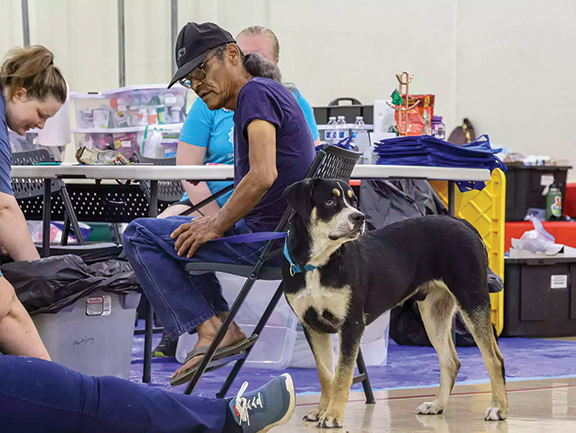
In the gymnasium of the Ponemah Elementary School veterinarian Raye Taylor is hard at work. She’s visiting with a feline patient through the screen door of a green pop-up tent. Because of cats’ nature the clinicians found it easier to work with these patients if the cats are by themselves.
But there’s more than just cat-care going on here.
According to an American Veterinary Medical Association report “the veterinary profession is one of the least ethnically and racially diverse professions in the country.” Native Americans make up only about 1 percent of U.S. veterinarians.
However, this week in Ponemah, the numbers are very different. This is the first pet clinic for the organization Natives in Vet Med.
One of its founders, vet tech Mitakamizi Liberty, is an enrolled member of the Leech Lake Band of Ojibwe. With so few frameworks to promote diversity in veterinarian medicine he helped create one.
“We’re a wonderful organization that’s really about getting Natives more in contact with one another so that we can build a community that’s supportive of us, especially through this post-secondary schooling,” Liberty said. “It’s a bit alienating to be coming into a new environment where there’s not a whole lot of your folks around, whether it be other ‘Shinabs’ (Anishinaabe) or other folks who have that kind of academic trauma.”
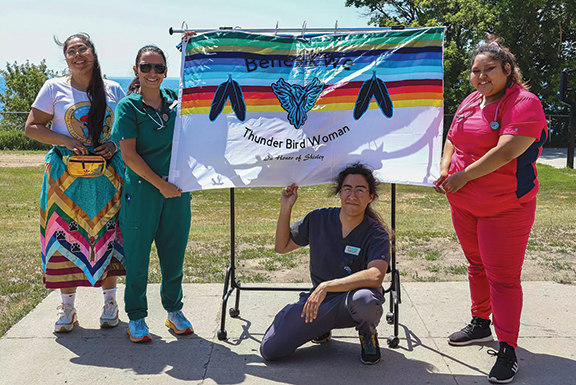
recently passed away.
Joining Liberty is co-founder Lecia Mata, a Standing Rock and Red Lake citizen. She’s a first-year veterinary student attending Colorado State University. Mata said when they started the organization about a year ago there were only three or four members, today there’s approximately 40-plus from around the U.S. and Canada. And they have plans to continue to expand.
“We meet once a month over Zoom. And we invite all Indigenous veterinary positions. It’s really cool just to get connected,” she said. “I think our last meeting we had like 32 people on. We started Natives in Ved Med, now we’re trying to get all over the country.”
The joy of rez dogs
Mata says her love for animals began when she was about five. Her eyes light up when asked about rez dogs.
“They come and greet you. They run in the middle of the road and say hi to your car,” she said. “They usually have like, their main family. They’ll go home too, but I think of it as a nice little community animal. He goes home to his family, but he has jobs to do during the day. They’ll come into the building if it’s super-hot. They’re like “I want some air conditioning.’”
Tanisha McChesney, another member, came to Ponema from the Navajo Nation in Arizona. She got into vet medicine after seeking care for her six rez dogs which led her to becoming a vet tech. Today she assists other spay and neuter clinics on reservations in the southwest.
“Which rez dog are we saving? Every rez dog. That’s the goal,” she said.
In McChesney’s eyes everything came full circle and now she’s the one helping those in need.
“I got in touch with Natives in Vet Med and they said they are doing the same thing on this reservation over here,” she recalled. “So I got invited. This is what I love to do, so of course I came.”
Mentoring the project is veterinarian Raye Taylor with Companions and Animals for Reform and Equity, or CARE.
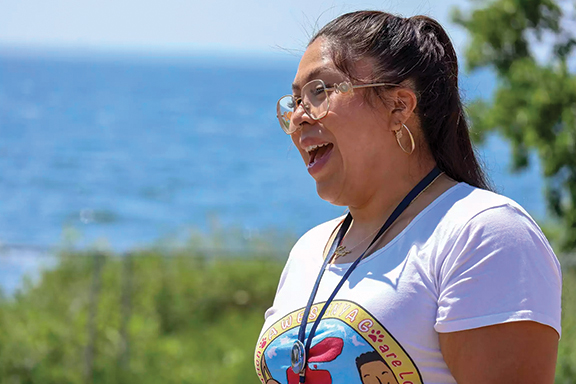
Taylor is a descendant of Red Lake but doesn’t have enough blood quantum to be an enrolled member. She encourages more people of color to get into the veterinarian field.
“We’re looking at just this astonishing misrepresentation, and inability to serve members because the representation is out there. And that is a huge error in our profession. And it’s a huge opportunity,” Taylor said. “So, we’re really trying to address that from the ground with our hands, bringing Natives who are in veterinary medicine, bringing them together around the country, and then bringing them into the community to create that representation and hopefully build a future for our profession from our community.”
The founder of Awesiinyag (Animals) Are Loved, Awanookwe Kingbird-Bratvold has created a melting pot of veterinary care. In a field that’s predominantly white she was able to bring in no less than four Indigenous professionals for the pet clinic. She was also able to forge a partnership with the Red Lake School District to host the clinic at the elementary school in Ponemah.
As an educator at Bemidji State University, she stressed representation matters. Even at a pet clinic in Ponemah with a population of 724 residents.
“Having these Natives in Vet Med here has been so profound for us because it’s an honor for us to create this space and this platform for them to use their voices and to show people that they’re here, they did it,” Kingbird-Bratvold said. “They’re working their butts off for us to make changes within our community because they see that the animals they’re a reflection of our communities, and how they’re living and what they’re going through is a direct reflection of who we are.”
Kingbird-Bratvold said on the first day of the pet clinic all spay and neuter appointments filled up within 40 minutes.
One evening at the Red Lake Tribal College, the community celebrated Native Americans in the veterinarian field. The event will also honored one of Awesiinyag Are Loved’s cofounders, Shirley Nordrum, who recently passed away.
Minnesota Public Radio News can be heard on MPR’s statewide radio network or online.