

By Lee Egerstrom
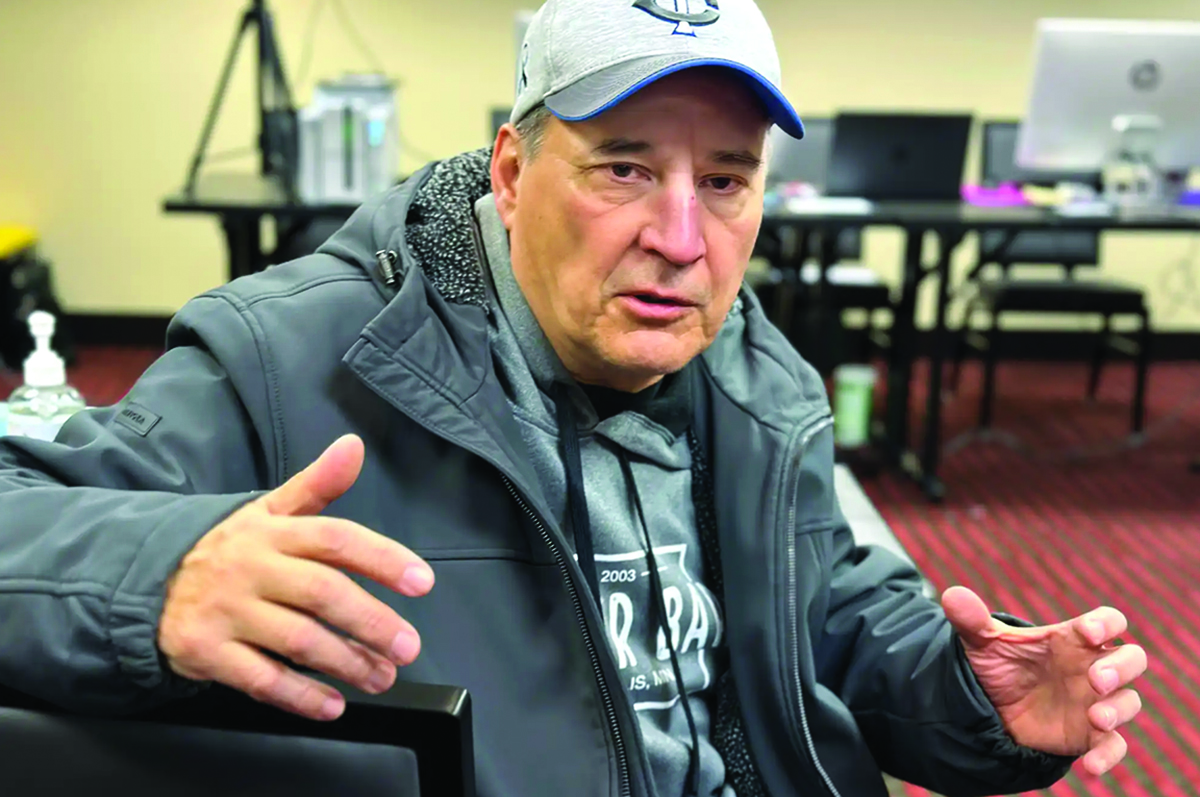
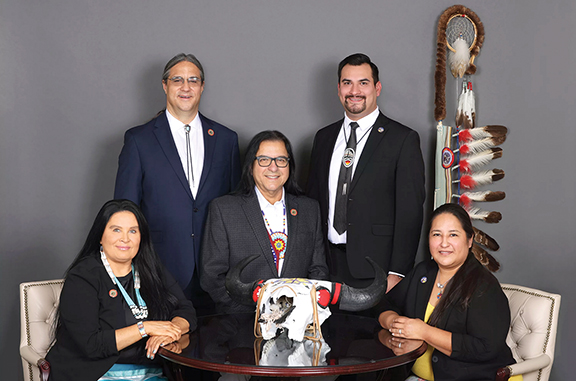
Newly elected Community Tribal Council members of Prairie Island Indian Community will select new officers this month, replacing both its president, Johnny Johnson, and its vice president and former president, Shelley Buck.
Neither Johnson nor Buck sought reelection in the October tribal elections. That closed out 14 terms on the tribal council for Johnson, and two terms as president. Buck has served six terms on the council and was tribal president for three terms.
Both have extensive roles away from Prairie Island that will keep them busy. And Buck, for instance, just might seek an even larger public role down the road. “Federal or state,” she told The Circle.
“It would have to be for the right reasons, not because ‘so-and-so’ asked me to,” she explained. “Anyway I can help my people, I want to do it.
“Looking ahead, my goal is to do whatever I can to help, and not only help Dakota people,” she said.
That is consistent with both outgoing tribal leaders. Johnson is on the board of directors for the nearby Red Wing Chamber of Commerce and is a former member of the Red Wing Human Rights Commission.
He is also a former board member for the Red Wing School Foundation and the Red Wing Hockey Association, and he has long-time connections with youth sports in the surrounding area and in working with elders.
His biographical information from the Tribal Council described him as a well-rounded person. It states, “He enjoys attending youth sporting events, watching hockey, golfing and traveling.”
Minnesota is “the state of hockey,” as the state proclaims, and Minnesota’s indigenous people are no small contributors to that nickname.
Buck currently serves on the board of directors for the Minnesota Wild Foundation. Prairie Island has had numerous promotions and programs with the professional hockey team in recent years. Prairie Island also has a loose connection with the Wild from the naming rights to the Treasure Island Center in downtown St. Paul.
While the Wild play their home games at the Xcel Energy Center, they have practice facilities in the grand old building that had been a major department store location for Dayton’s, then Dayton-Hudson and later Macy’s. It is now a mixed use building for several businesses, physical therapy providers and office space for businesses, professionals and groups.
Among the latter is the PIIC
“It makes me proud to see our Prairie Island flag on that building,” Buck said. “I see that when walking down the street. I know it makes my ancestors happy and proud.”
The prominent St. Paul building is a salute to Prairie Island’s huge Treasure Island entertainment complex. Buck said she feels proud when using PIIC offices in the building for meetings the tribe has from time to time in the Capitol City.
That, too, shows Buck’s view of the world around her isn’t limited to the tight confines of Prairie Island.
Buck also serves on the board for the Great River Passage Conservancy organization that works to make the Mississippi River running through the city available to all. Part of that mission is to educate Minnesotans and visitors that those 17 miles pass through the heart of a Dakota historic settlement.
More recently, she was elected to the board of Meet Minneapolis, an organization that promotes the city as a meeting place and host for major events. Her ties to that comes from Buck serving as president of Owamniyomni Okhodayapi, the Dakota name now used for the former Friends of the Falls nonprofit organization.
The Dakota name describes what colonizers called St. Anthony Falls and means “turbulent waters.” The organization is supported by the city of Minneapolis, its Parks Department, and it serves as the city negotiating agent with the U.S. Army Corps of Engineers on issues with the falls.
Elsewhere, Buck also has a national role. She has been reelected the Midwest Regional Vice President Alternate for the National Congress of American Indians.
The Prairie Island biography describes her this way: “In her spare time, Buck enjoys playing and watching sports, and hanging out and traveling with her daughters and friends.”
Looking back over the years of service, Buck said she sees a lot of accomplishments made by the Prairie Island community.
The Net Zero project, described in an accompanying article, took a lot of work and required successful working with the Minnesota Legislature, she said.
Another accomplishment involves all 11 federally recognized tribes in Minnesota, she said. Early on, there was some cooperative actions with the other Dakota communities but little with the seven Ojibwe tribes to the north.
“We worked with the Dakota but not the other tribes in the state. That has really changed.”
Capitol reporters have observed this past session of the Minnesota Legislature was probably the best ever for Native Americans.
Education achievements are also important accomplishments, both for Native children and for the general public “to know who we are,” she said. Serving on boards and with outside groups have let her be one of the “educators” to movers and shakers who are not Natives.
Prairie Island is the largest employer in Goodhue County, and relations with nearby communities have steadily improved over the years, she added. Farther away, she said PIIC has great relations with Pine Island, where the tribe has purchased more land, and “improving” relationships with other nearby townships and groups.
The biggest lack of success involves the nuclear power plant and nuclear waste storage that shares land and river space with the tribe. The federal government cannot find a storage site for the spent fuel rods.
“This is very unfortunate. I don’t see this changing anytime soon. I don’t see this being resolved in my lifetime, but I hope I am wrong,” she said.
That lingering problem is now passed on to the new council.
Michael Childs Jr. and Valentina Mgeni were reelected to third terms in the Oct. 10 PIIC tribal elections. Constance (Tori) Campbell, Grant Johnson, and Ron Johnson were elected to new terms on the board.
Grant Johnson is the tribal administrator. Campbell is with PIIC’s education department. Ron Johnson previously served 14 years on the council and was president for two terms.
The new Tribal Council will be sworn in on December 12. They will then select their leadership by electing a new president, vice president, treasurer, secretary and an assistant secretary-treasurer for the coming year.