

By Dan Ninham
“The Electric Indian” documentary film was publicly screened at the pre-game event for the Hockey Day Minnesota in Warrord in January. The documentary followed Ojibwe hockey legend Henry Boucha, a hockey star from Warroad, Minnesota, who competed in the 1969 Minnesota High School Hockey Tournament, continued to the 1972 Olympics and finished in the NHL. An on-ice assault and injury ended his athletic career that unexpectedly led to a journey of healing and cultural reclamation.
Leya Hale, Dakota and Diné Nations, is the documentary film producer for Twin Cities PBS (TPT) and director of “The Electric Indian”.
“Warroad is the hometown of Minnesota Hockey legend Henry Boucha so it was very meaningful for me to screen The Electric Indian for the first time in front of an audience that knew Henry so well,” said Leya Hale. “I felt very emotional as I witnessed the audience react to the film through laughter and tears. I was grateful and honored to receive such a positive response from the audience with standing ovation once the film concluded.”
“I felt blessed to receive encouraging words from Boucha family members that I did a good job,” added Hale.
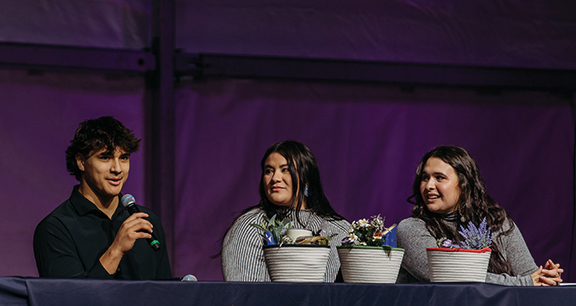
Following the screening, there was a question and answer session with three of Henry’s grandchildren including Shalese Snowdon, and Sky and Gaabi Boucha, all of whom also appeared in the film. Hale said, “They did an excellent job at explaining the impact of their grandfather’s legacy on the community. I was very proud of them for speaking from their hearts.”
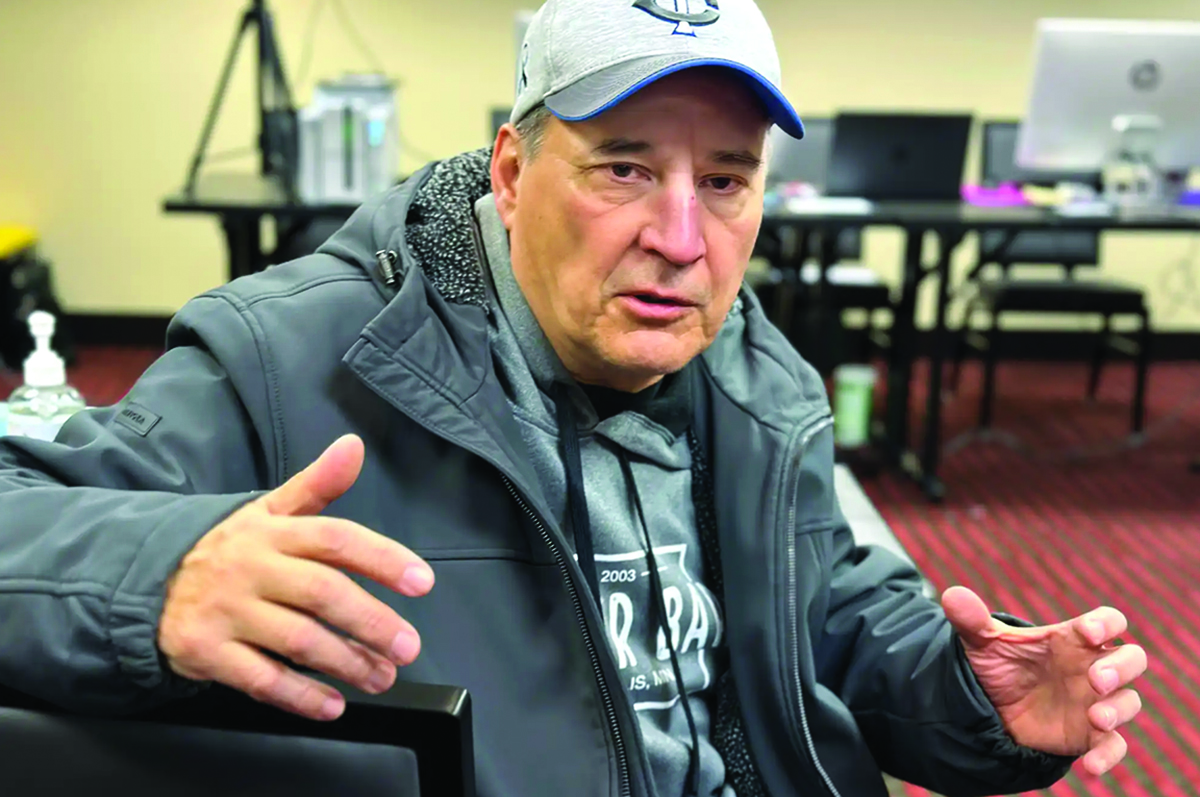
Tara Boucha is Henry’s daughter. She talked about her dad the hometown hero to so many and the documentary that keeps his legacy alive. She said, “Since Warroad is his home community it fit to have it shown as part of the Hockey Day events. Prior to his death, he was involved with the idea of having a special ‘sneak peek’ for Warroad, which is where his career started.”
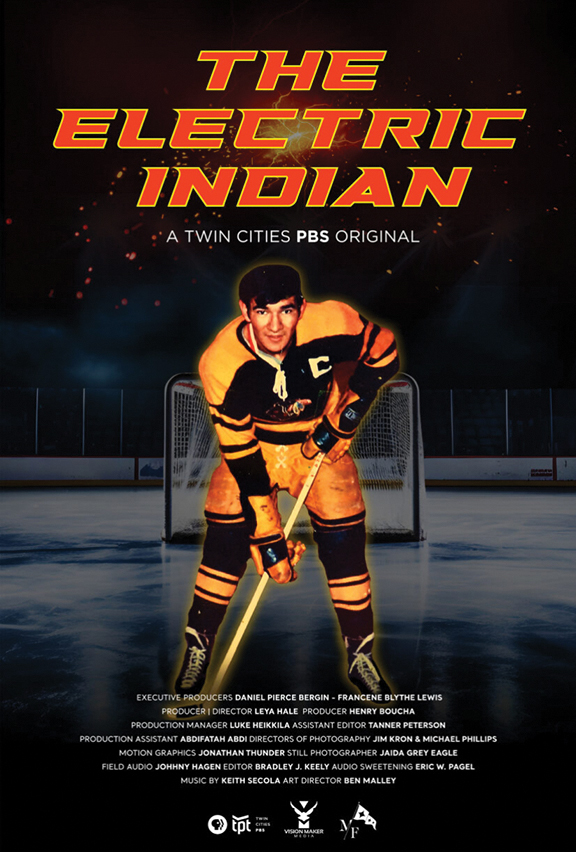
“He was also honored on a special jersey that was created for the event worn by the boys’ high school team,” said Tara. “The hockey day committee had various visuals with him depicted throughout the Hockey Day Village. There was also an ice sculpture of him and his signature on display in town. Media coverage included various clips regarding his hockey career including his contributions to hockey and the Native community.”
Granddaughter Sky Boucha, an Augsburg University student majoring in American Indian Studies and Finance, said, “Watching the documentary I was so proud of all the work my grandpa accomplished throughout his life. He had an amazing career in hockey, but the work I am most proud of his contributions to native communities. TPT and PBS did an amazing job telling his story.”
After the screening of the film, there was a panel held with Director Leya Hale with grandchildren Sky, Shalese and Gaabi Boucha.
Granddaughter Shalese Snowden, living in Warroad and in her third year at the Mitchell Hamline School of Law, said, “I want people to leave with the value of perseverance,” said Shalese. “My grandpa persevered through major life obstacles in his life but chose to never give up. Once his hockey career ended, he discovered the Ojibwe culture and spirituality which helped him discover his life-long path of helping Native American causes.”
“I believe his life goal was to inspire Native people to be proud of themselves and their identity. He achieved this in hockey by showing how an Ojibwe youth in a small town could achieve the highest levels of athletics and again in everything he did after by helping Indian country,” added Shalese.
Panel moderator Leya Hale asked how their grandfathers’ legacy in cultural revitalization and community building impacted them as young people. Shalese said, “His legacy in cultural revitalization and community building has greatly impacted Sky and I in our college career choices of law and American Indian students and business and American Indian studies. Both of us have future goals of working in Indian Country which is a large part from being mentored by our grandpa.”
“My grandpa taught us the importance of learning the culture, spending time with elders and being a good advocate. I believe my grandpa recognized the privilege he had from his hockey career success and he put that to good use by advocating for others in Indian country who could not. He always invited Sky and I along to different cultural and political events. I served on the National Coalition Against Racism in Sports and Media with him,” added Shalese.
Gaabi Boucha attends Northern State University and is on the NCAA DII football team. He is a former standout athlete at Warroad HS. He talked about the documentary honoring his grandfather. He said: “It was a lot of fun to see the finished documentary and how amazing of a job TPT did. The documentary captures a lot of great memories from my senior year of high school and those scenes will always be something I can look back on to remember the time my grandpa and I spent together. I looked up to my grandpa so much and I think the documentary did a great job of showcasing that.”
“This documentary was very special to me and my family. I know my grandpa would have been very pleased with the community turnout for the documentary and the other ways the community honored him at Hockey Day Minnesota.”
“The Electric Indian” is a co-production of Twin Cities PBS and Vision Maker Media, with funding provided by the Minnesota Legacy Arts and Cultural Heritage Fund and Manitou Foundation. Event Sponsors included Marvin and the Warroad Convention and Visitors Bureau.
“The Electric Indian” will be aired statewide on March 26 on TPT.
See the documentary trailer at: https://www.pbs.org/video/the-electric-indian-preview-rzqz3m.