

By Lee Egerstrom
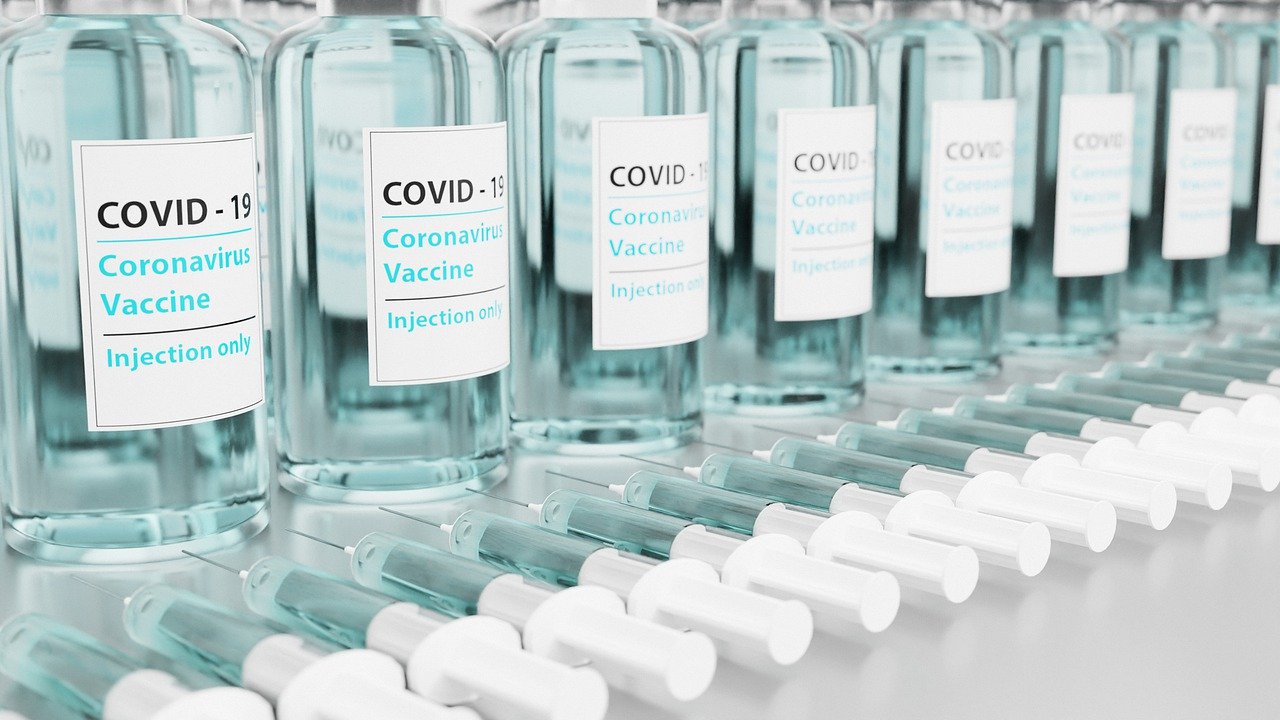
Minnesota came roaring back to normalcy for the Memorial Day weekend and start of summer but the coronavirus threat lingers on with health officials continuing to stress the importance of getting COVID-19 vaccine protection.
At the same time that Gov. Tim Walz and federal officials were lifting restraints on businesses and gatherings in time for the memorial weekend, Minnesota Department of Health (MDH) data showed the state is still far short of desired vaccination rates.
The generally accepted target for getting state and national populations vaccinated is 70 percent for now eligible people age 12 and older. Some experts, however, say it should be 80 percent to insure what is called “herd immunity.” That should make a protection level needed to prevent spreading the virus to vulnerable people.
Governor Walz wants Minnesota at the 70 percent or higher level by July 1. As of Saturday, May 29, MDH said 62 percent of the state’s population of age 12 and up had received at least one dose of a COVID vaccine. That means 2,911,375 Minnesotans have at least one dose, and 2,578,633 have completed their vaccinations.
State and local health providers and program officials are making progress in diverse communities and among various ethnic groups in reaching people. Steadily declining numbers of diagnosed infections and hospitalization rates show the results.
Vaccination rates and infection cases in counties around Minnesota’s 11 Native reservations are producing average or above statistical results. But with nearly three-quarters of Minnesota’s Native population spread to the winds, the task of reaching people in various urban settings is a bigger challenge.
To keep pushing vaccinations as the first line of defense, the MDH and Minnesota Department of Human Services announced in mid-May they had partnered with nine major health plans across the state to identify hardest hit and hardest to serve communities.
Dr. Nathan Chomilo, COVID-19 vaccine equity director and Medicaid medical director at MDH, explained the strategy this way:
“Immunizing for impact requires us to measure our success not only by how fast we are able to get the most Minnesotans vaccinated but also by how we are reaching communities at highest risk for COVID-19 who have already been hardest hit by the pandemic.”
Health plans participating in this push include Blue Cross and Blue Shield of Minnesota, HealthPartners, Hennepin Health, Itasca Medical Care, Medica, PreferredOne, PrimeWest Health, South Country Health Alliance and UCare.
They are reaching out to Minnesotans enrolled in Minnesota Health Care Programs (MCHP) such as Medical Assistance and MinnesotaCare programs that are partnered with county health plans. Research conducted in 2019 showed that 44 percent of African Americans, 39 percent of Native Americans, 31 percent of Hispanic and 20 percent of Asian Minnesota under age 65 use these programs.
“It takes local partnering and responsiveness to effectively address care inequities,” said Steve Gottwalt, executive director of the Minnesota Association of County Health Plans. “Our county-based plans continue working to improve vaccination rates among communities most impacted by COVID-19 and who still face barriers.”
Various city COVID protection rules remain in place but state officials on May 28 removed most state restrictions on businesses and how people may congregate indoors and out.
Some restrictions still apply in the Twin Cities, for instance. Businesses may still require facemasks and social distancing to keep customers and employees safe.
The Red Lake Nation lifted its Medical Martial Law at the tribal council meeting on May 11, 13 months after sweeping safeguards were put in place to protect members, tribal employees and the general area population.
As a result, facemasks are no longer required for outdoor activities, non-members can again enter the reservation, and restrictions were lifted on the number of people attending indoor activities.
These steps toward “normalcy,” if there is such a thing, are consistent with what state and federal health officials have since announced.
Loosening restraints on general public behavior doesn’t lessen the need to aggressively push for vaccinations and personal caution. Minnesota may be approaching the 70 percent vaccinated rate and may achieve it by July, but health data for the state’s 87 counties show great disparity.
Heading into the Memorial Day weekend, MDH said only five counties are currently at or above the 70 percent adult vaccinated target. Taking top honors is Cook County, around the Grand Portage reservation, which registers 80.9 percent of residents as vaccinated.
The other four counties topping the list include Olmsted, surrounding health-conscience Rochester and the Mayo Clinic, at 76.6 percent vaccinated; Hennepin (Minneapolis) at 74.1 percent; Ramsey (St. Paul) at 72.2 percent; and Washington County – the east metro suburbs – at 70.1 percent.
Only 18 other Minnesota counties are in fairly easy reach of the 70 percent vaccinated target.
They are Dakota and Houston counties, at 68.9 percent; Carlton and Carver at 68.7, Scott at 67.4, Big Stone at 66.6, Fillmore that 66, Wabasha at 64.9, Goodhue at 64.5, Lake at 64.3, Brown at 64.2, St. Louis at 63.9, Mahnomen at 63.4, Nicollet at 62.3, Mower at 61.1, Rice at 60.9 and Red Lake at 60 percent.
For point of reference, the Fond du Lac reservation is in Carlton and partly in St, Louis counties, the Shakopee Mdewakanton Sioux Community is in Scott, Prairie Island Indian Community is in Goodhue and the Bois Forte Band of Chippewa is scatted in parts of St. Louis and Koochiching counties.
That leaves 64 Minnesota counties with catching up to do if Minnesota is to reach the 70 percent vaccinated threshold by July.
Again, for The Circle readers’ reference, these include Yellow Medicine County around Upper Sioux Community, Redwood around Lower Sioux Community; Beltrami, Clearwater and parts of seven other counties around the Red Lake Nation; Mahnomen, Becker and Clearwater around White Earth Nation; Cass, Itasca, Beltrami and Hubbard around Leech Lake reservation; and Mille Lacs, Pine, Aitkin and Crow Wing counties around the Mille Lacs reservation.
For more information, see: https://www.health.state.mn.us/diseases/coronavirus/vaccine/index.html; https://mn.gov/covid19/; and https://www.health.state.mn.us/diseases/coronavirus/situation.html.